
13.08.2026
4 min
235



Ukrainian military intelligence says its experts have discovered an Nvidia Jetson Orin computing module inside a new Russian missile.
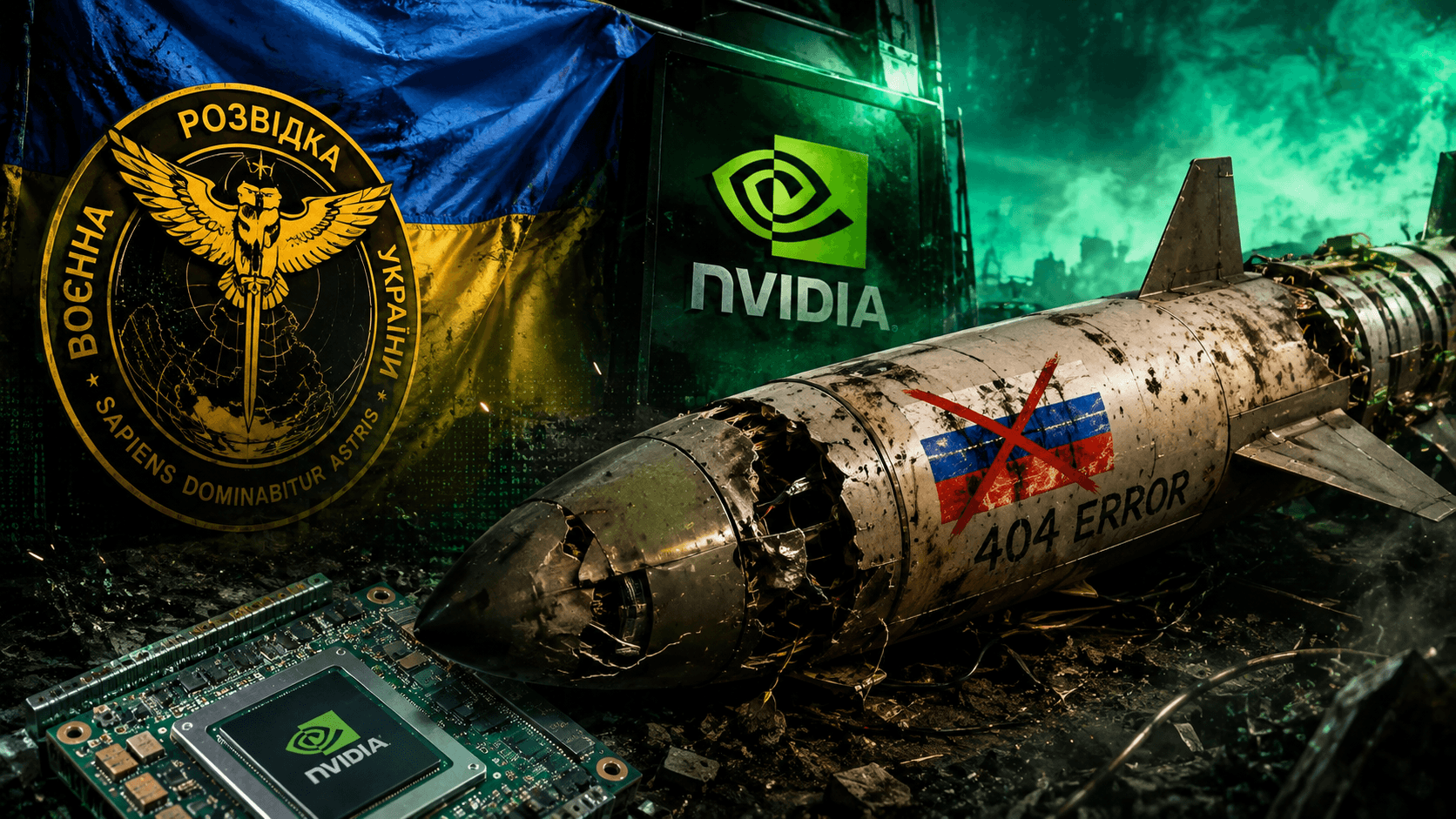
According to Kyiv Post, Ukraine’s Defense Intelligence (HUR) says the module was discovered in Russia’s new S-71 Monokhrom air-launched cruise missile.
According to HUR, the discovery could indicate that artificial intelligence technology has been integrated into the missile. However, the intelligence agency did not provide further details about the specific functions performed by the Nvidia module in the weapon system.
According to Nvidia’s website, Jetson Orin modules can be used to power generative and agentic AI, computer vision systems, and advanced robotics.
Research published on HUR’s War&Sanctions portal also identified 35 additional foreign electronic components in Russian weapons. Among them are components of a passive radar homing system that Russia is installing on its Geran-2 attack drones.
“The discovery of Nvidia Jetson in a new Russian missile once again demonstrates the need to increase sanctions pressure and coordinate the efforts of the civilized world,” Kyiv Post quoted HUR as saying.
An Nvidia spokesperson told Cybernews that Jetson Orin modules are consumer-grade products sold to students, developers, and startups for a wide range of useful applications.
The company stressed that these modules are not officially available in Russia and are not designed for military use.
“Used Jetson devices are available through numerous reseller channels. While we cannot track products after they are sold, if we determine that any customer is violating US export controls, we will take appropriate action,” an Nvidia spokesperson said in a written statement.
Following Russia’s full-scale invasion of Ukraine in 2022, the United States, in coordination with the European Union, the United Kingdom, and Japan, imposed a broad range of sanctions on Moscow.
The restrictions include controls on exports of advanced technologies, dual-use products, and equipment needed to support Russia’s military industry.
Since then, Russia has been trying to replace Western electronics with Chinese alternatives. Because these alternatives do not always provide the required capabilities, Moscow continues to actively seek ways to circumvent sanctions.
Sometimes it succeeds. In January 2026, the Institute for the Study of War (ISW) reported that Russia was using SpaceX’s Starlink satellite communications to extend the range of its attack drones and carry out medium-range strikes against Ukraine.
Elon Musk later said the company had taken measures to counter the unauthorized use of Starlink against Ukraine. Kyiv subsequently said that these measures had “produced real results.”
An analysis by the Carnegie Endowment for International Peace notes that Russia has several ways to circumvent Western export restrictions and obtain technologies needed to manufacture and equip its weapons systems.
For example, Moscow purchases ordinary computer chips and other components widely used in consumer electronics, whose export is not always subject to strict restrictions.
Russia also relies on global supply chains and networks of intermediaries in third countries to obtain dual-use components that are later integrated into its tanks, missiles, and drones.
In July 2026, The New York Times reported that Russian military intelligence had established a procurement network in Japan through which it could obtain semiconductors, transmitters, precision machine tools, and other dual-use equipment.