30.08.2026
2 min
243



Microsoft has confirmed a new issue following the September Windows 11 security update. On some PCs, USB audio devices stop working after a restart, and in some cases, users are left without both sound and microphone functionality.
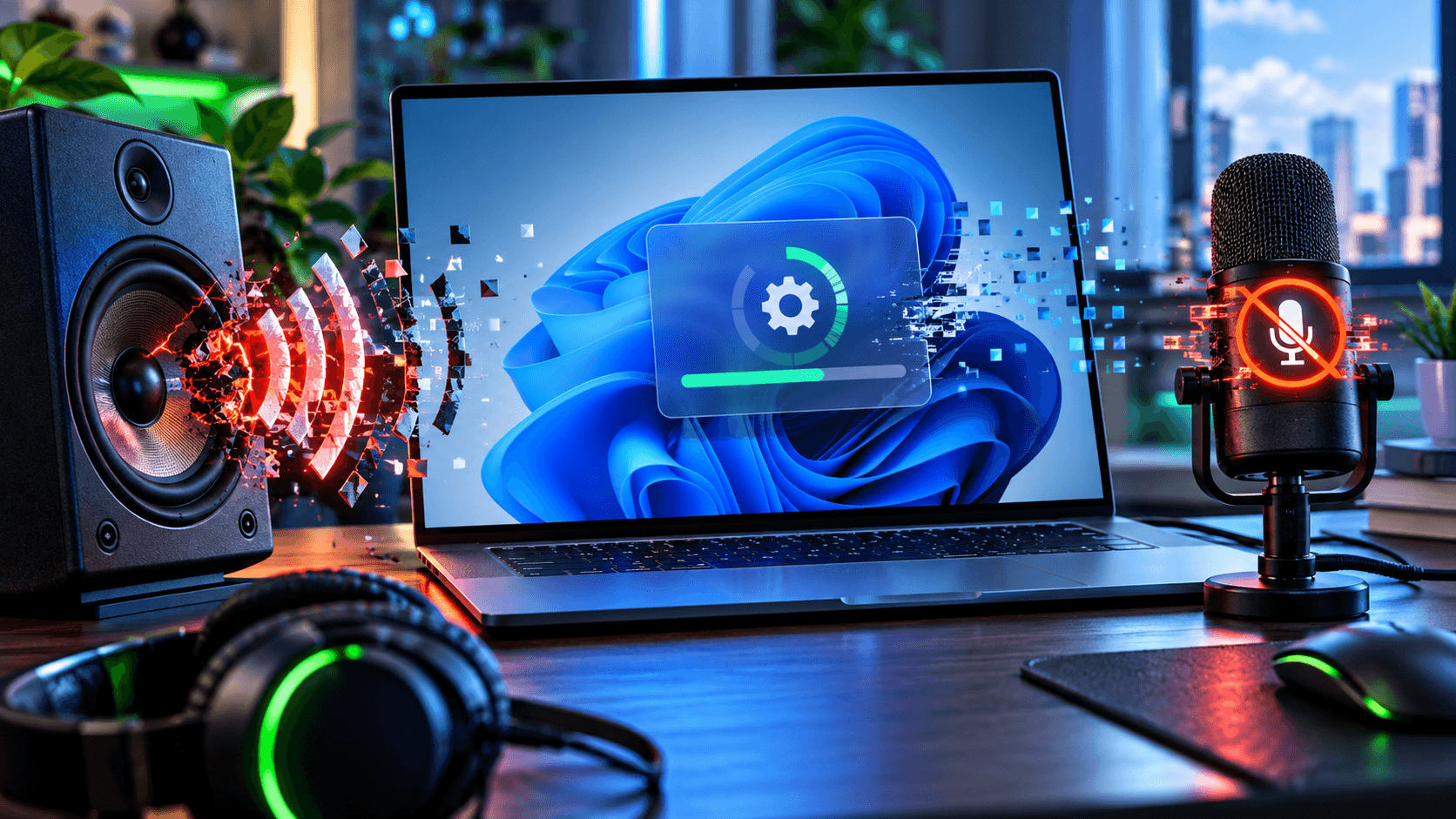
The issue appeared after installing the September Windows updates released on September 8, 2026, as part of the regular Patch Tuesday cycle. Microsoft has already confirmed the issue, saying it primarily affects USB Audio Class 1.0 devices.
These are USB audio devices that Windows normally recognizes automatically and that do not require a separate software driver from the manufacturer. After the update, some of these devices may fail to start altogether or stop playing audio.
On affected PCs, Windows may completely lose audio output. Volume controls may become unresponsive or remain stuck at zero, while sound settings can freeze or become inaccessible. Device Manager may also display the message “This device cannot start (Code 10).”
According to Cybernews, the issue also affects microphones, meaning users may experience not only a loss of sound but also problems making voice and video calls. Simply disconnecting the device or removing it from the system may not resolve the issue, as the problem is tied to the Windows update itself.
Microsoft also notes that some devices continue to work normally in standard stereo mode but stop functioning when multichannel audio is enabled. In particular, problems may occur with 8-channel audio and 3D audio modes.
Some users have managed to temporarily restore sound by switching their audio device to two-channel mode. Microsoft has acknowledged these reports, but a permanent fix is not yet available. The company is working on a solution and says it will update its documentation when more information becomes available.
It is also unclear how many computers have been affected or which specific device models are experiencing the issue most frequently. Microsoft says the problem is limited to USB Audio Class 1.0 devices and affects client versions of Windows 11 24H2, 25H2, and 26H1. Windows Server versions are not listed among the affected platforms.
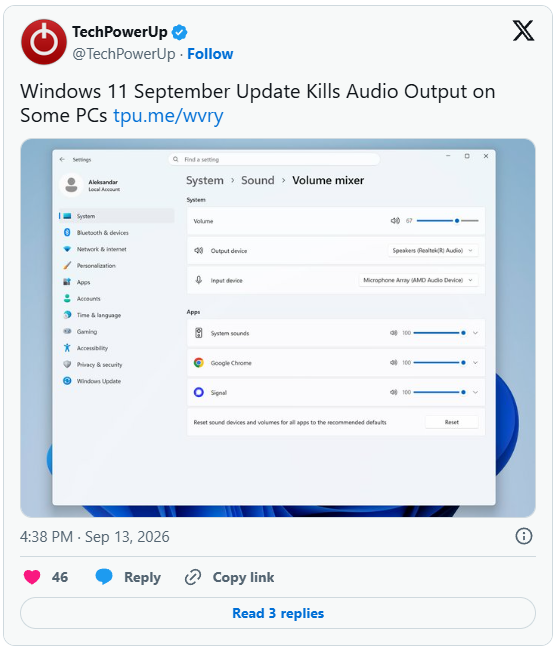
The new audio bug is yet another unwelcome consequence of September’s Patch Tuesday. The update package itself was intended to fix a number of Windows issues, including Explorer.exe crashes, black screens, problems with File History backups, Remote Desktop, and certain applications running in Linux-based virtual machines.
However, reports of new issues began to emerge after the update was released. According to Windows Latest, some systems experienced serious problems affecting both GPU and CPU performance.
A few days earlier, Microsoft also confirmed instability with Remote Desktop Services following the September updates. In addition, Windows 11 users began receiving false notifications in late August claiming that Microsoft Defender Antivirus was disabled, even though the antivirus software was actually still running.
Cybernews also points to a claim by a researcher using the pseudonym Nightmare Eclipse, who said that security protections introduced in recent Windows updates could be bypassed. This added to the growing list of issues surrounding Microsoft’s latest patches.
While Microsoft works on a fix, owners of USB audio devices that lost sound after the September Windows 11 update will have to wait for a new patch or, if the issue occurs specifically in multichannel mode, temporarily switch to two-channel audio.