11.06.2024
Updated 09.06.2026
Updated 09.06.2026
6 min
304



We are talking about Tim Berners-Lee, the creator of the World Wide Web. It describes his childhood, education, professional activities and key role in the creation of the Internet, as well as the technical aspects of his work at CERN. Special attention is paid to the INQUIRE program and the first web browser.

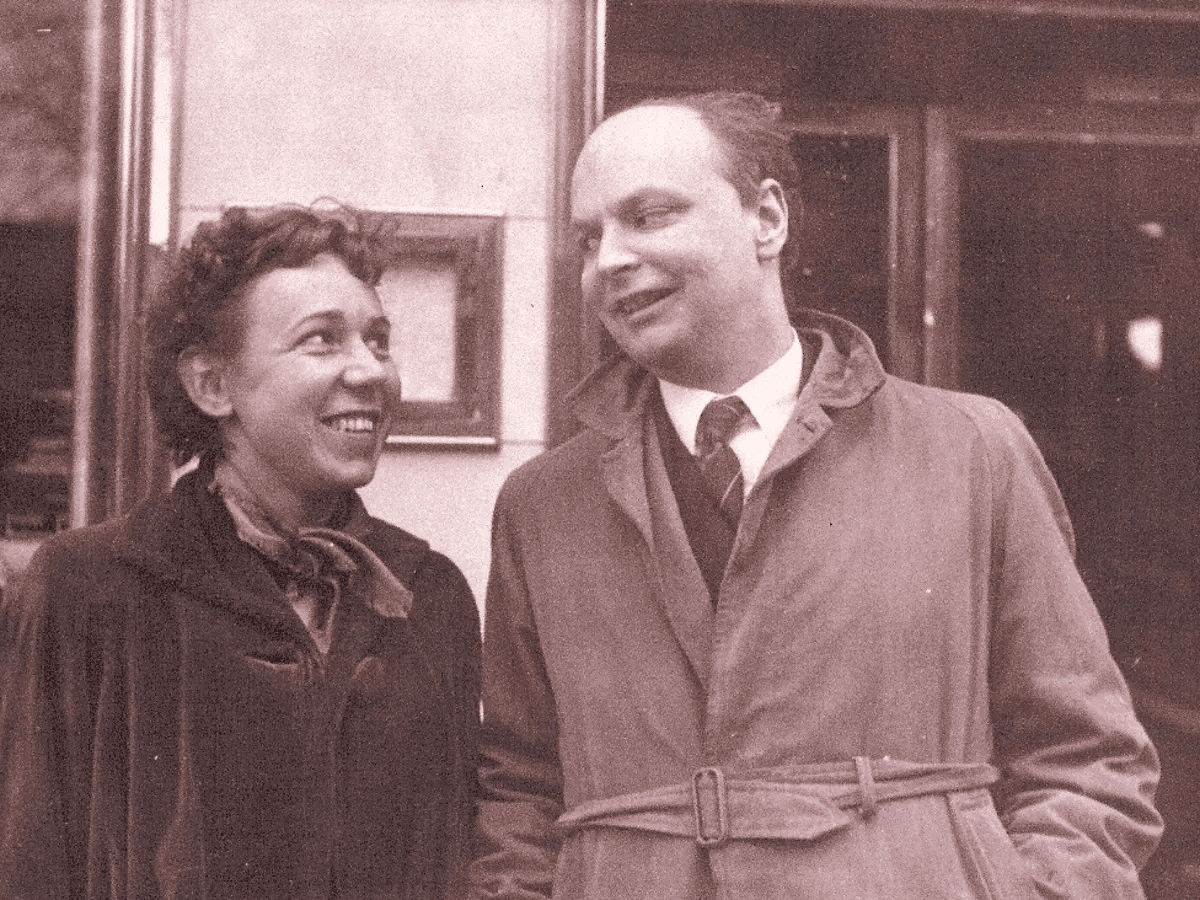
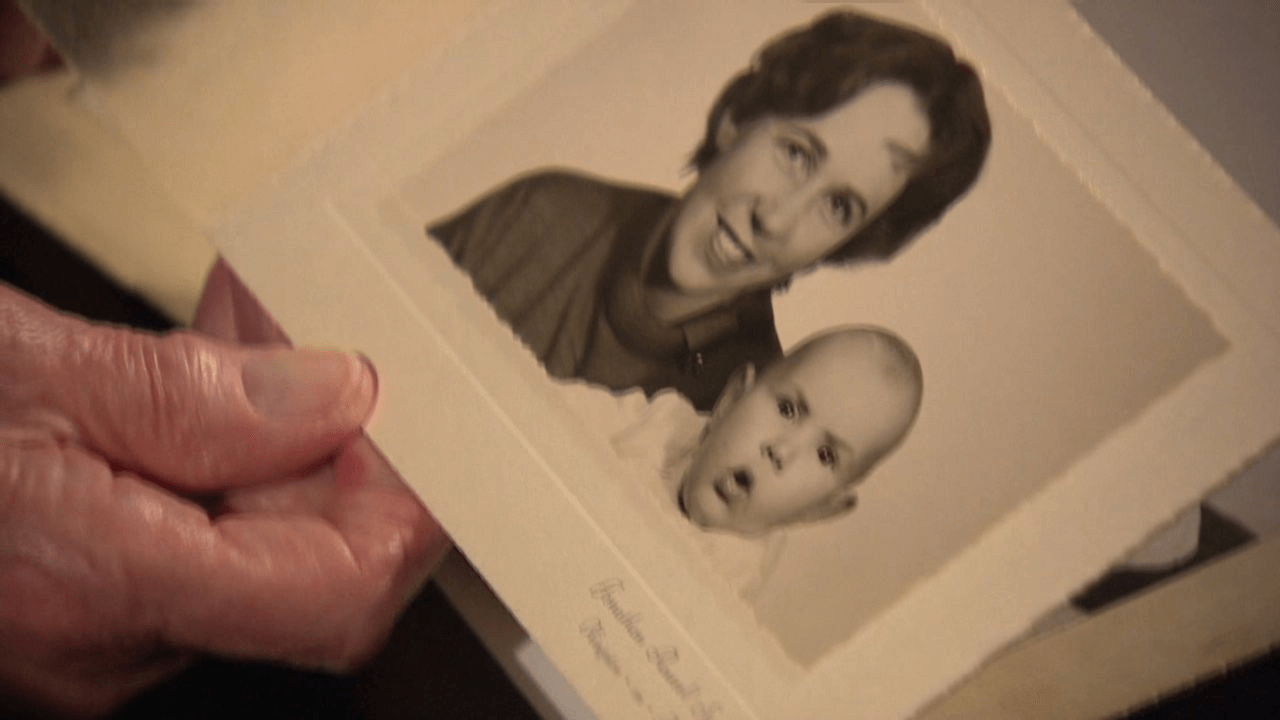
Our story begins not with the birth of a child who will change the world, but with 1952, when Mary Lee Woods and Conway Berners-Lee, two mathematicians with experience working with the first computers, met at the Christmas party of the British firm Ferranti. They worked on a Ferranti Mark 1 computer and married in the same year. They were destined for 63 years of life together, many scientific discoveries and the status of “grandfather and grandmother of the Internet”. In 1955, Timothy John Berners-Lee was born, the first of their four children, to whom this story is dedicated.
Tim Berners-Lee has been fascinated by modern technology since childhood. His first hobby was trains and he had a toy model railroad. However, the games of the son of two mathematicians and programmers were special: at school, Tim created separate electronic devices to control his trains. He closely followed the development of transistor technologies, which were then considered advanced and innovative.
Tim, a teenager, was fond of science fiction, especially Arthur Clarke’s “F stands for Frankenstein,” where computers are networked to form a brain. This idea struck him when he was 10 years old. After studying electronics and physics at Oxford University, Tim started out on his own in 1976 working as an engineer for a telecommunications company in Poole. He worked on software, transaction distribution systems, message relay and bar codes. In 1980, he first worked at CERN, creating the INQUIRE program, elements of which later appeared on the World Wide Web.
His passion for electronics was complemented by studying physics at King’s College, Oxford, which he remembers fondly, especially for the individual tutor programs. In 1976, after graduating from university, he began working as an engineer for a telecommunications company in Poole, England. He was involved in software development, transaction distribution systems, message relaying and barcodes. Tim mentioned how a machine with a bar code scanner was used to collect data in supermarkets, which allowed for the automation of product management.
For the next two years, he worked at DG Nash Ltd, where he was responsible for the creation of a multitasking operating system. In 1980, Tim first started working at CERN and created the INQUIRE program, many elements of which would later appear on the World Wide Web. Although he only worked there for six months, CERN would become a key place in his life. In 1980, CERN was a center of advanced scientific research, where leading scientists and engineers from all over the world worked.
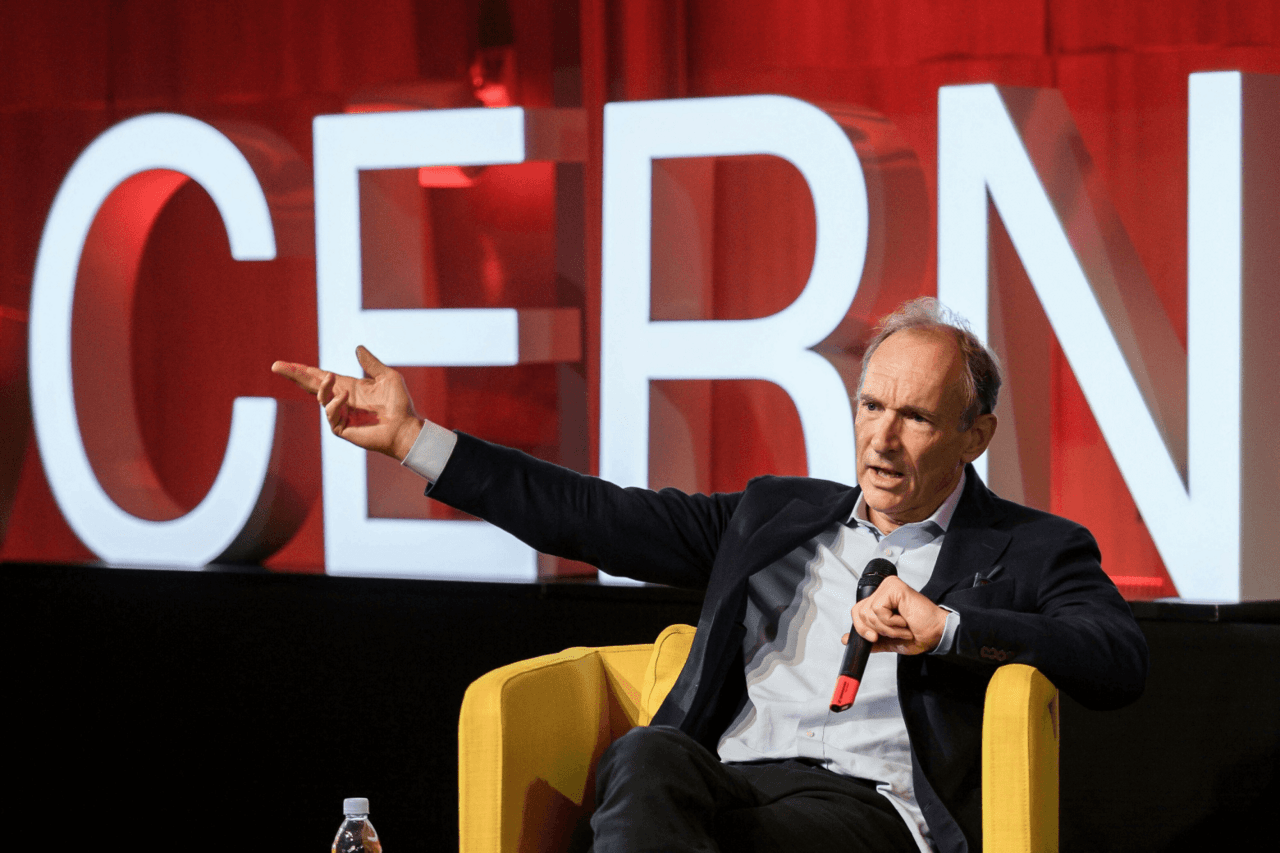
CERN is a large corporation with 10,000 employees who perform different tasks and use different hardware and software. It is not a single building or even a city, but a group of institutes, organizations and institutions that exchange information through local networks. At the same time, the level of training and computer literacy among employees is very high.
Of these 10,000 employees, only 3,000 worked permanently at CERN, the rest worked at several institutions at the same time. The average term of work at CERN was about two years, which led to the loss of some information after the departure of employees.
Tim Berners-Lee tried to solve the problem of information retention by creating the INQUIRE program. It was a kind of electronic card index with hyperlinks establishing connections between cards with important information.
Example:
Where is this module used?
Who wrote this code? Where does he work?
What documents exist regarding this concept?
Which laboratories are included in this project?
What systems depend on this device?
Which documents refer to this?
Simplifying the task as much as possible, INQUIRE was solved with the help of a wiki similar to the modern one: systematization of information and creation of links between blocks. Each card has a block change. At the same time, scientists were able to create such maps themselves, establish the necessary connections, but it was impossible to create a completely new map (establish a connection).
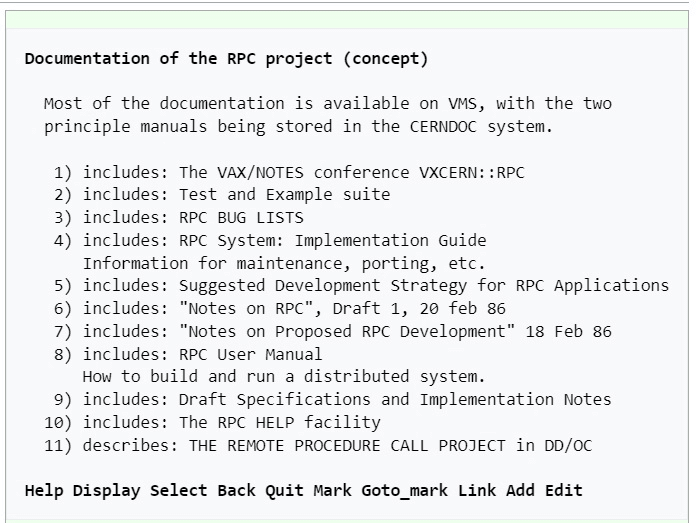
Sounds tempting, doesn’t it? Especially in 1980. However, the program had significant shortcomings. One of the most important points was that all the information was stored in one database and INQUIRE could not access any other database outside the organization. The database must be systematically updated. Few scientists used this system, and Tim himself did not try to “advertise” it, promote it or make it available to everyone.
But dear readers, remember that Tim Berners-Lee signed a contract for only 6 months. The contract was signed and he left CERN, but promised that, like Carlson, having worked at Image Computer Systems Ltd for 3 years, his work would be related to software for real-time operating systems.
In 1984, our hero was invited to CERN, where he again faced the problems of systematization and interaction between various elements of the institute, which he had already tried to solve. He actively participates in solving the questioning task. An important task: the program will be multi-user and cross-platform and will have to access external links. Sometimes I get the idea that hypertext was created by Tim Berners-Lee, but it’s not. He built his World Wide Web on its application, making it not only popular, but also important. But we return to the first steps that Tim, as a full-time employee of CERN, will take upon his return.
Since 1984, the main task of Tim Berners-Lee has been solving the problem of changing information in real time. The work was complicated by the peculiarities of CERN itself, and the people involved in the development were constantly changing places. Tim developed a tool to create a distribution system for his programs (during remote procedure calls). The Inquire program was mainly used to combine all information about all project participants. as he later recalled:
“I realized that a big part of coordinating a project is to keep things updated and keep everyone informed of changes. At the same time, I realized that I spent most of my time figuring out the details of a system that others were using.”
Tim had a very specific need: to make a version of the program similar to the inquiry, but accessible to everyone. The idea was the scalable possibility of joint and independent work of a group of users who receive an automatically updated platform for exchanging hypertext and materials. That’s how Tim came up with the important concept of the World Wide Web, in response to the “Problem 1” program.
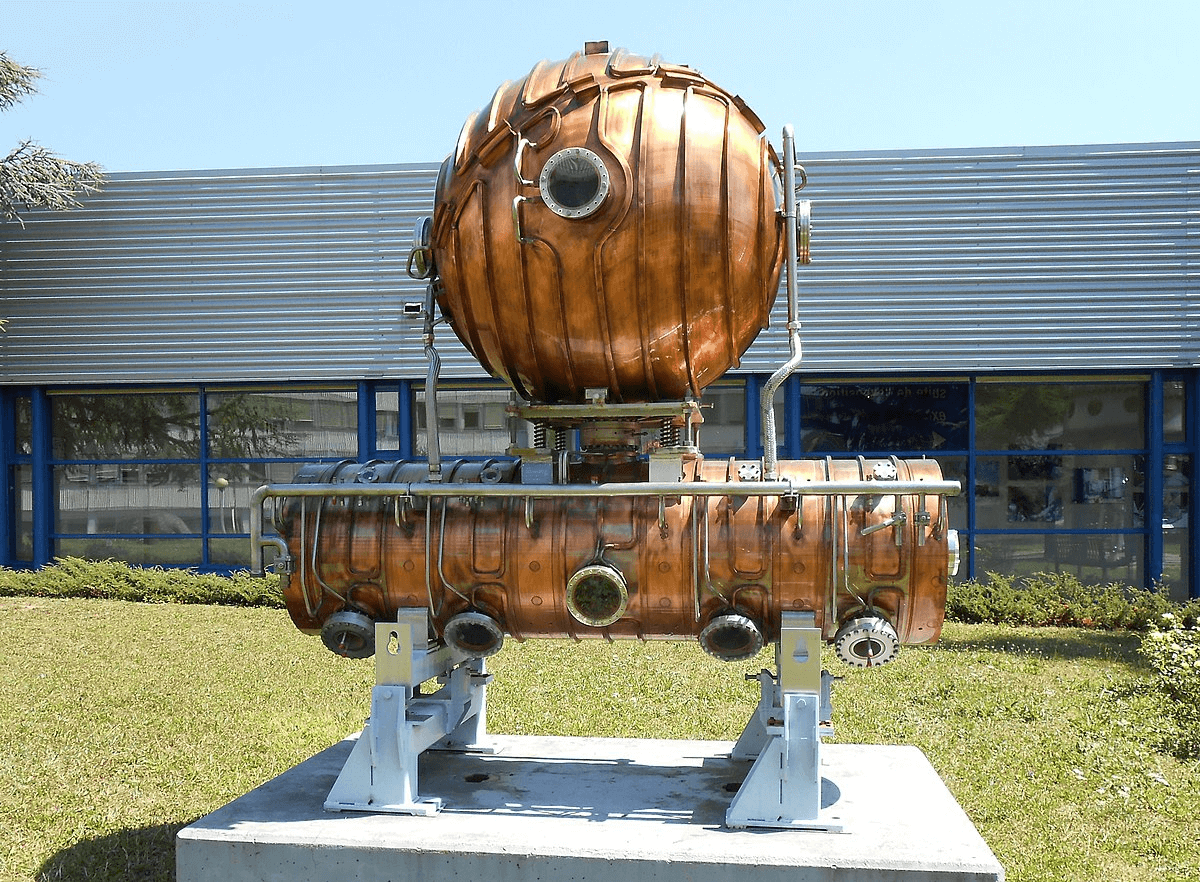
The year is 1989 in the yard. CERN is a large electron-positron collider (English Large Electron-Positron Collider). The study of the Large Hadron Collider has begun. The Institute felt an incredible need for fast, simple and “mobile” communication mechanisms.
And so Tim Berners-Lee proposes his concept of the “World Wide Web”, becomes famous, becomes famous, starts the Internet and publishes photos of fur seals there…
But in reality it was not so. Tim really came up with his concept. Not only an idea, but also a full-fledged proposal that did not yet have a name. It was a hypertext project in which Tim wrote notes, explanations and proposals for a whole year, but he was rejected. CERN refused to work on Tim Berners-Lee’s project. But his immediate superior, Mike Sendal, gave tacit approval to develop the concept during work hours and on work equipment.
The emphasis is not on hardware. At that time, the NeXT Computer (and its slightly improved version, the NeXTcube) was released. These computers were sold to individuals for 10,000 yen and to universities for 6,500 yen. Considering that we are talking about 1990, the difference is noticeable, to put it mildly.
It was the second model Tim had worked with at CERN, the NeXTcube, and his boss had said frankly that he wouldn’t mind if Tim bought the computer from the institute for personal use.
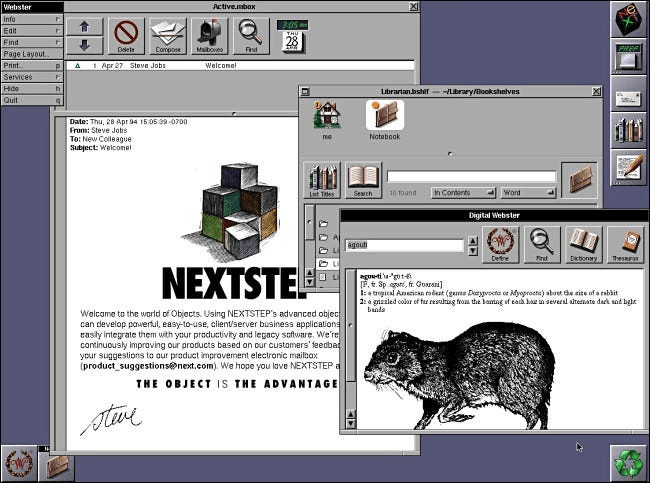
These computers were ideal for the birth of the World Wide Web. The NeXTSTEP operating system was installed on them. The functionality of the system allowed w3 developers not to waste time on the details of writing characters on the screen, font metrics and displaying windows. All this is already included in the “native” operating system. In addition, the programming environment already included an editor and a large number of fonts that could be freely converted to hypertext. It took only 1 month to create a prototype browser from the time work on the network began, and 1 month later, the editor started working on it on Christmas Day 1990, when what we used to call the word “Internet” already existed.
Let’s take another digression. Do you remember how diverse experience Tim Berners-Lee gained while working in commerce? And here his experience turned out to be very important! Tim himself said that CERN does not want to buy software! CERN employees are used to creating and updating software, which is precisely the source of the problems that it has been trying to solve for a long time. However, he himself had a lot of experience in the software industry and put a lot of effort into persuading CERN to buy the right software.
However, Tim was unable to successfully complete his “war”. We had to develop a version for Mac, for PC, for next, for a number of workstations and terminals. CERN was not prepared to pay money to buy software or hardware unnecessarily. The World Wide Web is not the first project of its kind, and other projects at CERN itself have failed.
Tim went for a technical trick. He created a gateway to the existing system for his brainchild. Gateway technology itself was a breakthrough, it is at the heart of the Internet as we know it. In the same 1990, Tim created Hypertext Markup Language (HTML).
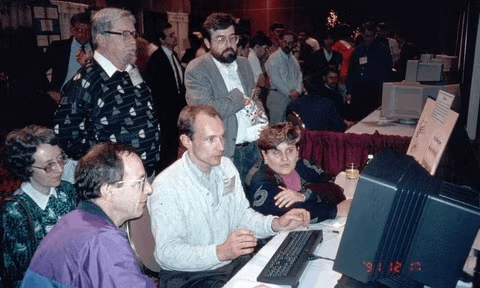
It all started with the CERN phonebook, which was a database stored in an old format. Its head, Bernd Palerman, received a task from the management to make this data available to everyone. Tim and Bernd jointly created the first server for storing a hypertext version of data.
At that time they were responsible for the client side, developing the first browser interface, in particular with the help of nipa Pellow, an intern who ported the browser to other platforms… Robert Caillot was responsible for the Macintosh adaptation. Another longread should be dedicated to Robert Caillot. The only thing worth mentioning is that before I met Tim, I was suggesting using a hypertext system for cern papers. Robert can be called the “co-creator” of the Internet, because together with Tim he was able to do the most important thing: finance their project.
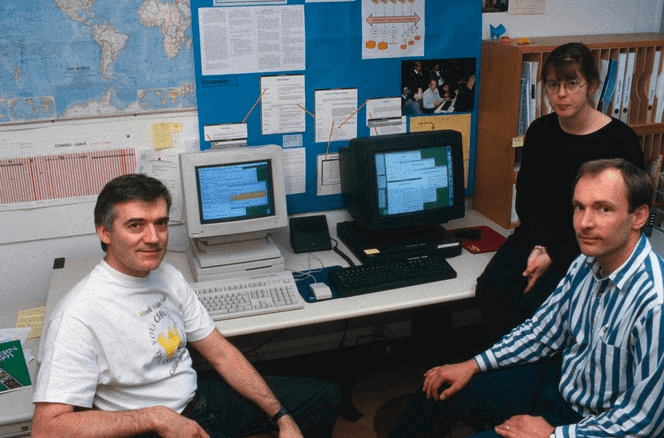
The World Wide Web is born! But from the moment she was born, she risked her life and was saved by… the Internet!
Dear readers, we remind you that the Internet existed at that time for more than 20 years. ARPANET, NSFNET, and hundreds of much smaller networks already existed. The IRC protocol has already been developed and there is a chat. Internet is fully functional (via FTP).
Information about hypertext, creation of a server and possible access to it by NeXTSTEP users was published both in the Usenet network and in alt newsgroups. Tim recalled that at the time, Usenet users were “smart and weird” and had a fairly high ability to maintain interesting material. The World Wide Web project began to receive a significant number of responses, and criticism often arose, for example, the www was compared to HyperCard (a system based on Apple’s hypermedia). But while HyperCard lost the popularity war and was limited to files on users’ local hard drives, the World Wide Web was not. The publication was followed by a serious wave of moral and intellectual support. People provided Tim with source code for various projects he needed. As he wrote later: “the people of the Internet created a network.”
At the same time, the practical application of the Internet was initiated by Louise Addis, a librarian at the Stanford Linear Accelerator (SLAC). For the first time, the library created a website based on the idea of the WWW, which greatly facilitated the life of physicists working on the project and provided access to a huge amount of relevant and important information. The next step was to work with the libraries of the High Energy Physics (HEP) community.
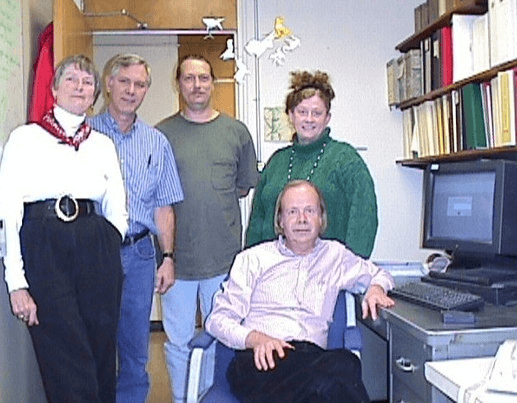
Despite the complete success, as Tim later recalled, he and Robert were teased by colleagues, because the “World Wide Web” was located at CERN itself, where it was created, at first scientists did not understand and did not accept the advantages of the network. She just became one of the “1…”
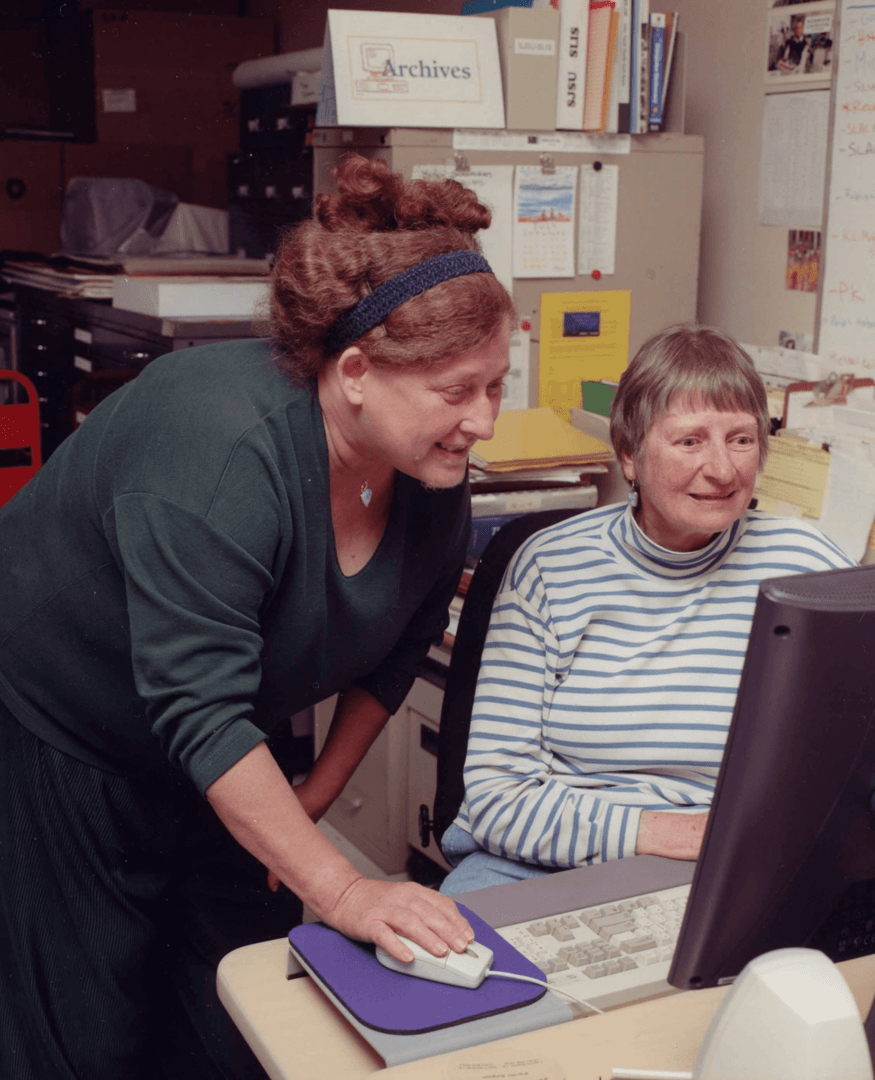
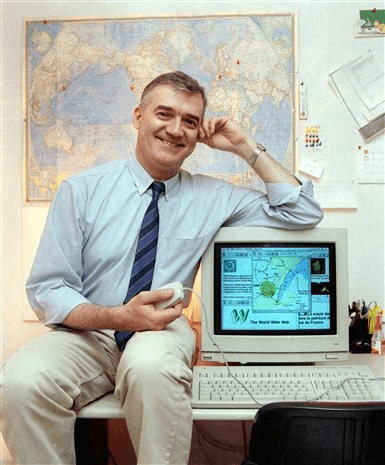
At the same time, we cannot say that the project was set on wheels, but, on the contrary, we needed a version for Windows, mac. They simply did not give resources for sorting. A volunteer student saved money here. After all, it wasn’t just Nicola Pellow. A team of students from the Helsinki Institute of Technology developed an X Window browser called Erwise. Pei-Yuan Wei, a student at Berkeley, created the Viola Internet browser, which is based on Unix and has its own Viola programming language. Tom Bruce, the author of the Cello browser, adapted it for Microsoft Windows. At the time, Microsoft Windows was particularly popular among lawyers, and it also needed its own browser to distribute legal information. Robert Caillot, already known to you, wrote for Macintosh.
This is where the real growth of the Internet began! Dear readers, from now on, we will combine the concepts of “Internet” and “World Wide Web” and continue to use only the word Internet.
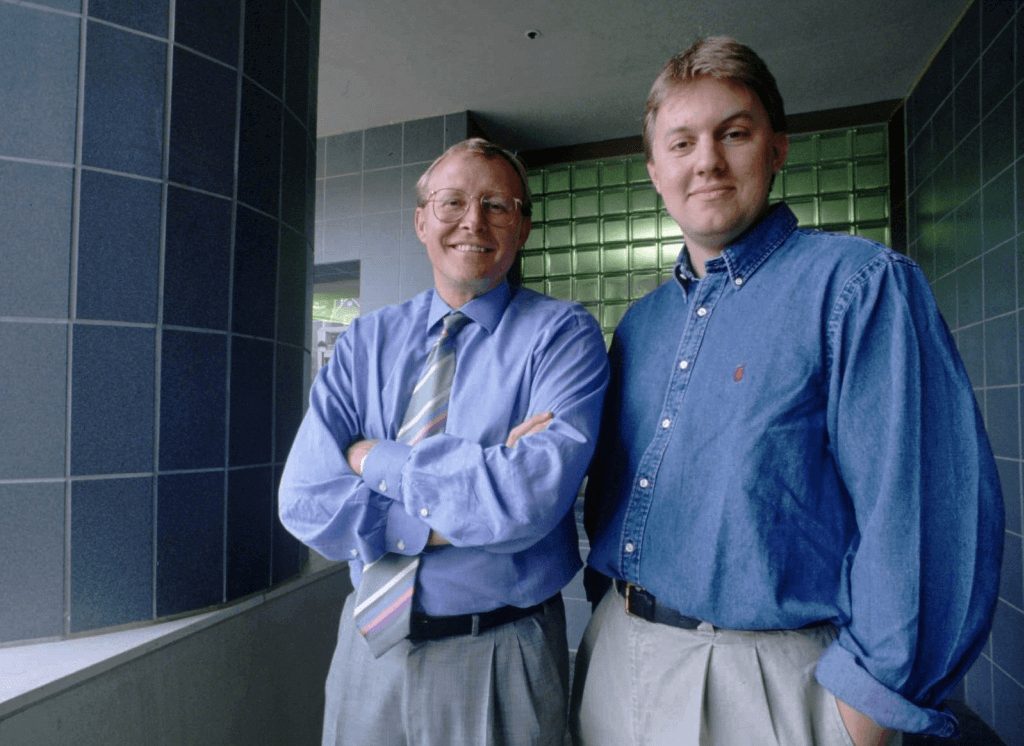
The ViolaWWW browser has been very warmly received by WTHYs and the National Center for Supercomputing Applications (NCSA). Student Marc Andreessen (now the founder of the Andreessen Horowitz Foundation) and the staff of the software development team decided to create their own browser for the X window, called Mosaic. A feature of this browser was the most active work with reviews and the immediate release of fixes for problems. In 1993, Mosaic was already ported to Microsoft Windows and Macintosh and won the race for the status of the most popular browser in the competition. The Internet has long been known for mosaics. The Internet is unstoppable!
The Internet was created. It was made free and open, but it not only provided the opportunity! Comrade Berners-Lee started talking about the dangers of the Internet in 1993-1994.
For example, the problem of anonymity. In 1994, an interesting situation occurred. CERN received a letter asking to include a new server with information about a major university in its server list. A little later another letter arrived from Z… Exactly the same text! After a long correspondence, it turned out that only one party had official approval from the university, and the other party was simply a better server. As a result, I added both servers and signed “university” and “University Underground”. The issue of checking information was obvious, and the need to check the status of official information was undeniable.
In the same 1994, serious problems arose with the information content of the Internet. Tim pointed out that there is a fear of a lot of information on the Internet, and at the same time (quote) “reading a lot of garbage, spending time searching for it.” Tim himself gave an example that there may not be specific information on the Internet…”You are unlikely to find it there. He emphasized that the Internet is full of people. However, issues of information security and confidentiality were raised.
The dichotomous perception of the Internet as a mechanism for uniting/dividing people seems very interesting to me. So, in 1994, Tim Berners-Lee wrote:
“The web can provide equality by giving everyone access to information. It is not so important whether the local library is well equipped or whether a person studies in a city where there is a university: anyone with access to the network can, in principle, find any information. However, the Internet can both bring equality and divide people. For example, if a person does not have the funds to pay for Internet access, or if the level of education does not allow a person to use the system. He may lose access to relevant information in principle.”
Exactly 30 years have passed since that time, and the visa is still there. The urgency of the problems did not go anywhere, Tim continued and continues to work on it.
Since 1994, the World Wide Web Consortium has been working to ensure that the web remains unified in standards, but continues to evolve. Since 2023, the organization has become non-commercial.
In 1999, Tim published the book Weaving the Web: The Implications and Future of the World Wide Web, which details the history of the Internet and explores the issues of liability, plagiarism, and fraud. He writes about the role of government structures in modern networks, but at the same time continues to defend its free status.
In 2004, Timothy John Berners-Lee, an employee of the University of Southampton, received a knighthood from the hands of the late Queen of England, and a year later he released a second book called “Walking the Semantic Web: Unlocking the World Wide Web.” Semantic Web is the main modern scientific and practical development of Tim Berners-Lee. This is a specific version of the World Wide Web that allows you to process text using special programs. Regardless of the platform or programming language, any program can access the content of the text and process it.
Since 2009, Tim has been working “for” or “in aid of” the UK Government. That’s what I love about publishing open data online. In the same year, he founded the World Wide Web Foundation, a non-profit organization dedicated to making the Internet safe, also in matters of political influence. Going forward a little, in 2019 the organization was able to “push” a program called “Internet Contracts” aimed at fakes, political manipulation and other arbitrariness. Despite the fact that it was signed by an industry giant, the program does not actually perform its functions. In 2012, with the support of the British Government, Tim founded the Open Data Institute, a non-profit organization aimed at supporting innovative development. This organization, like many other organizations created by Tim, still exists today.
In the same 2012, Tim received one of the highest awards – 1. When Tim himself was sitting on the lawn and working on a complete copy of the computer that started the creation of the modern Internet, a quote from the opening ceremony of the Olympic Games in London was heard in the audience hall of his first website: “it’s for everyone.”
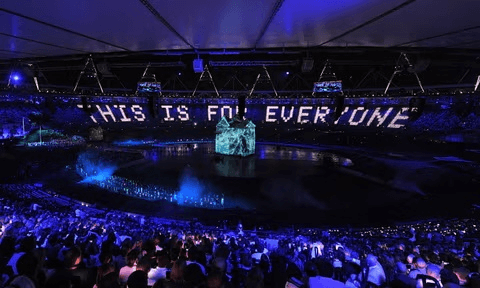
The team is currently working on the Solid (Social Network Data) project, which aims to decentralize the network and significantly improve user privacy. More recently, on 2024/3/12, Tim Berners-Lee wrote a warning letter on the occasion of the 35th anniversary of the Internet. Therefore, he refocused his efforts and talked about the problem of moving away from the old “spirit” of the Internet. As you already understand, these problems are not entirely new. Although within the framework of the Solid Team project, we propose to solve them… It is still too early to say that it has already achieved success very quickly.
Questions often arise about whether this new decentralized Internet is necessary. And if needed, why not? And here we recall the situation familiar to all of us, when the World Wide Web was created. When those who already have status and respect say, “why do we need this?” After all, what already works.” But history continued as we know it, and now we read this text on the Internet, created by Tim, and dozens or even hundreds of people helped him popularize this Internet. Now he is creating his own “new” Internet, and as is usually the case with people living today, we will see what his story is, but Timothy John Berners- Lee, without a doubt, inscribed himself in the digital history of humanity during his lifetime.