

12.06.2024
Updated 07.06.2026
Updated 07.06.2026
18 min
296



We are talking about Clément Lefebvre, the creator of the Linux Mint distribution. It covers his biography, starting with his university studies, his career moves in the IT industry and his interest in Linux. The history of the creation and development of Linux Mint, its key features, popularity among users and further evolution are described. Current achievements and plans of the project are also mentioned.
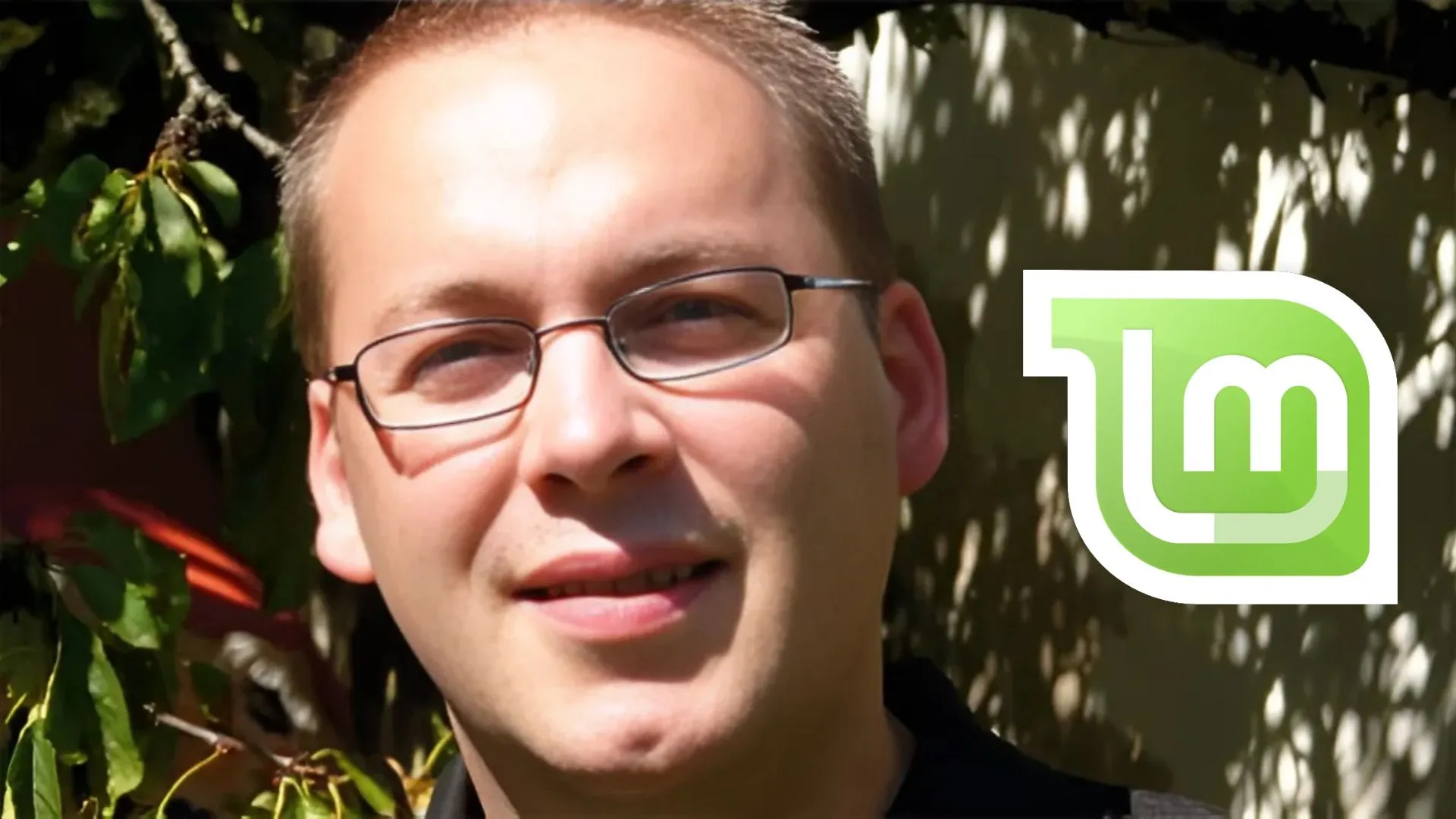
Clement Lefebvre is the creator of Linux Mint. For a long time it was the most popular Linux distribution, in fact the most popular free desktop OS in the world.
Distributions based on Ubuntu and Debian have overtaken both Ubuntu and Debian in popularity. It hasn’t received much media attention, but mint is highly recommended if you ask Linuxoids themselves.
Clément Lefebvre received a master’s degree in computer science from the University of South Paris in 2001. First of all, he was interested in game development, but was unable to work in this field. According to his LinkedIn profile, the young programmer has worked as a web developer, IT engineer, j2EE programmer architect in French and Irish banking, communications and software. In most cases, the work involved designing and developing software or web applications.
At first glance, this is a very simple Developer. But he became interested in Linux while studying at the university.
Clement recalls that at that time all the students had Windows on their home computers, but it had many interesting tools that they learned at the university: remote terminals, parallel operations of several users, file access rights, regular consoles, processes, traffic lights, etc. then students first learned about the principles of free software, which completely blew their minds. Everyone wanted to be a part of this movement. Since then, Clement became interested in Linux.
The first distribution was Slackware: “if I remember correctly, in 1997 a student from our university brought a set of glossy Wallnut Creek floppies. Everyone was fired up with the idea of installing a Unix system at home (in college I developed it on IBM AIX). I immediately Slackware was (and still is) a clean, predictable work of art… And it was also my first introduction to free software.”:
“Back then, few people worked under Linux. Sound required a special “Sound Blaster” sound card, and a novice would have to spend a week or two getting the mouse working and getting good resolution in the X11 graphics environment. And, of course, very few applications. Most Linux users were students, teachers, or developers with a strong thirst for adventure and a strong immunity to discomfort. That, as well as the novelty of SPO ideas, was very instructive for me, and I really enjoyed being a part of that process in the late 90s,” he recalls.
The Linux Mint distribution based on Ubuntu (which is based on Debian) is one of the most popular, user-friendly and user-friendly versions of Linux for the modern desktop.
Initially, it was an experiment that gradually improved thanks to user feedback. Only after the release of Linux Mint 2.2 Bianca did the project become serious.
Continuous improvement based on community feedback has paid off. From a technical point of view, Linux Mint uses the Ubuntu or Debian package base, so there is little difference between the two outside of the desktop. The main focus is on improving the user interface.
Lefebvre noted that Mint’s desktop interface is generally better than Windows, although it takes some getting used to, but it’s worth it.
Mint c 2.0 to version 12 was released on GNOME:
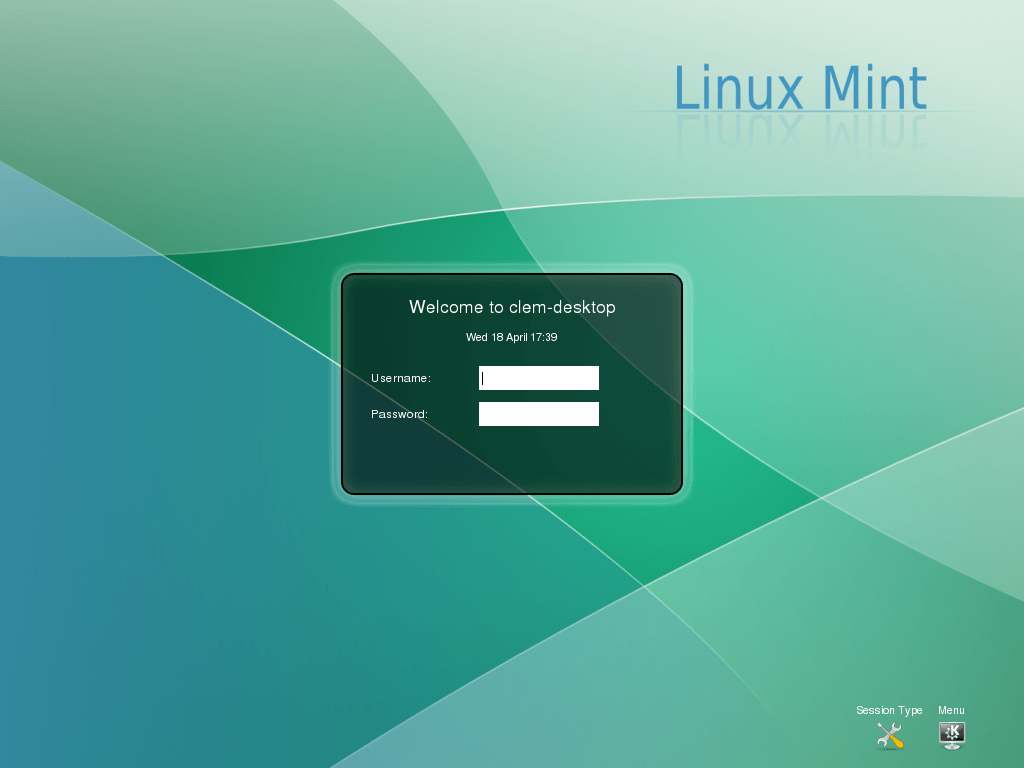
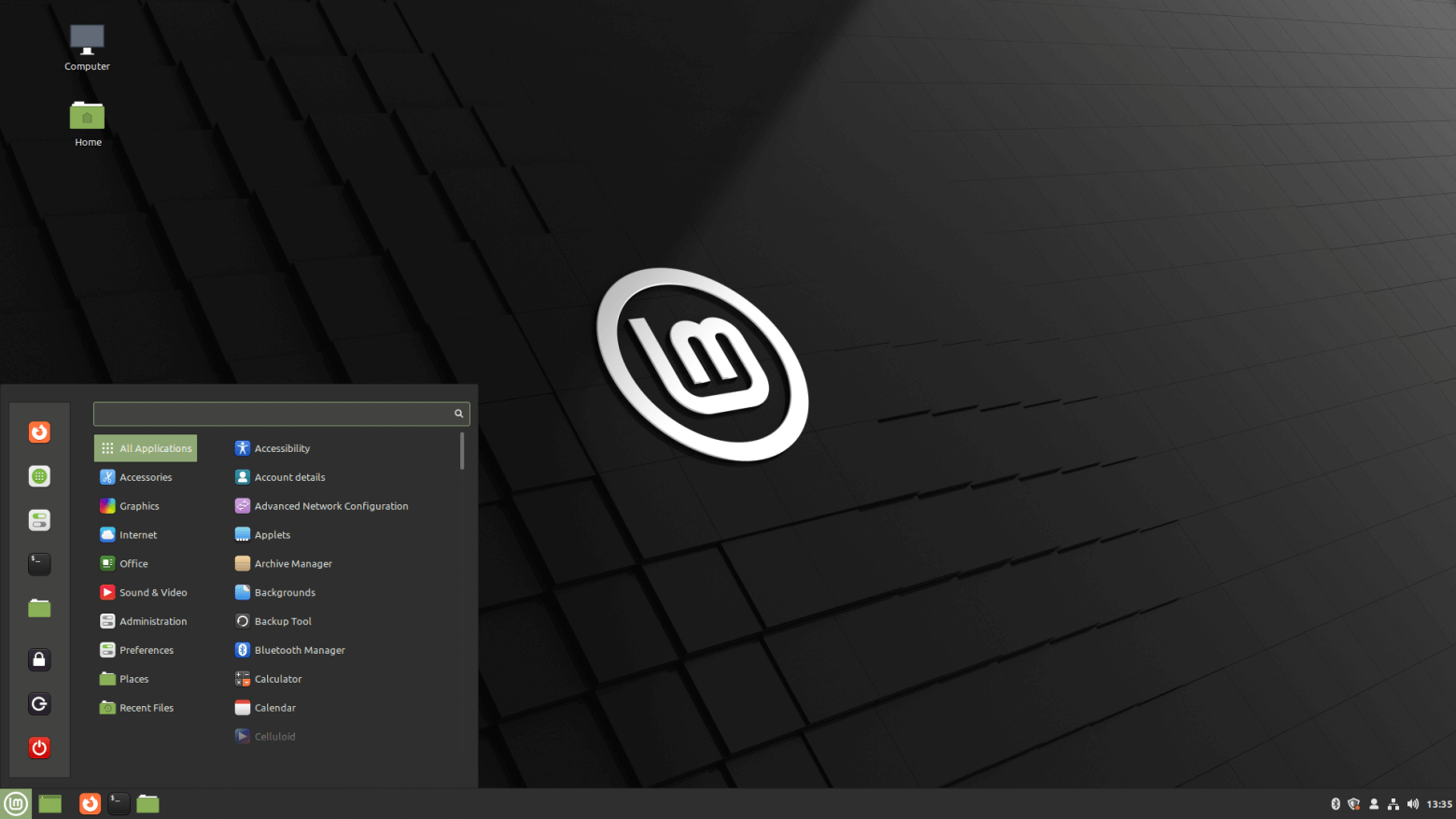
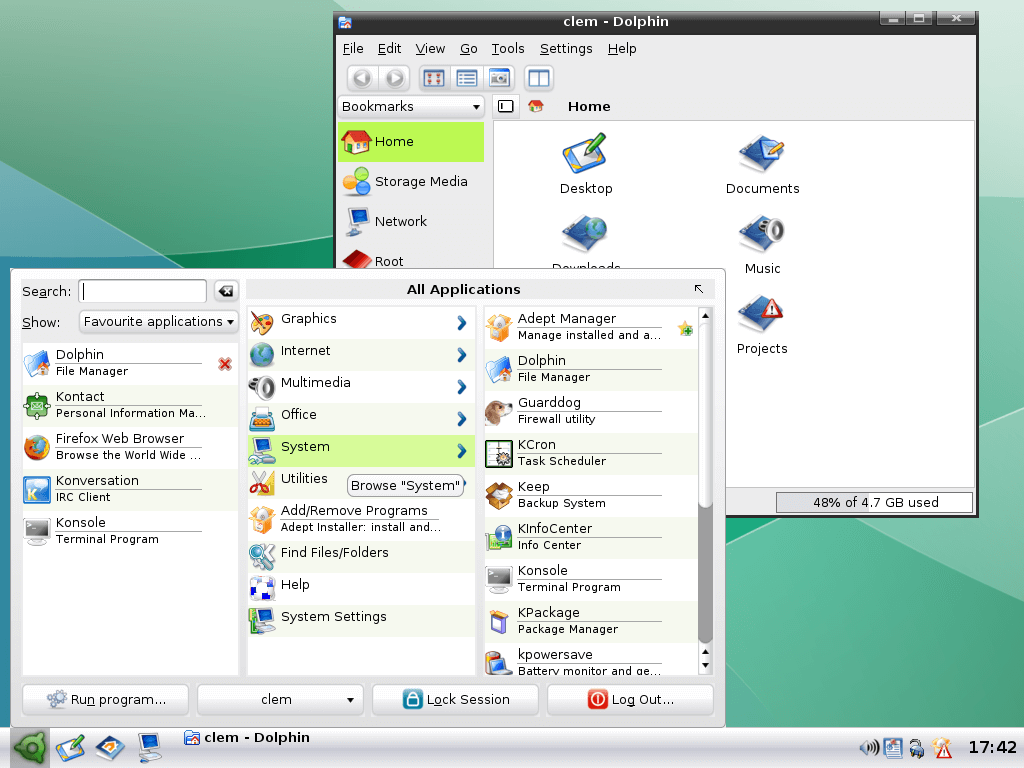 Only in Mint 13 was support for the native Cinnamon desktop environment added. After several releases, Cinnamon changed the interface to GNOME, turning it into a full desktop environment with its own server interface.
A number of important sub-projects for Mint are underway under the Cinnamon roof:
Cjs, Gjs fork, Cinnamon JS interpreter
Cinnamon Control Center, a fork of GNOME Control Center
Cinnamon Desktop, a fork of the GNOME desktop, contains schematics for most of the Cinnamon components, such as org.cinnamon.desktop.screensaver, as well as a small library of support functions
MDM Display Manager, a fork of GDM
Cinnamon Menus Muffin window manager, a fork of Mutter/Metacity
file manager Nemo, a fork of Nautilus
Cinnamon Translations translation package
Most of the mini-tools for Mint (mintDisk, mintDesktop, mintInstall, mintUpload, mintAssistant) were written by Kleman himself in Python and Glade, with a little use of Perl and bash scripts.
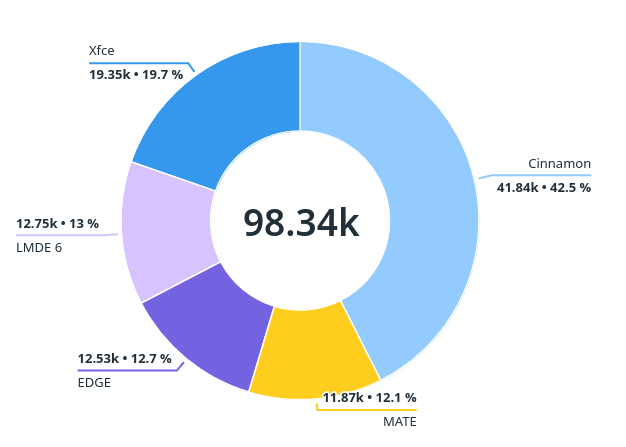
Mint quickly grew in popularity and was soon named “the most popular free OS in the world” according to DistroWatch.com page views.
Mint now holds the top spot in ratings, but has dropped to second in overall popularity, behind MX Linux. Such leadership for 18 years is noteworthy.
The popularity of Mint ensured maximum focus on convenience and ease of use for average users. Among the excellent features:
Full operation “out of the box” immediately after installation
Multimedia support for proprietary software, including all multimedia codecs (Kleman vs. boycott of proprietary software)
Cinnamon’s own desktop interface
A handy Windows/Mint multi-booter of choice
Technically, Mint is positioned as a full-fledged replacement for Windows: without viruses, with better performance, not demanding on resources, does not require disk or registry defragmentation, and is fully configurable
The system can work with LiveCD without installation
A complete set of programs for work: LibreOffice office suite, Steam games, Blender 3D editor
In general, the optimal combination of stability, reliability, performance and convenience.
Recent Mint news includes a partnership with analytics company Datadog. They provided advanced analytics for different versions of the distribution. It’s not just about monitoring and analyzing logs, it’s also a customized set of tools with parsers, metrics, and measurements to track critical information in real-time. All data comes from website pages and there is no telemetry inside the distribution.
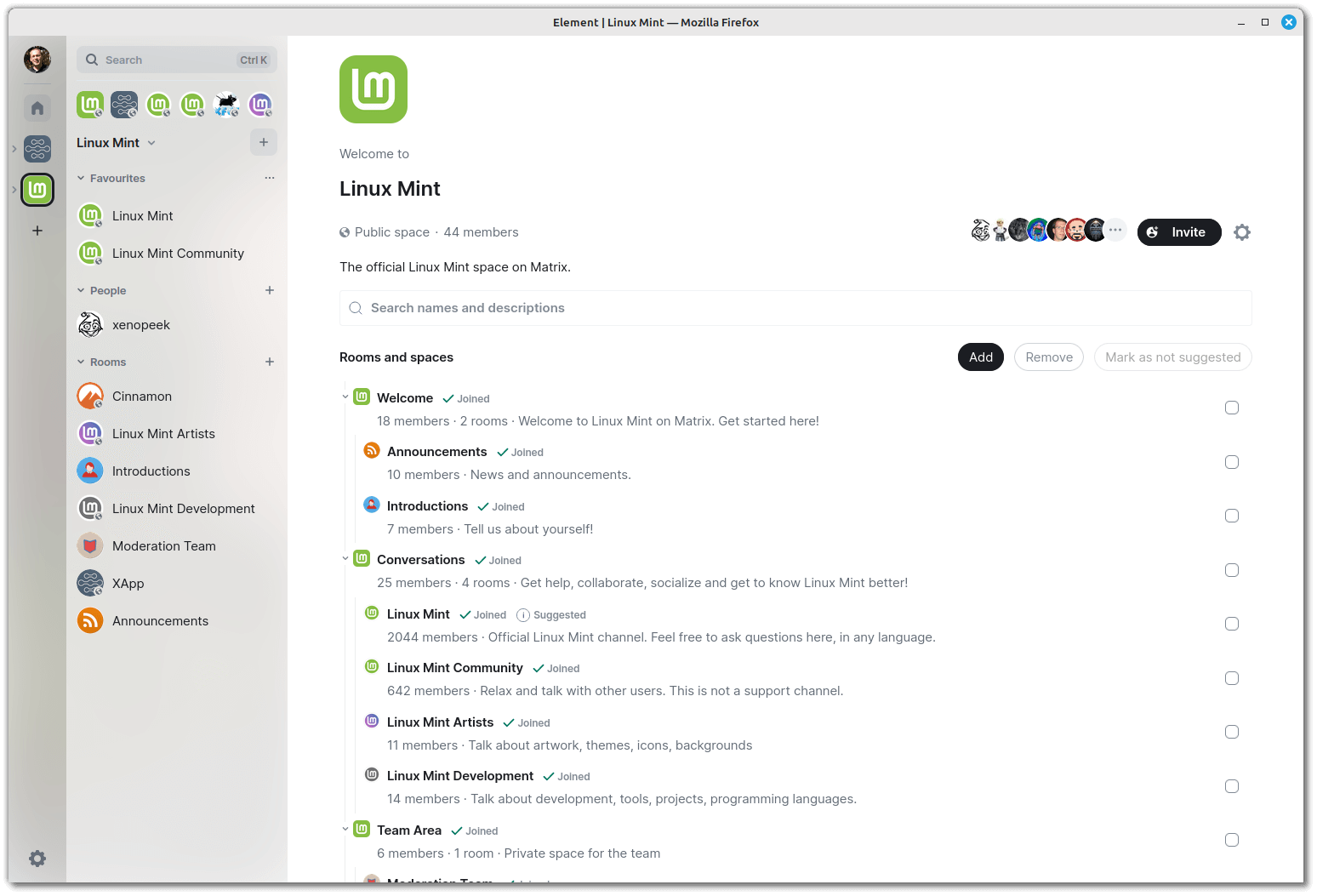
Jargonaut was once chosen as the default IRC client instead of Hexchat, but starting with Mint 22 it was decided to switch to Matrix and Element. They will be installed on the system, and the Element client will immediately connect the user to the Linux Mint space in the Matrix:
In the spring of this year, important strategic decisions were also made regarding the support of the universal XApp application. It is very important that as many such applications are released as possible.
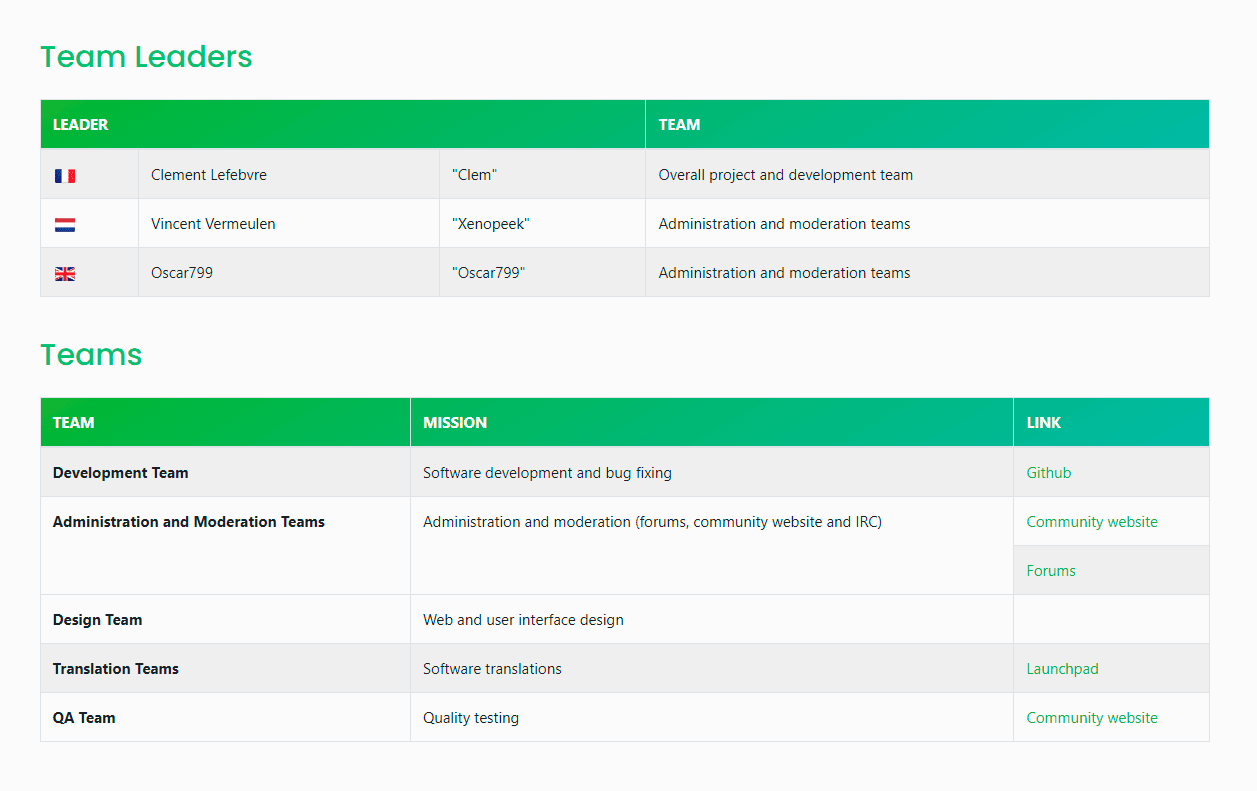
Therefore, Clement Lefebvre looks like an average developer who has turned around several companies and built a fairly standard career in the IT industry. Everything changed in 2006 after the release of the Linux Mint distribution, which became the most popular operating system in the FOSS world. Lefebvre continues to lead mint development and is involved in all processes. The project itself includes two staff members to manage volunteer groups such as development, design, management, moderation, interface translation and quality control.
“Linux Mint started as a hobby, something I did in my spare time. This hobby grew and now I do it full time, every day, and I have no free time for anything else. I have the support of many people and the community, and two other people who work with me full-time [another was fired in scandal after he started using the corporate repository to express his emotions – ed. prov.]. I’m not interested in Linux Mint growing fast [as a business]. Searching for investments, funds, renting an office, assigning a position to myself and daily management of dozens of hired programmers in the office – I don’t need that. I like what I do, I work with passion, from home, without commercial ties to anyone.”
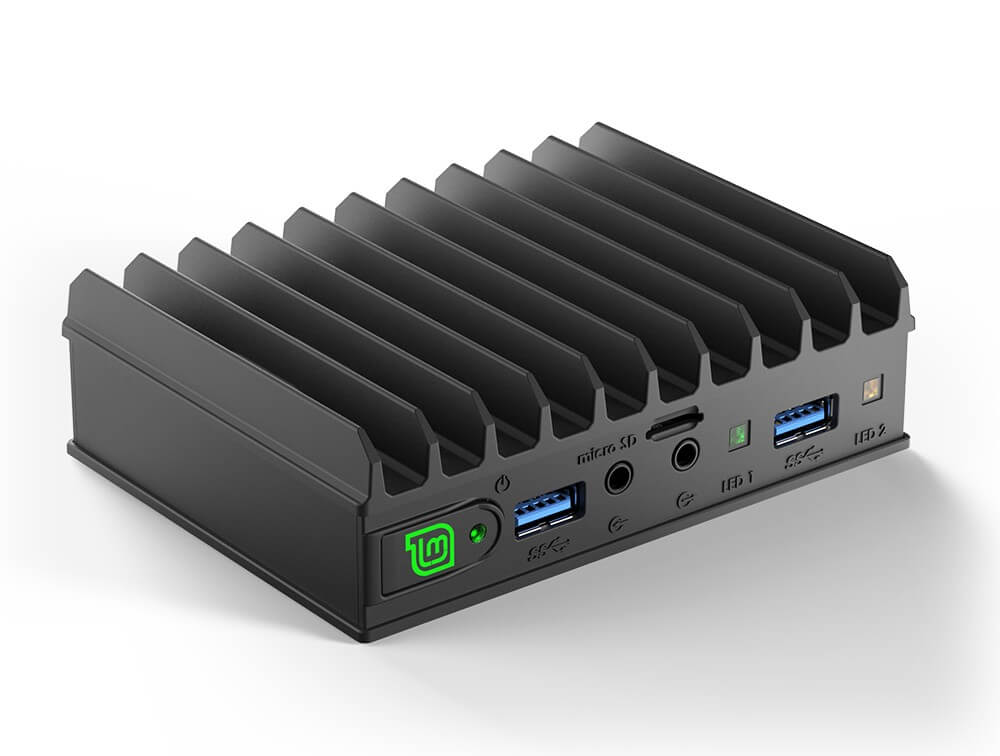
The mint collects about $99,500 a month in personal donations from private individuals. In addition, the project has 13 corporate sponsors. There are also great items for sale, such as this silent Mint Box Mini 2 :
There is one strange fact: since 2008, Lefebvre is considered the director of a small private firm Syslin Ltd., which is written for three Indian brothers, and the staff consists of two people.
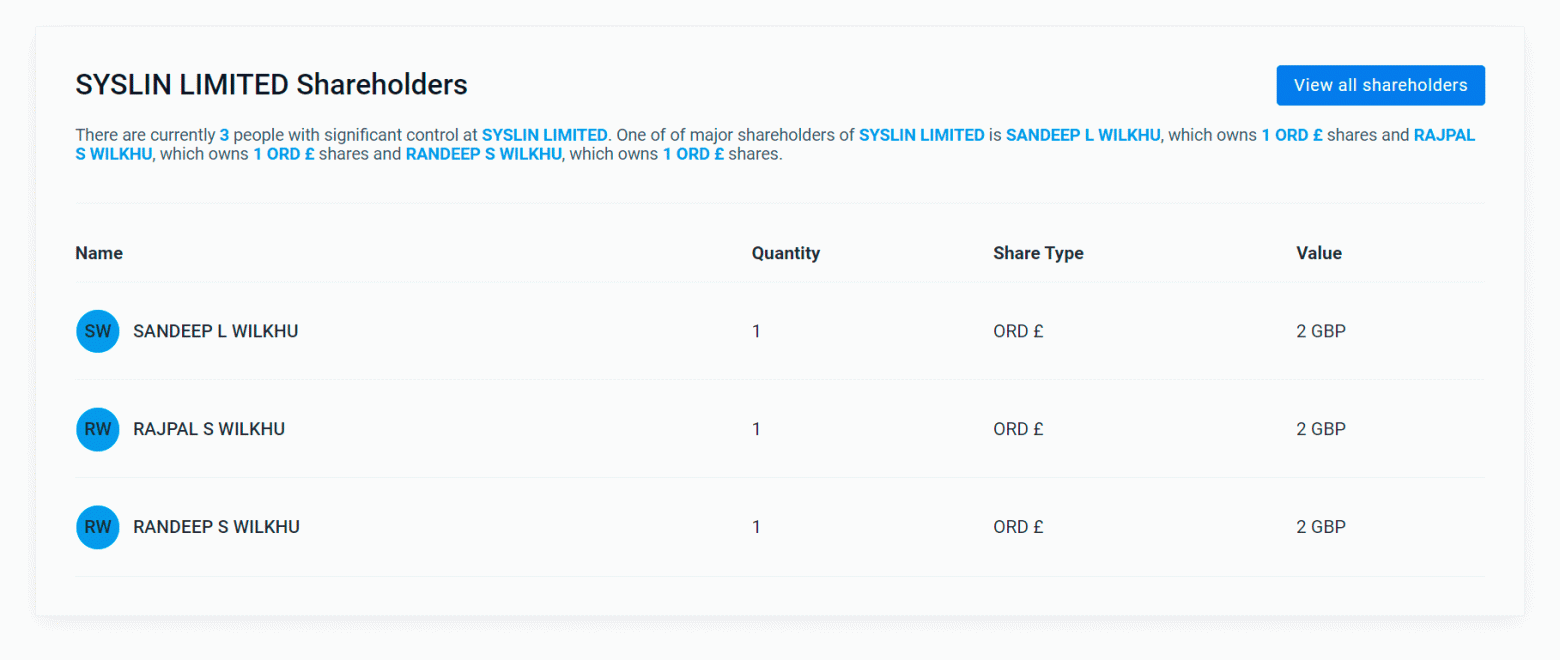
Perhaps the company offers Consulting services, and the Indians are “serial sponsors” registered to facilitate legal and tax procedures in dozens of different companies, and no one knows it.Be that as it may, since 2008 Clement leads a modest family life in a quiet Irish town, does not need anything in particular and has raised two children (the 13th version of the mint system is named after his daughter Maya). He works only on one project – MINT, takes a small part in MATE, has no time for rest.
Clement Lefebvre, the creator of Linux Mint and the distribution, is another example of how free software can greatly benefit people and bring relative financial well-being to its creators.
Clement recalled his first steps in Linux, explained a few questions and thanked the experts who put up with him: “today’s Linux community is completely different.
Linus Torvalds talks a lot about open source and connects its principles with personal freedom. This is exactly what attracts millions of Linux fans around the world.