12.01.2024
9 min
1365



Kenyan ammunition discovered in RSF warehouses near Khartoum has caused a loud international scandal. Boxes marked Kenya MOD have raised suspicions about Kenya’s possible involvement in the armed conflict in Sudan. The discovery of such supplies calls into question compliance with the UN embargo and raises the question of indirect arms supplies via third countries.
Journalists from the Kenyan newspaper Daily Nation have discovered boxes of ammunition with Kenyan markings at a suspected Republican Security Forces depot near Sudan’s recently recaptured capital, Khartoum.
Although they were unable to independently verify the contents of each box they found, among the captured weapons displayed by the Sudanese Armed Forces (SAF), canisters of ammunition matching the labels on the boxes were found nearby.
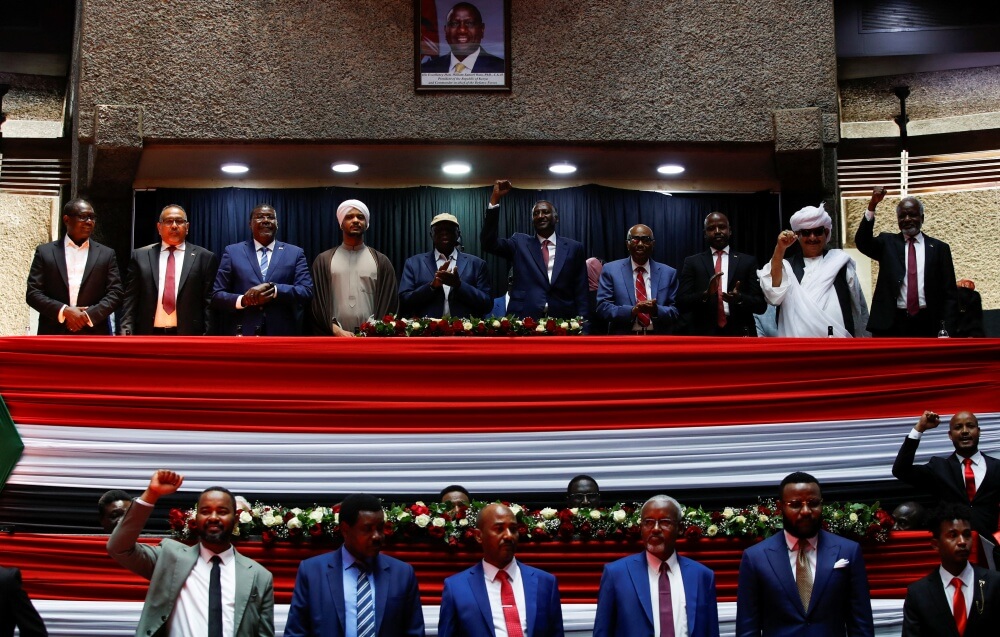
The confirmation of the boxes of ammunition in Sudan raises new questions about Kenya’s involvement in the conflict following a high-profile visit to Nairobi earlier this year by the head of the Rapid Support Forces, General Mohamed Hamdan Dagalo.
In response to the visit, the Sudanese government banned all imports from Kenya due to perceived close ties between the Ruto government and General Dagalo, commonly known as Hemedti.
The Kenyan government defended the decision to host Hemedti, stating that their aim was to promote dialogue and peace, and stressing the importance of engaging all parties involved in the conflict.
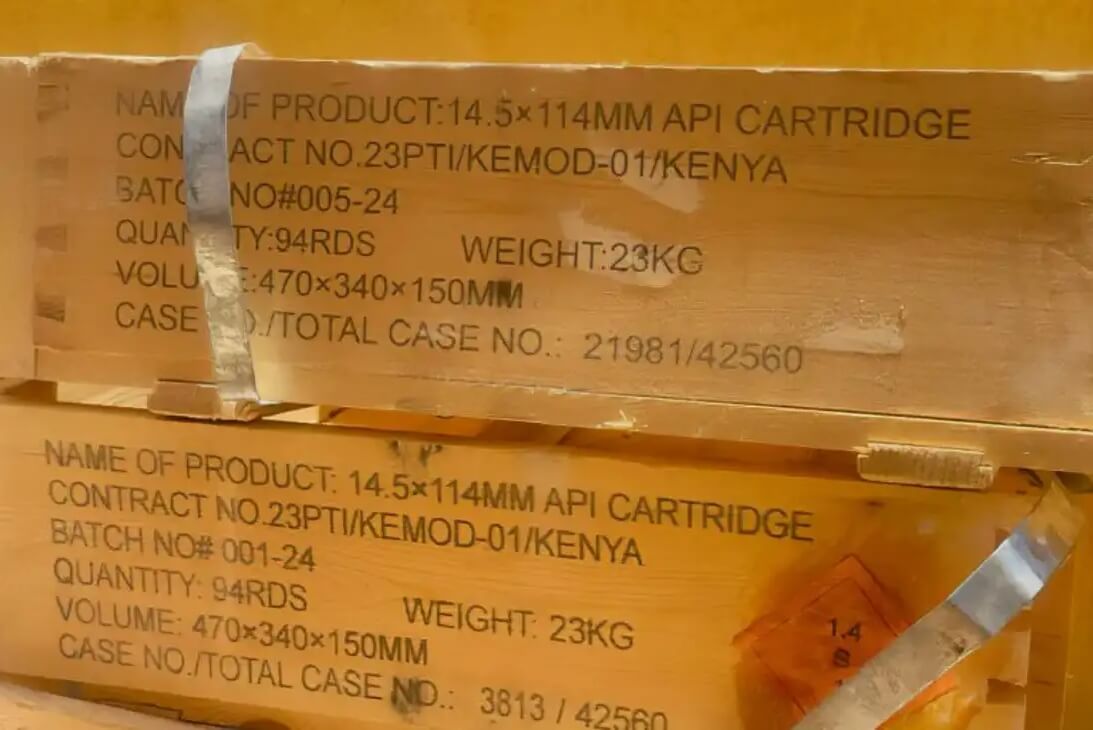
Although the Kenya Ordnance Corporation (KOFC) claims on its website that it manufactures small arms ammunition, it does not mention the production of the larger 14.5×114mm rounds and the Chinese-made HE PP87 mortar shells found in this investigation.
Daily Nation journalists contacted the Kenyan Ministry of Defence to inquire about the marked boxes found in Sudan and how the weapons could have ended up there. They also asked whether it was Kenyan government policy to provide ammunition or weapons to the Rapid Support Force, and how this fit with its stated commitment to promoting peace and dialogue in the region.
In response, the Ministry of Defence said it did not recognise the boxes or the labels on them and distanced itself from the allegations. His response appears to be limited to domestically produced ammunition and internal records. It does not mention whether Kenya has made any imports, international transfers or diversions of the relevant weapons or ammunition. This statement leaves key questions regarding the Sudanese connection unclear.
“After reviewing the photographs provided, we wish to state that we do not recognize either the boxes or the inscriptions on them.”
The Kenya Ammunition Corporation, and therefore the Ministry, is aware of the confidentiality of the ammunition it manufactures and as a result has clear records of its supplies within and outside Kenya. In addition, and to ensure public safety, the plant is frequently audited by regulatory and external oversight bodies.
The Ministry of Defence therefore distances itself from the allegations you made earlier.
The agency also stressed its full commitment to the rule of law and assured that its activities are carried out solely within the mandate defined by the Constitution and applicable laws.
Justin Lynch, managing director of Conflict Insights Group and a researcher from Sudan, said the discovery of the boxes was further evidence of Kenya’s political and logistical support for Reporters Without Borders (RSF).
Sudan is in the midst of a civil war between two rival factions, the Sudanese Armed Forces (SAF) and the paramilitary Rapid Support Forces (RSF).
An ammunition dump near the Sudanese capital was captured on video by Sudanese Armed Forces (SAF) soldiers who were taking part in the final operation to retake the city from the Republican Security Forces (RSF), which had controlled Khartoum and surrounding towns for much of the civil war.
On May 20, the SAF announced the recapture of the last remaining areas of resistance in Khartoum, its twin city of Omdurman, and the neighboring city of Bahri, saying the three areas were now completely free of RPF forces.
The re-capture of the capital has led to the publication of a large amount of video and images. Including video that appears to show supplies being used by security force reporters.
A 2005 UN arms embargo remains in place, prohibiting any country from supplying weapons to Darfur, Sudan, a region that has seen fierce fighting since the start of the civil war.
However, Amnesty International and Human Rights Watch have identified weapons manufactured in China, Iran, Russia, Serbia and the UAE being used in the conflict.
In May, the Sudanese government filed a lawsuit at the International Court of Justice in The Hague, accusing the UAE of complicity in genocide for its role in supporting the Republican Security Forces (RSF). The UAE has strongly denied supporting the RSF. The case was dismissed because the UAE is not a signatory to Article 9 of the Genocide Convention.
Both sides in the conflict have been accused of war crimes, and the security forces have been accused of ethnic cleansing in certain areas, particularly around Darfur. The UN says more than 24,000 people have been killed since the fighting began in 2023 following a peaceful civilian uprising against dictator Omar al-Bashir. More than 11 million people are reported to have been displaced.
While there are detailed reports of the routes used to transfer weapons between the UAE and Sudan’s neighboring countries, including Chad, specific details about how the Kenyan ammunition crates ended up in the country remain scarce.
On May 19, after weeks of reports of intense fighting with the Republican Security Forces, soldiers from the Sudanese Army and allied forces released video clips claiming to be in the Salha area, south of Omdurman, across the Nile from Khartoum.
Open sources have uncovered three videos showing boxes of ammunition marked with Kenyan Ministry of Defense (KMOD) markings allegedly left by RSF forces at an unknown warehouse, most likely in the Salha area.
Open sources on social media have identified the soldiers present at the warehouse next to the ammunition as a major from the Sudanese Army’s General Intelligence Service (GIS) and at least one other young Sudanese soldier. Both are believed to have been at the site during the Salha area operation.
Video 1, Video 2, and Video 3 show soldiers searching through several rooms containing crates and discussing armor allegedly left behind by the Republican Security Forces. Photos of the same crates with the same label from the Kenyan Ministry of Defense circulated on social media for some time earlier this year. However, until these newer videos emerged, it was difficult to determine the geolocation in Sudan.
In Video 3, the speaker mentions the discovery of ammunition and repeats the location of the ammunition several times, “Salha.”
In Video 1, an Arabic speaker is heard saying, “But by God, you will not be able to fight anymore and you will not defeat us, is this the work (equipment) you are leaving behind?”
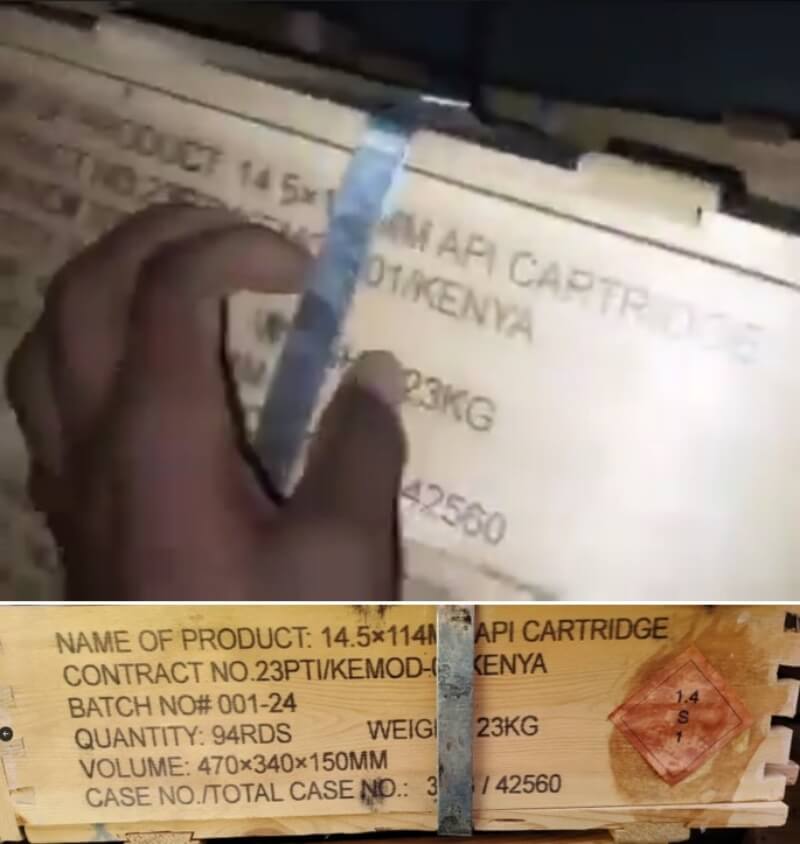
Video #1 shows a man inside a depot wearing a tattered T-shirt, glasses, and white tasbeeh prayer beads. Other videos show what appears to be the same man wearing similar clothing and accessories. Elements in the background suggest that the video was indeed filmed in Salsa, Omdurman, along the main road. (15.5479, 32.4273).
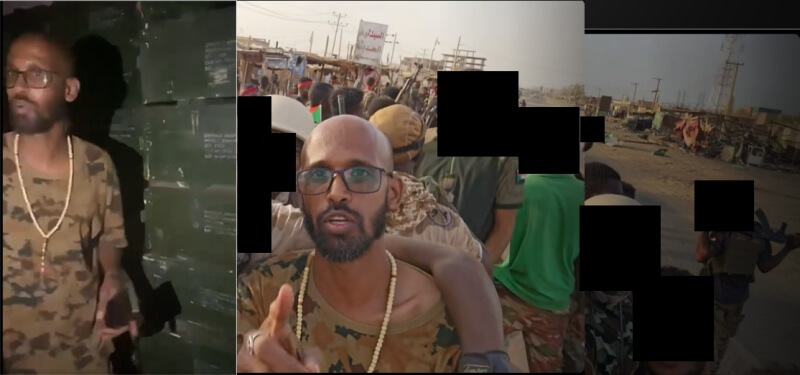
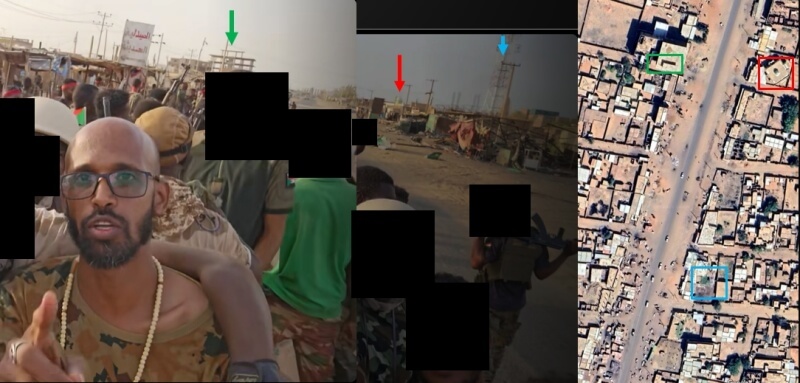
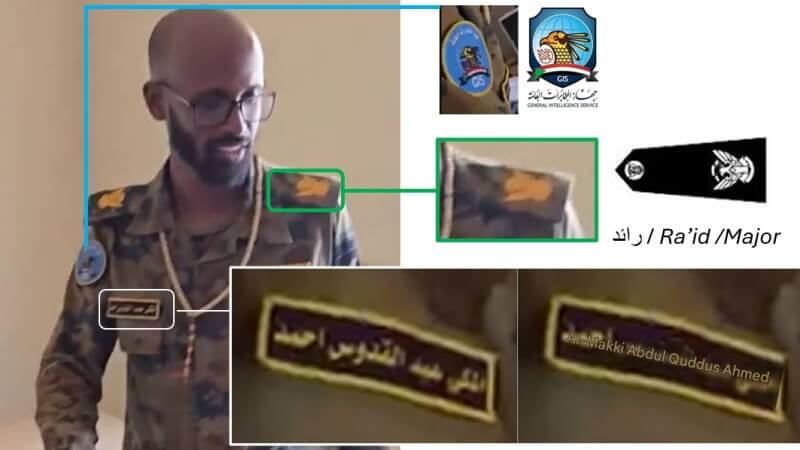
We have identified the soldier pictured above as a Major (Raida) from the General Intelligence Service of the Land Forces, as evidenced by his insignia and uniform patches seen in another video that circulated on May 20. His name is likely Al-Makki Abdul Quddus Ahmed.
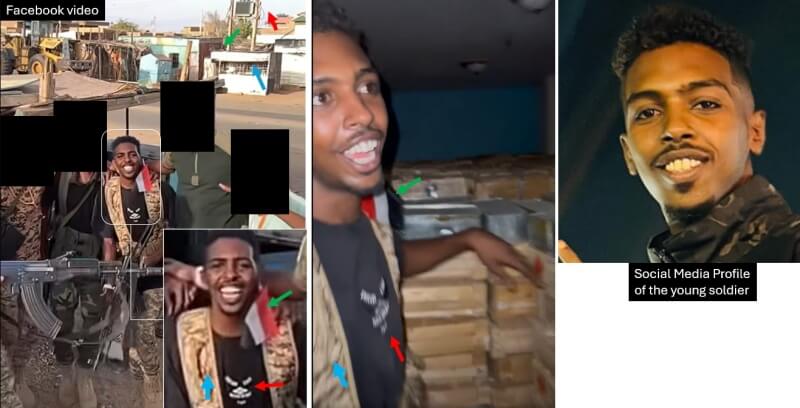
Similarly, in another video, filmed approximately 150 meters from Major Al-Makki, here (15.546947, 32.427022) A second man seen in the video from the ammunition depot has been identified. In both videos, he is seen wearing the same clothing with a small Sudanese flag on his left shoulder.
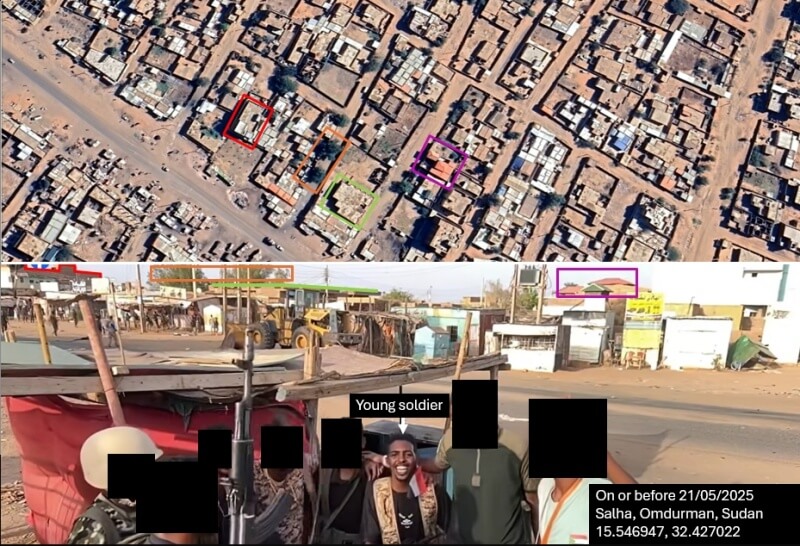
All of the videos analyzed were released between May 19 and 21. The geolocation of the soldiers captured in the footage points to the market area of the Salha district in southern Omdurman. This is consistent with the SAF retaking the city. Aljazeera reported that the SAF had fully regained control of the area by May 20.
While the exact location of the warehouse could not be confirmed, confirmation of the presence of soldiers in the Salha district, as well as information from open sources, strongly suggests that the warehouse is indeed located in the Salha district of Omdurman.
We compared the labels on the boxes located near the Khartoum warehouse with other images of boxes of Kenyan ammunition, reportedly also from Sudan. The labels show text in English, including the product name, contract number, batch number, quantity, volume, box number and total box number.
It should be noted that while the boxes are labeled with contractual and technical information, we cannot be certain of the origin or manufacturer of the ammunition. However, there are important details that should be highlighted.
Daily Nation reporters contacted Conflict Armament Research (CAR), a British organization that tracks illegal weapons, and provided them with images of the discovered boxes of ammunition.
They said that the labels indicate that the boxes of ammunition are part of the same contract (No. 23PTI) and were delivered to the Kenyan Ministry of Defense (KEMOD-01).
“The markings on this box match other boxes we have seen, which we believe were delivered under a Kenyan contract,” they added.
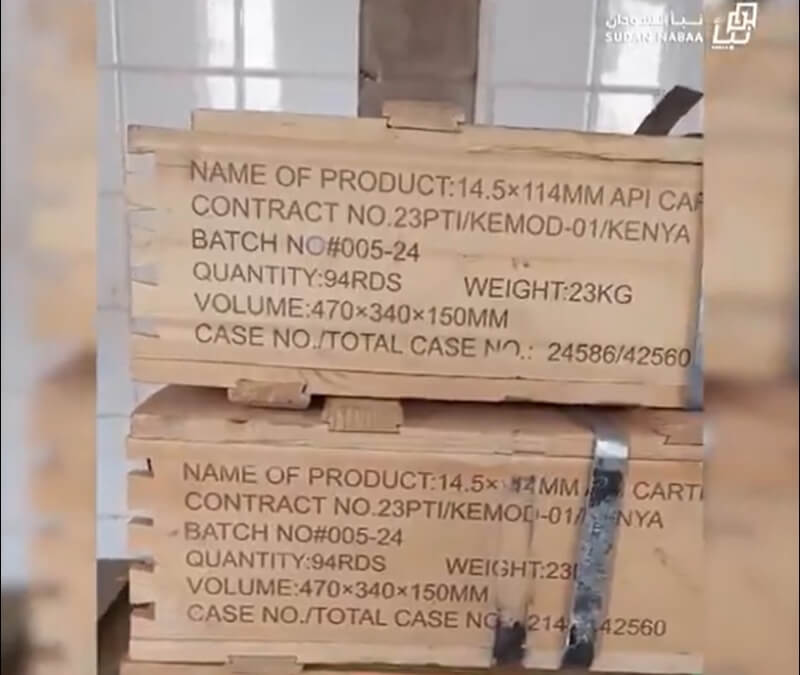
CAR also noted that many of the boxes indicate delivery after 2024 – when the Sudanese civil war was at its height.
“Three batch numbers are visible (001, 002 and 005-24), all of which indicate a probable delivery in 2024. This is significant as it proves that the box was diverted to Sudan after the war began in April 2023.”
Adding that “there is no marking that would identify the manufacturer. However, it should be noted that the calibers mentioned above are not NATO calibers, so it is unlikely that they were manufactured in the West.”
According to experts consulted, the type of ammunition indicated on the labels is 57 caliber (14.5×114 mm) armor-piercing incendiary (API) rounds.
Former Royal Artillery officer and Chiron Resources director Chris Cobb-Smith told us that the 14.5×114mm (.57 caliber) is a heavy machine gun and anti-materiel rifle cartridge used by the Soviet Union, former Warsaw Pact states, modern-day Russia, and other countries.
Although the boxes do not state this, Cobb added that this type of cartridge was produced in Bulgaria, China, Egypt, Hungary, Iraq, North Korea, Poland, Romania, Russia, and the former Czechoslovakia.
One of the videos we found of these boxes at a warehouse in Salsa, Omdurman, showed cans inside the boxes, and at least one open can next to the boxes showed ammunition matching the specifications on the label. The visible ammunition appears to have a green case and what appears to be a standard black tip.
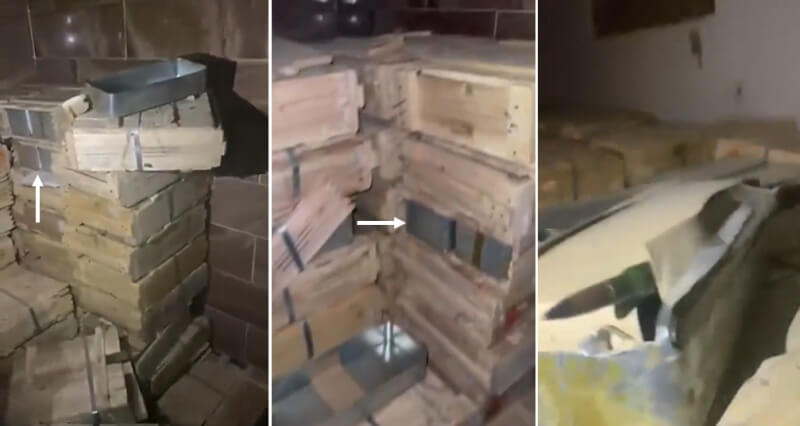
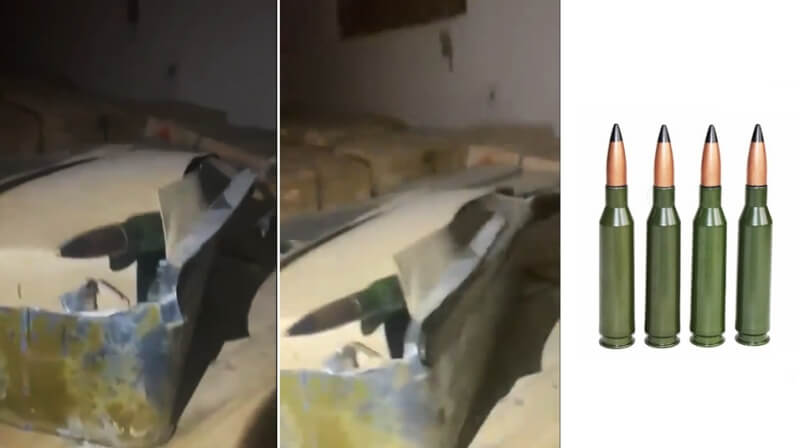
Two additional green boxes, seen in the video showing the Salha warehouse, were also identified. The label appears to indicate that the boxes likely contain (or at least contained) explosives with the specification “82mm high-explosive mortar bomb type PP87.”
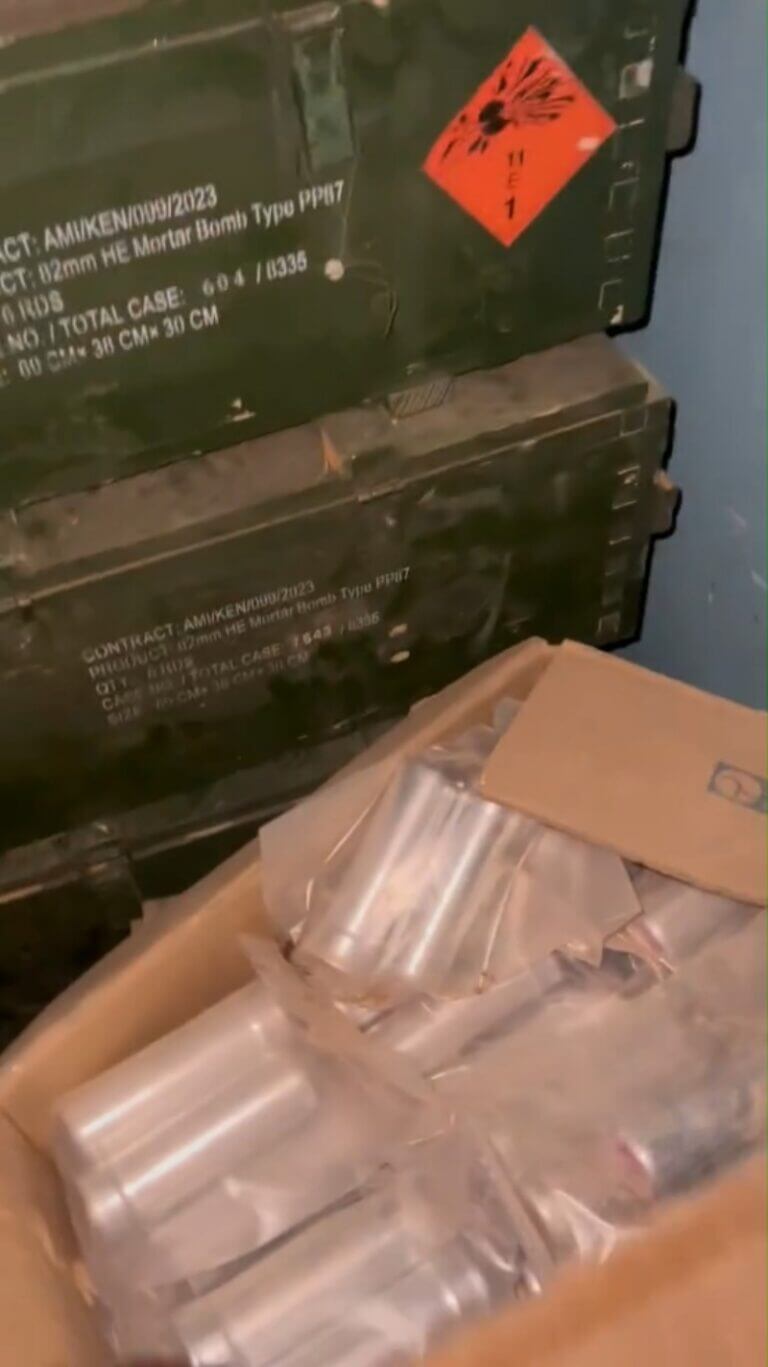
According to CAR, the markings on the box indicate that the box and its contents were likely originally delivered to Kenyan authorities under contract AMI/KEN/099/2023.
Chiron Resources CEO Chris Cobb-Smith noted that the contract number on the boxes indicates that the Kenyan Ministry of Defense purchased the mortar bombs from China as early as 2023. He added that it was not yet possible to determine whether the munitions were immediately diverted or not.
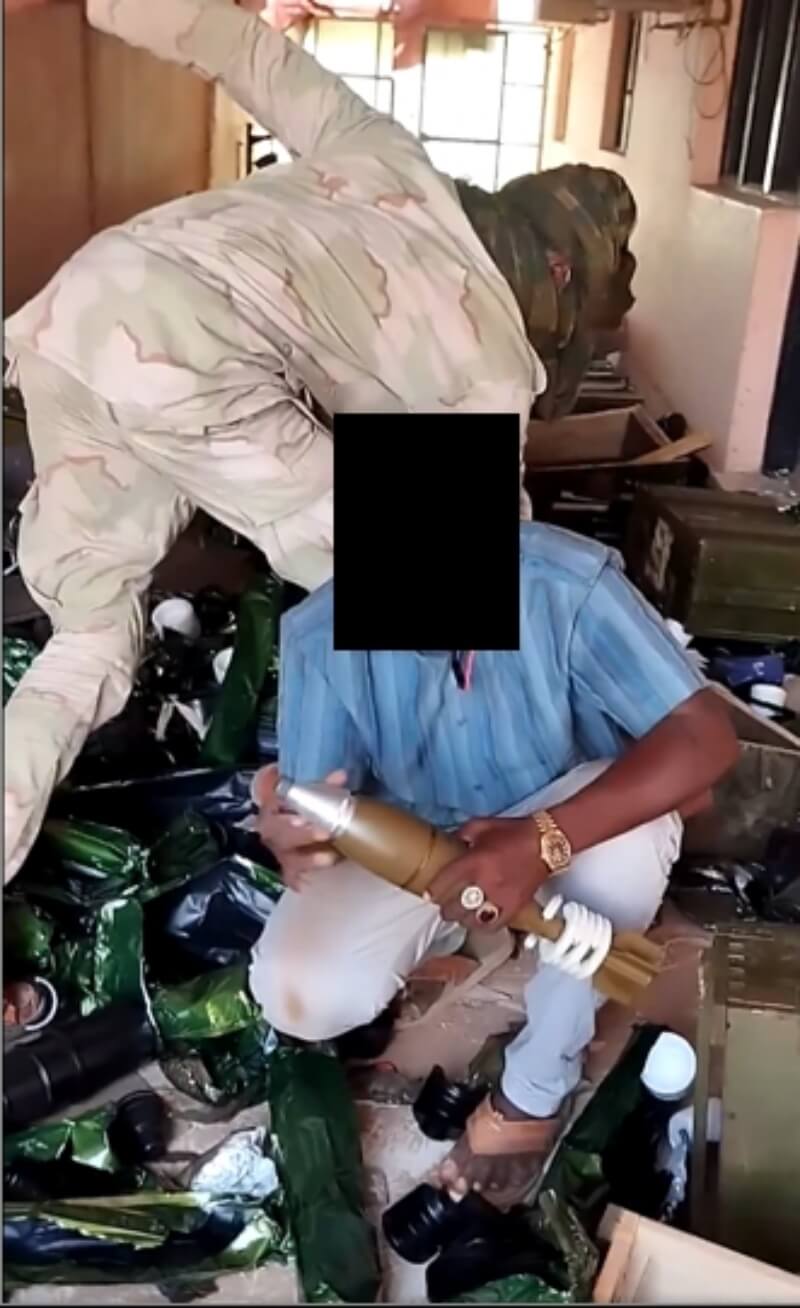
In 2024, Human Rights Watch reported that the RSF was likely using these Chinese-made mortar bombs. This video shows a man in RSF camouflage and another in civilian clothes unpacking an 82mm high-explosive mortar bomb, the PP87 type. HRW was unable to verify RSF’s claims that they had seized these new mortar munitions from the SAF. Amnesty International has also reported on the use of these weapons in Sudan.
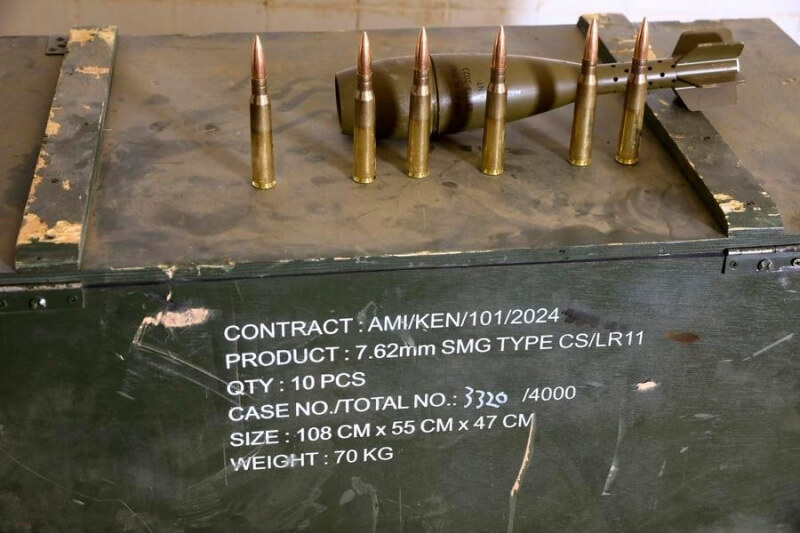
We also found another example of these bombs among other munitions captured by the SDF that were on display in Khartoum in early May. The Chinese-made bomb was photographed next to another box with a Kenyan label indicating that it contained 7.62mm submachine guns or CS/LR11 TYPE semi-automatic rifles sold by the intermediary China Jing An Import & Export Corporation (CJAIE).
There have been several reports of Chinese-made weapons being used by the RBF. In April, the Sudanese government summoned China’s chargé d’affaires in Port Sudan over the RBF’s use of Chinese-made drones. China has stressed that it “has nothing to do with the presence of these drones and has no connection with the RBF.” Earlier this month, the Sudanese media outlet Ayin used open sources to identify Chinese-made weapons in the hands of RBF fighters.
During a separate alleged seizure of weapons and ammunition displayed by the SPS at the Engineering Corps building in Omdurman (15.609734, 32.480369), similar boxes were observed, but with the stenciled label removed.
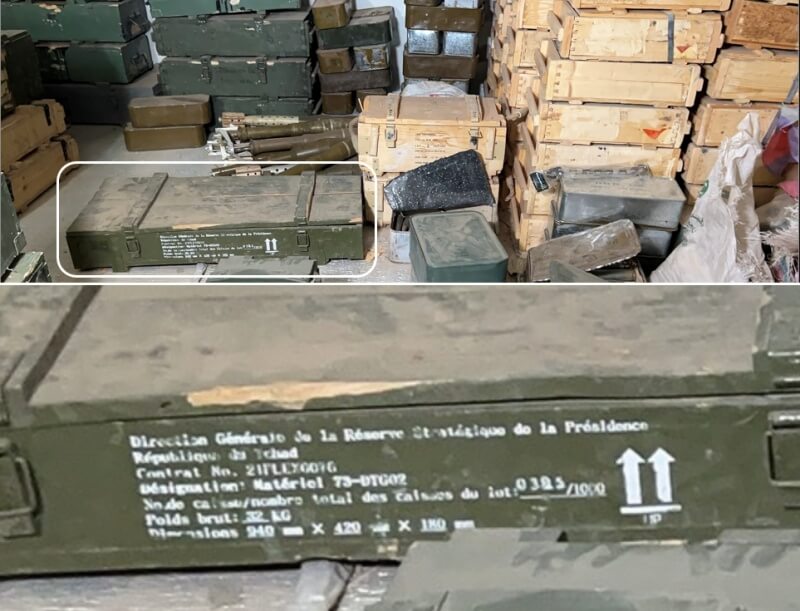
Next to the crates is a green box with a stenciled label that appears to read:
« Direction Générale de la Réserve Stratégique de la Présidence … République du Tchad»: Directorate General of Strategic Reserves (DGRS) of the President of the … Republic of Chad.
The label on this box indicates another designation, “73-DTG02”. According to the Collective Awareness of Unexploded Ordnance (CAT-UXO), this designation is believed to be a Chinese 73 mm high-explosive fragmentation dual-purpose (HEDP), high-explosive anti-tank (HEAT) missile with anti-personnel (AP) fragmentation and stabilized stabilizer.
The UAE is accused of supplying the Sudanese Republican Security Party via an airstrip in Chad. Dozens of flights from the UAE appear to have used the airstrip at Amjaras in eastern Chad since the war began in April 2023.
The discovery of the Kenyan-marked ammunition crates is further evidence of Kenya’s political and logistical support for the Security Reporters, said Justin Lynch, managing director of Conflict Insights Group and a Sudan researcher.
He said the UAE has used Kenya and other African states as a political and logistical hub to support the Rapid Support Force.
“It is hardly a coincidence that immediately after the RSF public conferences in Nairobi, the UAE provided a $1.5 billion loan, and there has also been a sharp increase in suspicious shipments from the UAE to the RSF transiting through Kenya,” Lynch said.
Kenya is reportedly set to receive the first $500 million tranche of a $1.5 billion commercial loan guaranteed by the United Arab Emirates (UAE) next week.
Despite losing control of the heart of the country, the Republican Security Forces (RSF) still control vast swaths of Sudan, including Darfur in the southwest of the country, where the UN says the violence is causing one of the world’s worst humanitarian crises.
As long as the conflict continues, questions about who is supplying weapons and support to the warring parties will remain open.