31.05.2024
4 min
1357



An investigation into Alabuga’s payment records points to a possible link between the production of Iranian Shahed drones in Russia and specialists who worked with nuclear technologies.
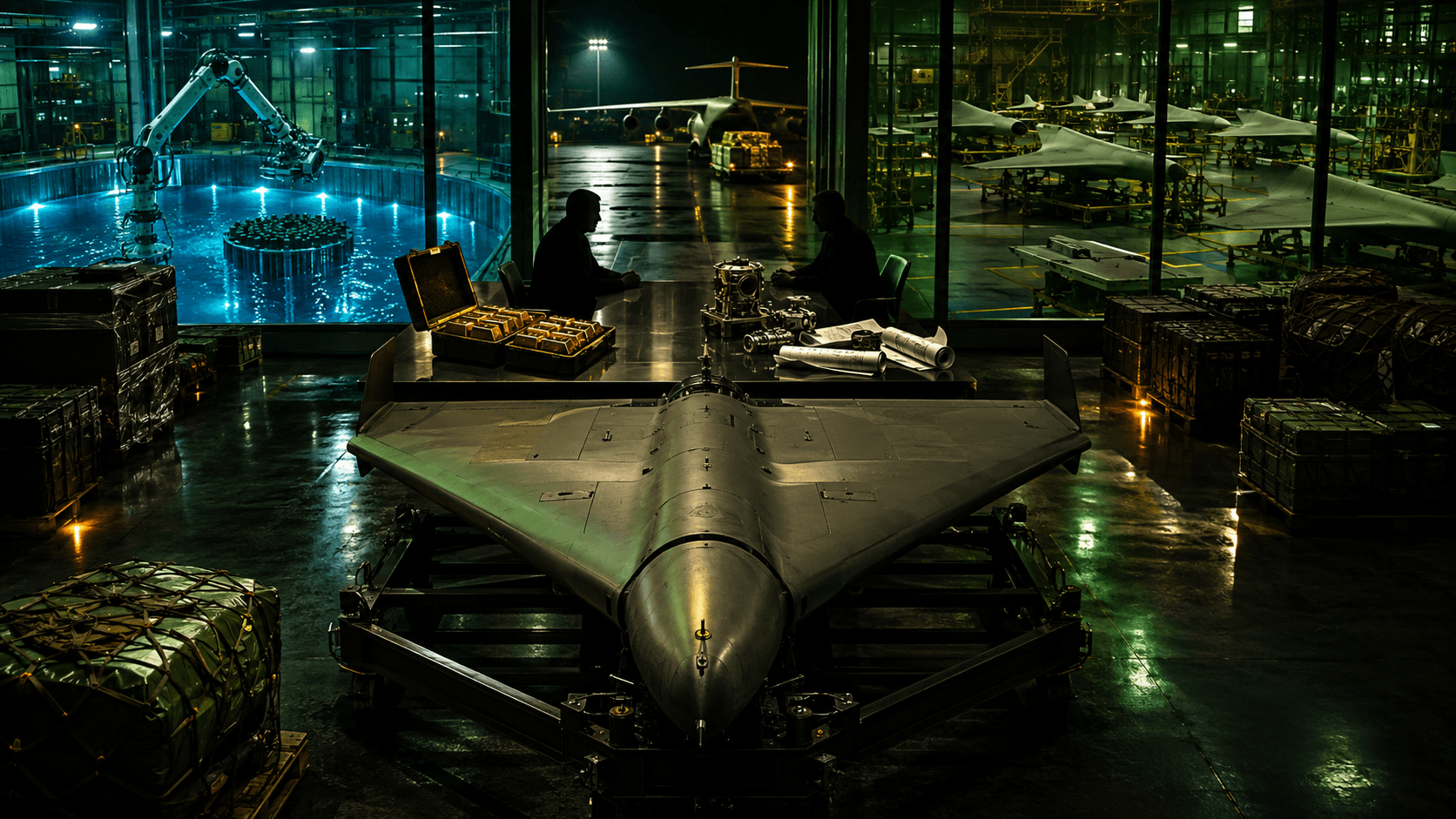
On March 10, 2023, an Alabuga delegation flew from Moscow to Tehran. Alabuga is a Russian special economic zone in Tatarstan where the production of Shahed attack drones was established under an Iranian license. Two people on the passenger list attracted particular attention because their professional backgrounds had little connection to aviation or drone development.
One of them was Russian engineer Dmitry Shubnyakov. According to the documents, he was hired by Alabuga as a digital electronics software engineer. He was assigned to a unit responsible for what internal records referred to as “motorboats.” This was the code name used by the Russians to conceal their domestic production of Shahed drones (1, 2, 3).
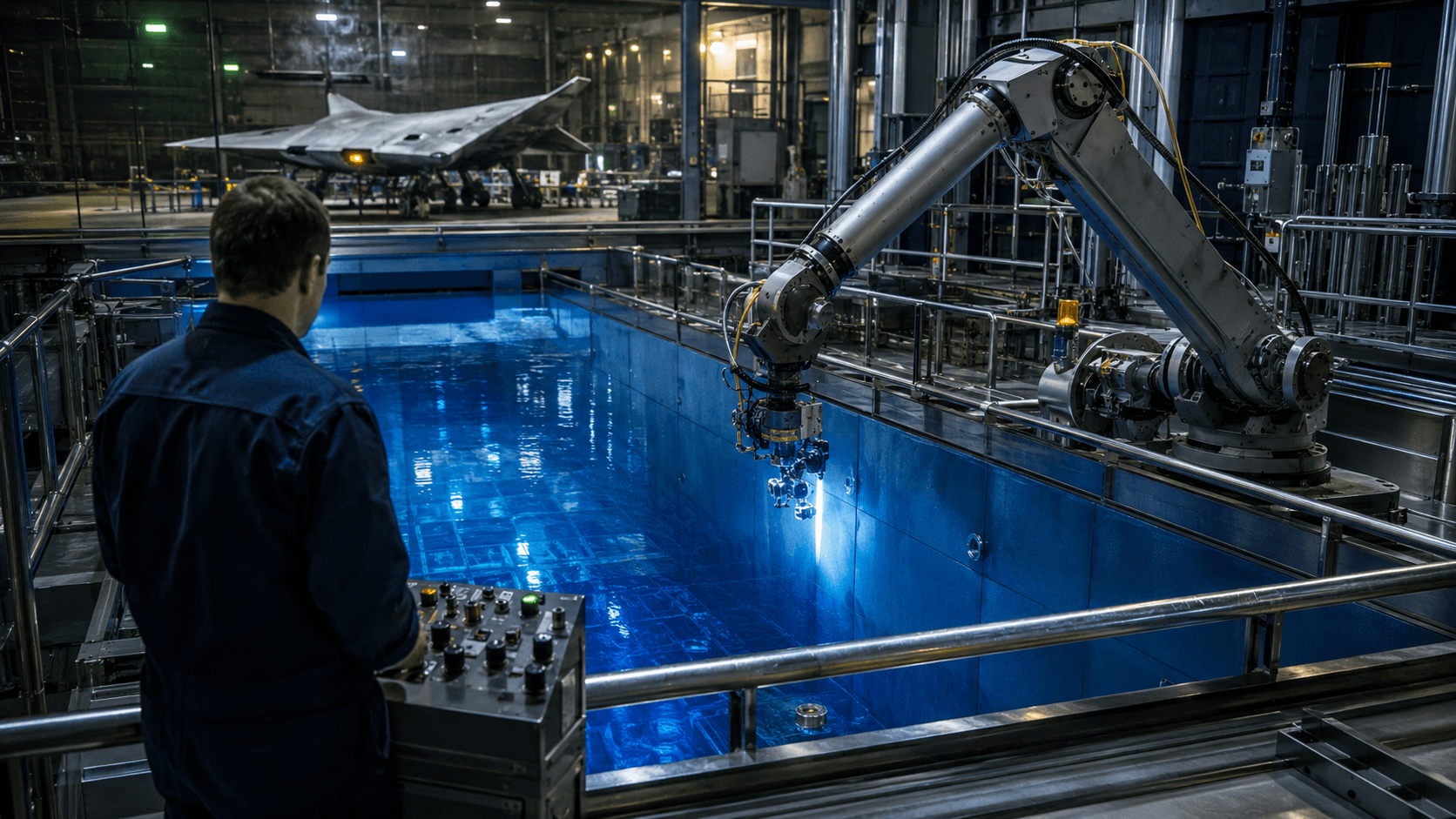
Shubnyakov’s previous career, however, was connected not to unmanned aircraft but to nuclear infrastructure. He had worked with spent nuclear fuel, facilities associated with weapons-grade plutonium, and robotic systems used to maintain them. Ten days before the flight to Tehran, the engineer was named among the inventors in an application submitted to Iran’s national patent registry. The invention concerned equipment for detecting and repairing leaks in spent nuclear fuel storage pools.
The second passenger was a man identified in the documents as Saeed Darki. An Iranian researcher with the same name lives in Yekaterinburg and works and studies at Ural Federal University. His academic publications focus on metal forming under pressure. Such technologies are used, among other applications, in the manufacture of nuclear fuel storage containers. In July 2025, a person with the same name received a payment from Alabuga.
These coincidences raise an obvious question: why would a company producing attack drones pay specialists with experience in the nuclear industry? Molfar analysts found both men in Alabuga’s financial records covering the period when Russia was receiving drone-production technology from Iran. The researchers suggest that the payments may have been royalties for inventions and research. The possibility that nuclear technology was transferred directly would require much stronger evidence.
Dmitry Shubnyakov grew up in Desnogorsk, a satellite city of the Smolensk Nuclear Power Plant (1, 2). It was also where he began his professional career.
From at least 2012, the engineer worked at the Moscow-based Special Design and Technology Bureau for Applied Robotics, also known as SKTB PR. The organization began by developing remotely operated machinery used to deal with the aftermath of the Chornobyl nuclear disaster.
The bureau’s list of customers names Rosatom and the Russian Ministry of Defense first. As of April 2025, the organization was also included in a classified Russian register of defense-industrial enterprises.
Between 2015 and 2018, SKTB PR received government contracts from four organizations controlled by Rosatom. Two of them were involved in developing nuclear weapons, their components, or nuclear munitions. Another specialized in decommissioning industrial uranium-graphite reactors. Facilities of this type were originally designed to produce weapons-grade plutonium.
Shubnyakov did not play a minor role in these projects. In materials related to his patents, he described himself as the lead specialist managing a team of 60 people.
While working at SKTB PR, the engineer became a co-inventor on three patents for a robotic system designed to repair the lining of spent nuclear fuel storage pools. Two of the inventions were registered in Russia, while a third international application combined both technologies. The patent’s co-owners included SKTB PR and companies within the Rosatom system.
The combined invention was later submitted for national registration in several countries. Iran was one of them.
An international application does not automatically grant exclusive rights in every country. Instead, it gives the applicant time to seek protection through individual national patent offices. Without national registration, the technology could be used in Iran without paying the patent holder. Once a patent is granted, however, its owner gains the right to sell licenses and collect royalties for the use of the invention.
The Iranian application was submitted ten days before Shubnyakov traveled to Tehran with Alabuga representatives.
The technology concerns equipment for spent fuel pools that can be used at civilian nuclear power plants. However, the problem of damaged pool linings that Shubnyakov’s system was designed to address had also occurred at Soviet reactors used to produce weapons-grade plutonium.
The risk of extracting plutonium from spent nuclear fuel had already become a matter of international concern. In 2005, the United States secured an agreement requiring the spent fuel from Iran’s Bushehr Nuclear Power Plant to be returned to Russia. Shubnyakov’s invention does not prove the existence of a military program, but it belongs to the same sensitive field of safely storing spent nuclear fuel.
In January 2023, Shubnyakov was appointed to two positions simultaneously in the department responsible for supporting “motorboat” production. He was listed as a senior navigation systems software engineer and a senior digital electronics software engineer for the flight control unit, or FCU.
He was dismissed from the first position as early as April 2023. According to the payment records, however, he continued receiving money for his work in the digital electronics unit until at least the summer of 2025.
During this period, Shubnyakov also managed a Moscow-based manufacturer of specialized vehicles, received payments from other companies, and continued working with SKTB PR. In March 2025, he even published a résumé stating that he was looking for a lead engineer position in the Moscow region.
Alabuga’s records also mention his son, Georgy, who was listed as a lead specialist in the FCU group. In October 2024, police stopped him in the Belgorod region during working hours. This was more than 1,000 kilometers from the facility in Tatarstan where he was supposedly employed.
Shubnyakov therefore received payments for work in Tatarstan for more than two years, even though he was simultaneously managing companies, remaining professionally active in the Moscow region, and looking for another job there.
Unlike Shubnyakov, Saeed Darki was not registered as a full-time employee. The documents contain no job title, department, or termination date. They list only his name and the number of an Iranian-format passport. This type of entry appears more consistent with payment for a one-off contract than with standard employment.
Darki has lived in Yekaterinburg since approximately 2019. The city is located in a region with a long history of Soviet nuclear industry development. In 1949, the Soviet Union’s first uranium enrichment plant began operating in nearby Novouralsk.
Darki’s field of expertise is not directly related to nuclear technology. He has co-authored at least seven academic papers (ResearchGate, Academia) covering mechanical engineering, materials science, radial forging, metal forming, and seamless tube production.
One of the papers examines the manufacture of seamless tubes using the piercing process and the properties of the resulting products. The study was added to the INIS database, which is maintained by the International Atomic Energy Agency to catalogue research related to nuclear science and technology. Similar seamless tubes are used in the nuclear energy industry, including in the production of nuclear fuel storage containers.
Researchers from Iranian universities are among the academics who have cited Darki’s publications. Some of them study subjects related to nuclear technology or work at institutions that have been linked to Iran’s missile and nuclear programs.
Developments during the Israel–Iran war illustrated how closely connected this academic environment may be. In June 2025, Israel published a list of 11 Iranian nuclear scientists who had been killed. At least three of them had earned doctoral degrees in Russia. Some were affiliated with universities whose delegations traveled to Russia in November 2024 and expressed interest in laser technologies. One of the scientists on the list had previously cited Darki’s research.
A citation alone does not prove personal contact or collaboration. The author of an academic paper may have no relationship with the hundreds of researchers who later reference it. Nevertheless, these citations help define the professional environment surrounding a person whose name appeared in Alabuga’s payment records.
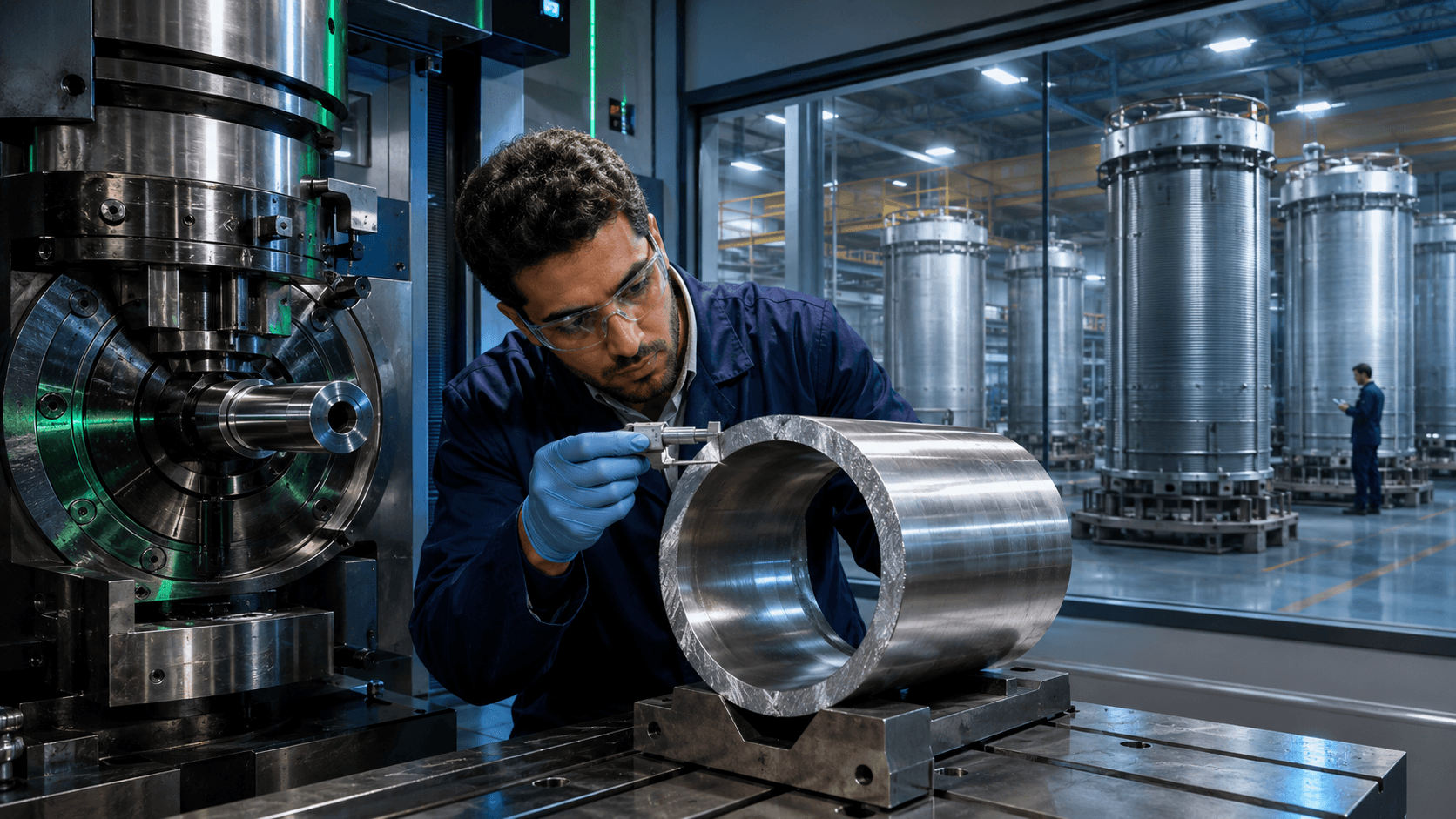
Each of these episodes, taken separately, may have an ordinary explanation. An engineer can move to another company, an inventor is entitled to register a patent abroad, and a researcher may be cited by academics they have never met. However, when these facts are compared with the timeline of Russian–Iranian cooperation surrounding Shahed drones, a series of notable coincidences emerges.
| Date | Cooperation Involving Shahed Drones | Events Related to the Nuclear Sector |
|---|---|---|
| February 28, 2023 | Russia and Iran agree on payment mechanisms for components used in drones procured through Alabuga. | An application is submitted in Iran for the national registration of Shubnyakov’s patent concerning repairs to spent nuclear fuel storage pools. |
| March 10, 2023 | An Alabuga delegation flies from Moscow to Tehran. At the same time, Iranian representatives visit Russian defense enterprises. | Dmitry Shubnyakov and Saeed Darki travel to Iran with Alabuga representatives. |
| April 4–9, 2023 | In Tehran, Russian representatives receive technical documentation and source code for the newer Shahed 238 and Shahed 107 models. The parties also discuss the value of the technology and the payment arrangements. | Shubnyakov and his son appear in an Alabuga business trip report discovered among the leaked Sahara Thunder materials. |
| March–June 2023 | Iran receives approximately 1.8 metric tons of gold, with the total amount transferred by the summer reaching around two metric tons. | Shubnyakov is dismissed from one position but continues to receive payments as an FCU specialist, even though the role does not correspond to his many years of professional experience. |
| 2024 | Russian missile systems and air defense specialists repeatedly visit Iranian production facilities, according to Reuters. | Iranian scientists linked to the country’s nuclear program visit Russian research institutions, according to the Financial Times. |
| By the summer of 2025 | Shubnyakov and his son continue receiving payments from Alabuga. In July, money is transferred to a person named Saeed Darki. | Researchers who have cited Darki’s work include representatives of Iranian universities linked to nuclear and missile development. |
The analysis drew on documents from the Sahara Thunder server leak and hacked correspondence belonging to Alexey Florov, which had previously been examined by C4ADS, Protokol, and InformNapalm. The sources also included applications filed with the World Intellectual Property Organization, Russian patent and corporate registries, sanctions decisions issued by the US Department of the Treasury, materials from OFAC, Reuters, and the Financial Times.
The authors of the investigation treat claims based on a single insider source as leads requiring further verification rather than as conclusively established facts.
The Financial Times reported that Iranian scientists connected to Iran’s defense and nuclear infrastructure traveled to Russia in August and November 2024. Members of the delegations expressed interest in tritium, strontium-90, and nickel-63, and visited centers that manufacture electron accelerators and klystrons.
Equipment of this kind can be used to simulate nuclear tests. According to analysts cited by the newspaper, the Iranian representatives may also have been seeking laser technologies capable of helping validate a nuclear weapon design without conducting an actual explosive test.
In this context, the appearance of two specialists whose professional experience is closer to nuclear infrastructure than to aircraft engineering in the payment records of a Shahed manufacturer no longer seems like an entirely random anomaly.
After the beginning of the full-scale war, Iran supplied Russia with Shahed drones. The two countries later agreed to move part of the production process to Russian territory and establish it at the Alabuga facility.
Documents belonging to the Iranian front company Sahara Thunder, which was sanctioned by the US Department of the Treasury, revealed contracts, component deliveries, and the financial mechanisms used to settle payments.
Payment remained a persistent problem. Iran did not want to accept Russian rubles, while Moscow did not have enough US dollars in cash. Russia initially transferred approximately two metric tons of gold. An intermediary based in the UAE, Generation Trading FZE, was later brought into the arrangement. The company issued invoices through the Dubai branch of an Iranian bank and used backdated contracts to provide a legal framework for the transactions.
The documents mention several forms of payment: US dollars, rubles, euros, dirhams, rials, yuan, gold, and “other property”.
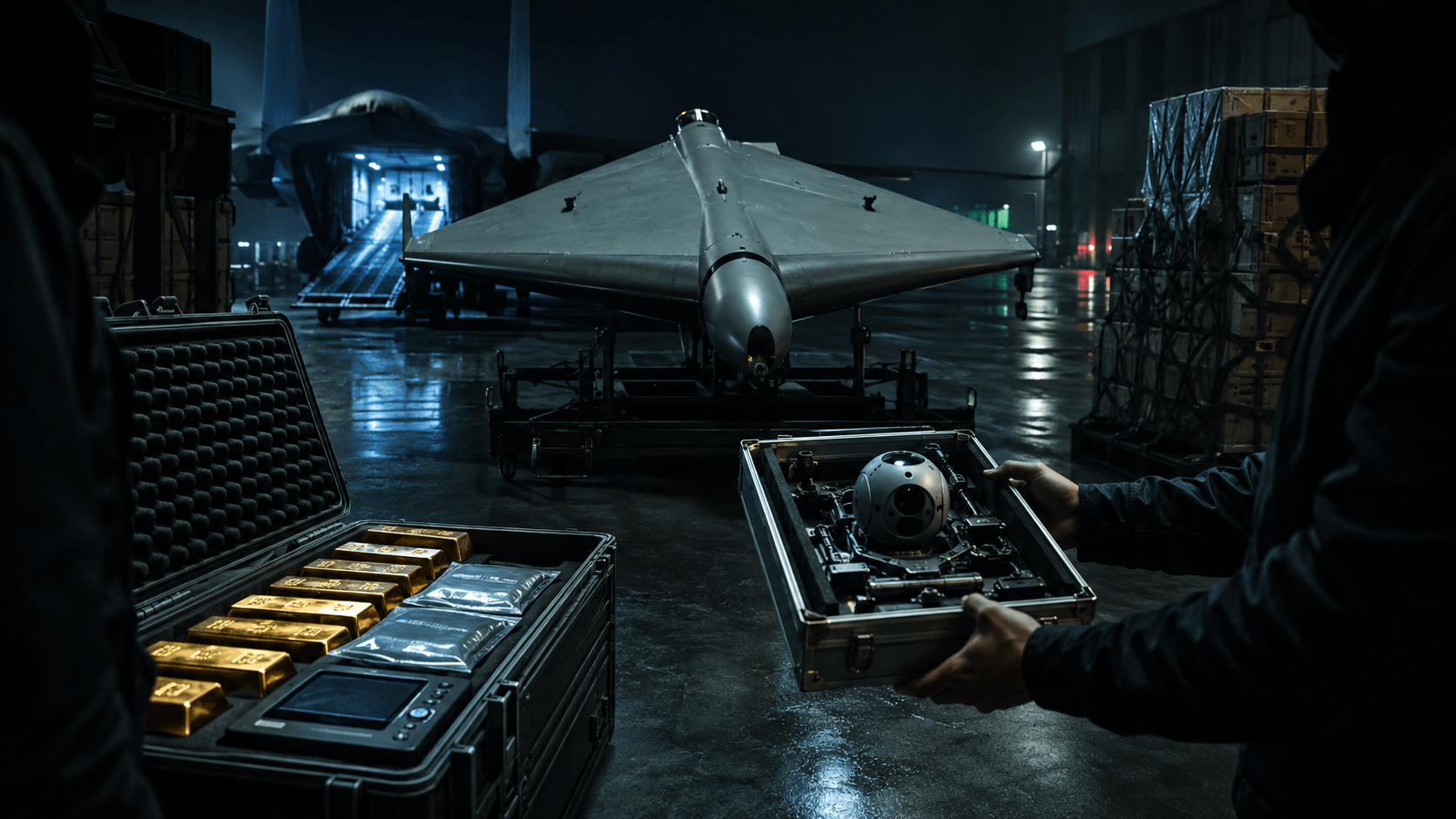
The phrase “other property” raises the question of whether technology could have formed part of the payment. As early as late 2022, Ukrainian intelligence reported that Russia had offered unspecified technologies for Iran’s defense industry in exchange for missiles.
After analyzing the leaked documents, C4ADS researchers concluded that Russian–Iranian cooperation was not limited to the drone program and had gradually expanded into other areas of the defense industry.
This raises a more specific question: could Shubnyakov’s invention and Darki’s research have been among the technologies offered to Iran? And could Alabuga’s payments have been disguised licensing royalties rather than ordinary salaries?
If Shubnyakov’s employment was indeed used merely as a formal cover, the payments would require another explanation. Alabuga received government funding and loans to localize Shahed production before selling the completed drones to the Russian state. In theory, the project’s accounts could therefore have been used to record the costs of transferring technology. Payments for Shubnyakov’s patent and Darki’s contractual compensation could have appeared in the records as ordinary production expenses.
MII has access to records covering tens of thousands of people who received payments from Alabuga between 2023 and 2025. Researchers have so far examined only a small part of this dataset, meaning that other recipients may include additional specialists connected to the nuclear industry.