
19.07.2023
3 min
1
9160



Data leaks are not an exception, but a daily occurrence. Banks, online stores, postal services, bookmakers – almost all large companies have lost their user bases at least once. These days, your phone numbers, addresses, passwords, and purchase history are already being sold on the “dark web“. Tools like LeakNavigator were created for this very purpose. It allows you to quickly check if your data is in known leaks and helps you understand the scale of the problem. Below, we will show you in detail how it works, with examples and screenshots.

The main thing is to remember: such services should only be used to verify your data.
P.S. Want to check if your accounts have been “leaked”? One query in LeakNavigator can reveal more than years of independent monitoring.
Rates and subscription
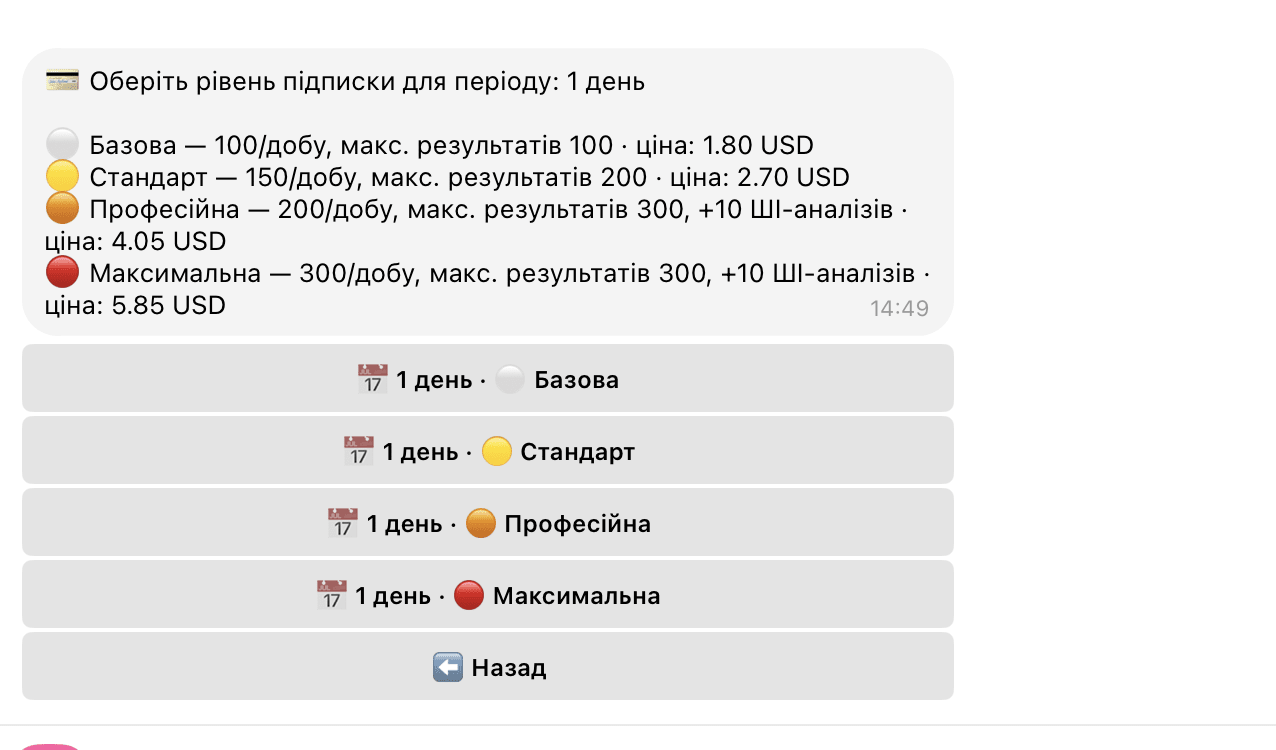
The first step in working with LeakNavigator is choosing a subscription. It is required in order to gain access to the databases and generate detailed reports. There are several levels:
Basic — 100 results per day. Minimum price, but limited functionality.
Standard — 150 results and you can already see a wider cross-section.
Professional — 200 results + 10 AI analyses that help recognize similar records even if they are slightly different.
Maximum — 300 results per day and a full set of features for professionals.
This approach is convenient: if you just want to check your email or number, the basic package will be enough. But if you work with OSINT or audit a company, then you cannot do without the maximum tariff.
LeakNavigator works not only with local Ukrainian leaks. There are also international cases in the databases. For example:
1Win Bookmaker leak (2024) — 96 million accounts.
There you can find email, IP address, hashed passwords, registration date and even the account currency.
In many cases, the data is stored in SHA-256 format, which makes it partially protected, but the very fact of the leak already carries a risk.
This shows the scale of the problem: even if you do not use Ukrainian services, your data could have “leaked” from any international platform.
LeakNavigator works as a Telegram bot, which is very convenient: you don’t need to install or configure anything. You add the bot, enter data (phone number, email, sometimes even IP address) and start the search.
The bot can:
Search in open and closed leak databases.
Generate short answers directly in the chat.
Offer an extended report in HTML format.
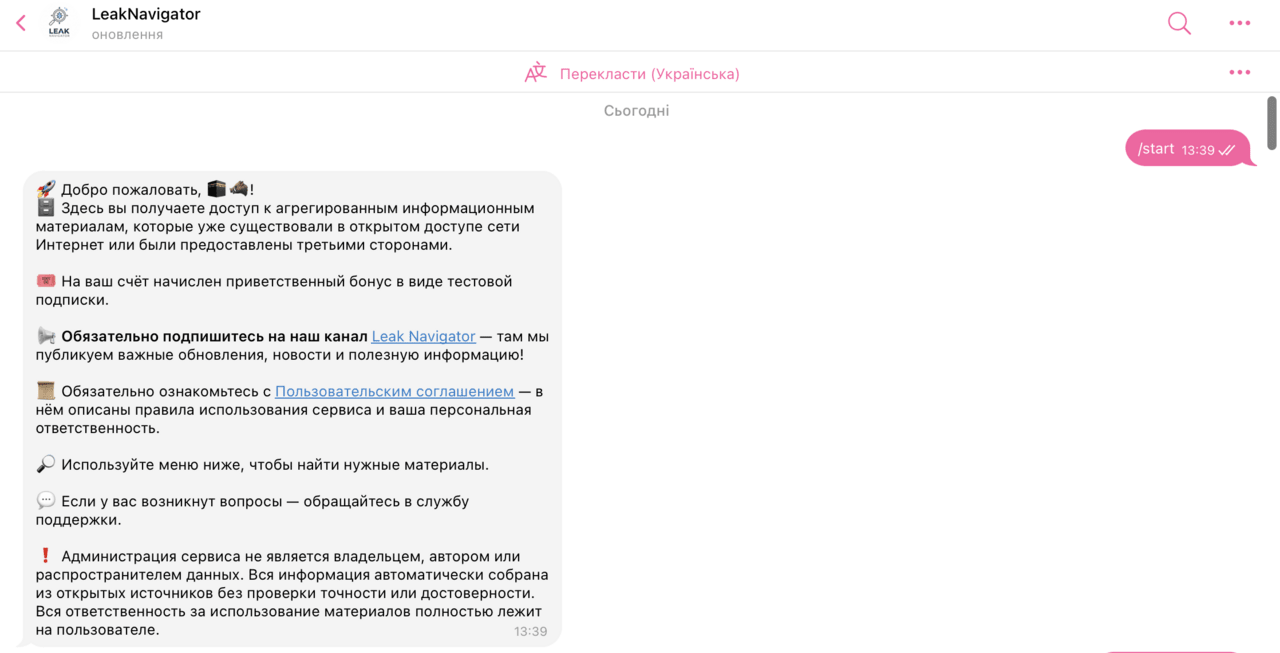
Everything looks as native as possible: like regular correspondence, but instead of messages from a friend, you receive extracts from databases.
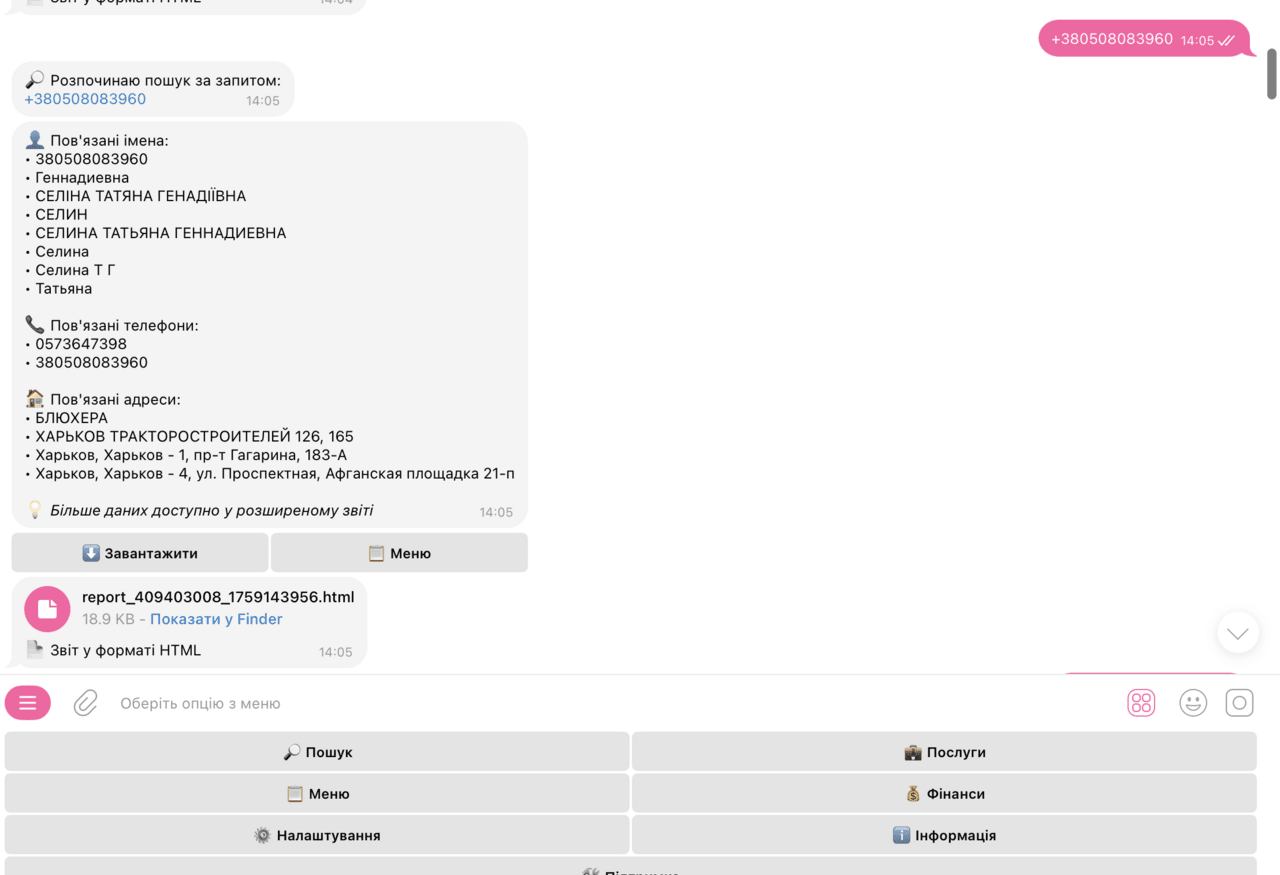
For example, we enter a phone number. In response, the bot gives:
Related names. Often the number was registered in different services under different variations of names.
Addresses. If the database included logistics data, you can see the delivery locations.
Additional phones. The system shows what other numbers could be associated with the same person.
This is already a serious tool for OSINT. Even one number opens up a whole network of related data.
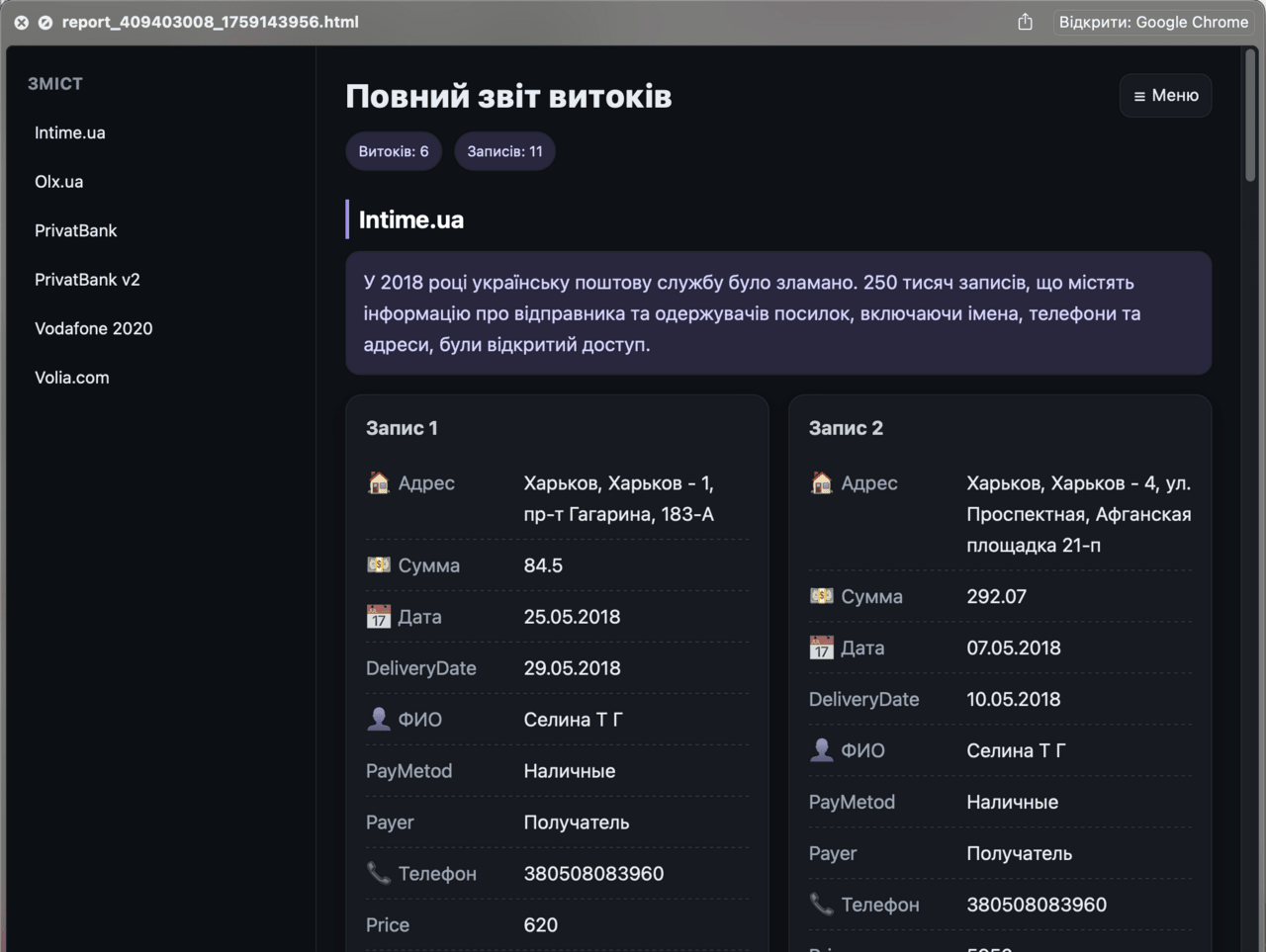
For those who need a detailed analysis, there is an advanced HTML report.
It contains:
Addresses and full names.
Transaction amounts and dates.
Payment method (cash, card).
Contact details.
In fact, this is a copy of the real leak database. For example, it is visible that a person received a parcel in Kharkiv in 2018, with the specified amount and even the payment method. For a journalist, researcher or cyber expert, it is a goldmine.
Support is always important in such services. LeakNavigator offers:
E-mail for inquiries.
Telegram chat for consultations.
Official news channel.
This allows you to quickly solve technical problems or find out about database updates.
LeakNavigator is not just a bot. It is a tool that clearly shows: no data is completely private. It is useful both for personal verification (whether my email was leaked), and for research, journalism or cybersecurity.
The main thing is to remember: such services should only be used to verify your data.
P.S. Want to check if your accounts have been “leaked”? One query in LeakNavigator can show more than years of independent monitoring.