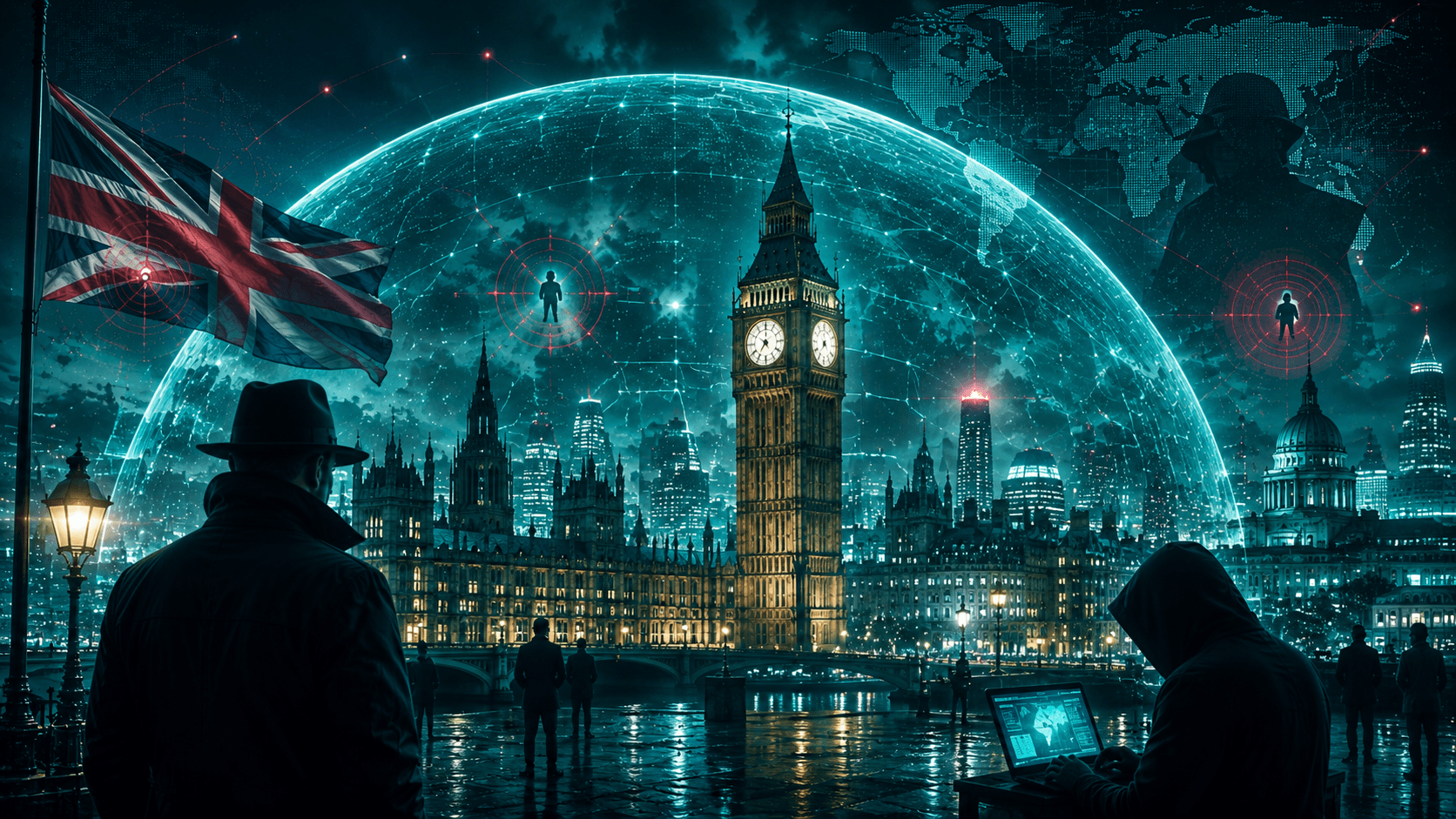
Great Britain Introduces New Law Against Agents of Hostile Foreign States

11.06.2026 3 minutes Author: Newsman

The UK government has introduced a new bill aimed at strengthening the country’s defenses against hostile foreign states. The legislation will provide intelligence agencies and law enforcement with additional powers to counter espionage, cyberattacks, political interference, and other threats to national security.

Officials say they are determined to detect, deter, and disrupt the activities of foreign state actors and their proxies that pose a threat to the country. The National Security Threats Bill 2026 was fast-tracked following a recent wave of antisemitic attacks across the UK. If approved by Parliament, the legislation could come into force as early as July 2026.

The proposed measures would grant intelligence agencies broader powers to target intermediaries and organizations acting on behalf of foreign governments. British authorities have identified Iran, Russia, China, and North Korea as states that have repeatedly attempted to influence domestic affairs in the United Kingdom in recent years.

Former Prime Minister Rishi Sunak previously warned that the UK faces hostile actions from foreign states on a near-daily basis, ranging from espionage and cyberattacks to other forms of interference.

According to the government, modern threats extend far beyond traditional espionage. Hostile states increasingly rely on digital technologies to conduct influence operations, gather intelligence, and target critical infrastructure.

State-sponsored hacking groups remain one of the most significant concerns. These actors frequently use sophisticated cyber operations to steal sensitive information, conduct surveillance, and infiltrate computer networks.

Among the examples cited by British officials is Fancy Bear, a hacking group linked to Russia’s military intelligence agency, the GRU. Investigators say the group exploited vulnerabilities in TP-Link routers to steal passwords and other valuable data.

North Korea’s activities have also raised alarm. Authorities report that hackers linked to the regime have been applying for jobs at technology companies in the UK, the United States, and Australia while posing as remote IT professionals. Their objective is to gain access to corporate systems and steal confidential business information.

Meanwhile, Iran has been using digital platforms to advance its information campaigns. The Islamic Revolutionary Guard Corps (IRGC) has reportedly leveraged social media, streaming services, websites, and blogs to spread propaganda, increasingly incorporating artificial intelligence into its operations.

A joint international task force has identified more than 14,200 posts linked to the group across major online platforms, as well as on dedicated websites and blogs.

Against this backdrop, MI5 raised the UK’s terrorism threat level to “substantial” in May, warning that the risk of a terrorist attack remains significant. The agency cited growing online radicalization and threats to specific communities amid the ongoing conflict in the Middle East.

The bill also includes a long-awaited overhaul of the Computer Misuse Act 1990. The proposed reforms are expected to give law enforcement greater flexibility in responding to modern cyber threats and strengthen the country’s ability to combat cybercrime.

At the same time, the British government is considering separate legislation aimed at improving national cyber resilience. The proposal would expand cybersecurity requirements to cover more sectors of the economy and strengthen protections against the rising volume of cyberattacks.

Officials in London argue that the nature of modern threats is evolving rapidly and that legislation must keep pace with the changing tactics used by foreign intelligence services and state-linked cyber groups.

Subscribe
Notify of
0 Коментарі
Oldest
Newest Most Voted
Found an error?
If you find an error, take a screenshot and send it to the bot.