
08.06.2026
2 min
305



Apple has officially unveiled its biggest Siri update in years. During WWDC, the company introduced a new version of its voice assistant called Siri AI, featuring enhanced conversational abilities, deeper access to user data, and the ability to interact with on-screen content.
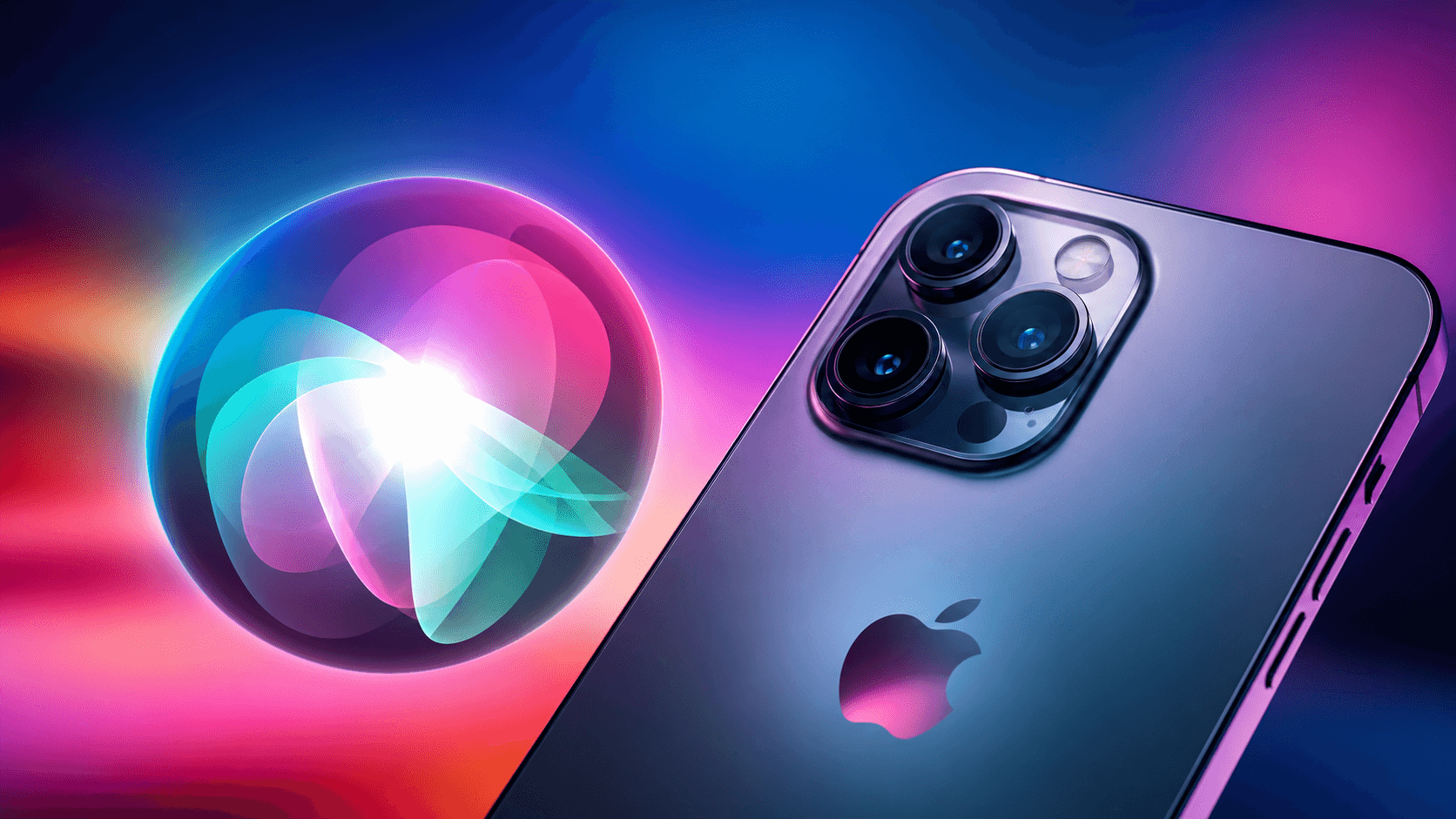
The announcement took place in Cupertino, where Apple showcased an assistant capable of holding more natural conversations, analyzing information displayed on a device’s screen, and retrieving relevant data from the web. To support these new capabilities, the company also introduced a dedicated Siri AI app.
One of the most notable additions is conversation history. Users will be able to revisit previous interactions with Siri, while the assistant can now locate information even if it was never formally saved. For example, Siri can find an address that was previously mentioned in a text message.
The update marks Apple’s latest effort to close the gap with competitors in the artificial intelligence market. Over the past two years, OpenAI, Google, and Anthropic have made significant progress in developing so-called AI agents capable of handling complex tasks with minimal user involvement.
During the presentation, Apple’s Senior Vice President of Software Engineering, Craig Federighi, appeared to take aim at rival approaches to AI development.

“Some seem to be racing ahead as if they’re pursuing AI for the sake of AI itself, without a clear focus on people, on all of us whom it is ultimately meant to serve,” he said.
Unlike many of its rivals, Apple is not betting on fully autonomous AI agents. Instead, the company is focusing on practical features designed to help users with everyday tasks while remaining deeply integrated across its ecosystem of devices.
According to Bob O’Donnell, President and Chief Analyst at TECHnalysis Research, this is exactly the kind of approach most consumers are looking for.
“This finally delivers on the promise Siri made 15 years ago. This is AI for the masses; it’s not really agentic. For many people, this is exactly the kind of intelligence they want,” O’Donnell said.
However, early reactions from analysts were relatively cautious. Craig Moffett of MoffettNathanson said the new features were not revolutionary, although they could turn Siri into a capable chatbot and potentially a reliable digital assistant. Following the announcement, Apple shares fell 1.9% on the Nasdaq, closing at $301.54.
Apple also placed significant emphasis on privacy. The company said most data processing will take place directly on users’ devices or through its own Private Cloud Compute infrastructure. At the same time, Siri’s new capabilities require broader access to personal information, since the assistant needs to understand what is happening on the screen and within apps.
“This creates an inevitable tension between convenience and privacy,” said Paolo Pescatore.
According to Pescatore, Apple’s biggest challenge will be convincing users that these new AI features do not compromise their personal data.
The company also revealed additional technical details. Some Siri AI models were developed using technology from Google‘s Gemini, while larger models will run in cloud infrastructure powered by Nvidia chips.
The new Siri AI will be able to search through emails and messages, answer questions about content displayed on a user’s screen, and synchronize conversation history across iPhone, iPad, and Mac devices through a dedicated application.
The rollout, however, will not be available everywhere at launch. Apple said Siri AI will initially be unavailable in the European Union due to privacy and security concerns related to regulatory requirements. The service will also not launch in China for now, as the company continues to address local regulatory issues.
Alongside Siri, Apple introduced new parental control tools that allow parents to manage the apps, websites, and contacts their children can access. Messaging applications will also automatically blur graphic content and notify parents when such material is detected.
The company additionally updated its image-generation tools and introduced new AI-powered features in Safari, including the ability to check product availability directly on websites.