
19.07.2023
3 min
1
15315



Artificial intelligence is playing an increasingly important role in cybersecurity, and many specialized models can now run locally without expensive hardware. In this roundup, we explore AI models designed for vulnerability research, code analysis, penetration testing, cyber threat intelligence (CTI), bug bounty, CTF challenges, and security research.

A versatile model designed for practical cybersecurity tasks. It is well suited for CTF challenges, bug bounty programs, and supports both Blue Team and Red Team operations during incident analysis and security assessments.
An open AI model developed by Cisco for a wide range of cybersecurity tasks. It is designed for threat modeling, attack scenario analysis, risk assessment, and identifying potential vulnerabilities.

A compact model built for fast cybersecurity analysis. It is well suited for cyber threat intelligence (CTI), CVE and CWE analysis, as well as code review and analysis, all while requiring only modest hardware resources.

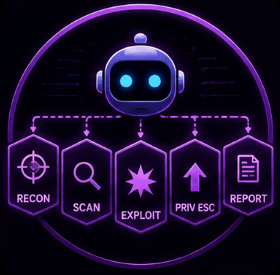
A model designed to automate the entire penetration testing workflow using AI agents. It can handle multiple stages of security testing, with a 70-billion-parameter version available for more advanced and complex scenarios.
A specialized model for penetration testers and Red Team professionals. It helps analyze systems, identify potential attack paths, perform security assessments, and automate penetration testing tasks.

A local vulnerability research pipeline built on the uncensored Qwen2.5-Coder-14B model. It is designed for in-depth code analysis, identifying potential security weaknesses, and conducting security research without relying on cloud services.
A specialized model for vulnerability discovery, code analysis, and bug bounty. In selected benchmarks, it outperformed Claude 3.7 Sonnet and CodeQL at detecting security flaws, and its developers claim it is capable of identifying previously unknown vulnerabilities. It can be run locally with approximately 8–16 GB of RAM.