27.02.2025
4 min
1177


Russian products and advertising are increasingly appearing in videos by Ukrainian and foreign authors on YouTube. However, those who promote Russian programming schools and other services while simultaneously using Ukrainian donation platforms — Donatello or other services — are particularly suspicious. Such bloggers give the impression that they are working legally, but in fact they are making money from an audience that believes in the transparency of their activities.
OSINT methods allow you to quickly find such authors. In particular, Google Dorks helps to detect videos with suspicious links in the description: for example, the simultaneous use of donatello.to and *.ru resources, or mentions of “Advertising. OOO” and TIN in the texts. Such search queries reveal dozens of results where bloggers hide their real activities.
This material tells how to detect schemes for earning money on Russian products using Ukrainian services and why it is worth reporting such cases to the platform administration.
The idea of checking and searching came to mind while studying the materials of one blogger who talks about IT, there have been a lot of such in the country of rot recently. While listening, the words were heard: “I started learning programming in the fall of 2022, but due to severe outages during the fall-winter, I could not do it actively enough” – these words were seriously alarming, because at that time active shelling of Ukraine began, which led to large-scale blackouts.
Well, if this situation is described as a factor that interfered, then the author was in Ukraine at that time. But he advertises a Russian programming school, which was alarming. Having dug into the description, links were found to platforms for collecting donations, while on Donatello (a product originally from Lviv), on Busta (an analogue for authors in Russia). After visiting the page on the Ukrainian website, it was discovered that the account was active, and donations were being made, and the amounts were considerable.
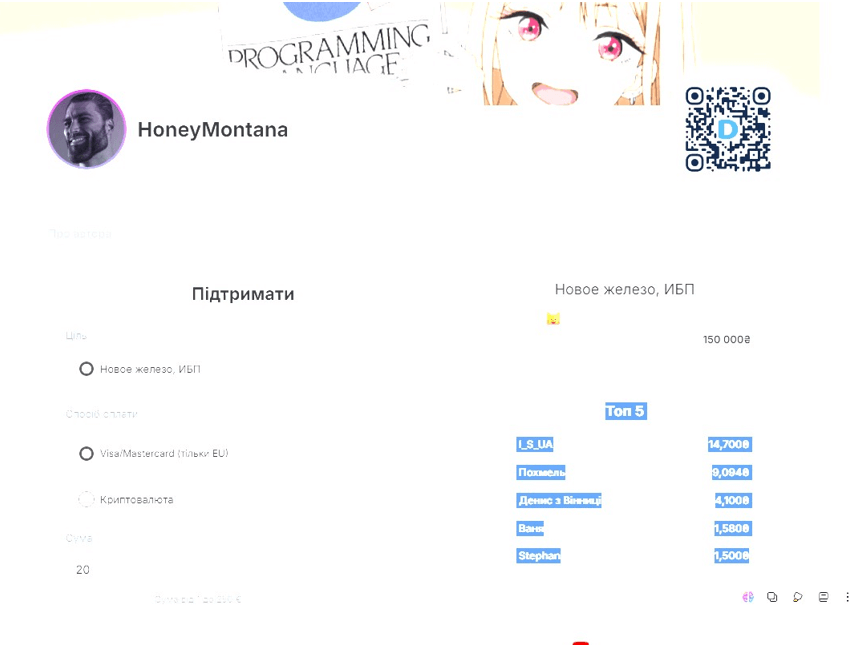
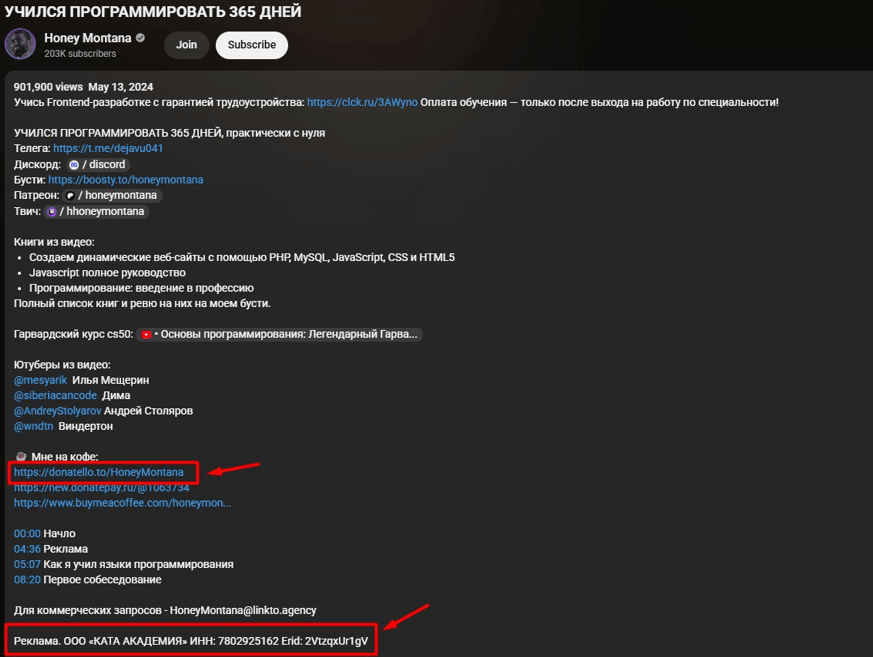
If there is one such person, then there may be others as cunning. Searching for them manually is almost impossible, but one such possibility immediately came to mind: Google Dorks. I will not explain the details now, but in short, this is a special search technique that helps to find information that can sometimes be hidden. In a minute, such a Dork was created, as bony as possible, and I will show how it can be changed for better search.
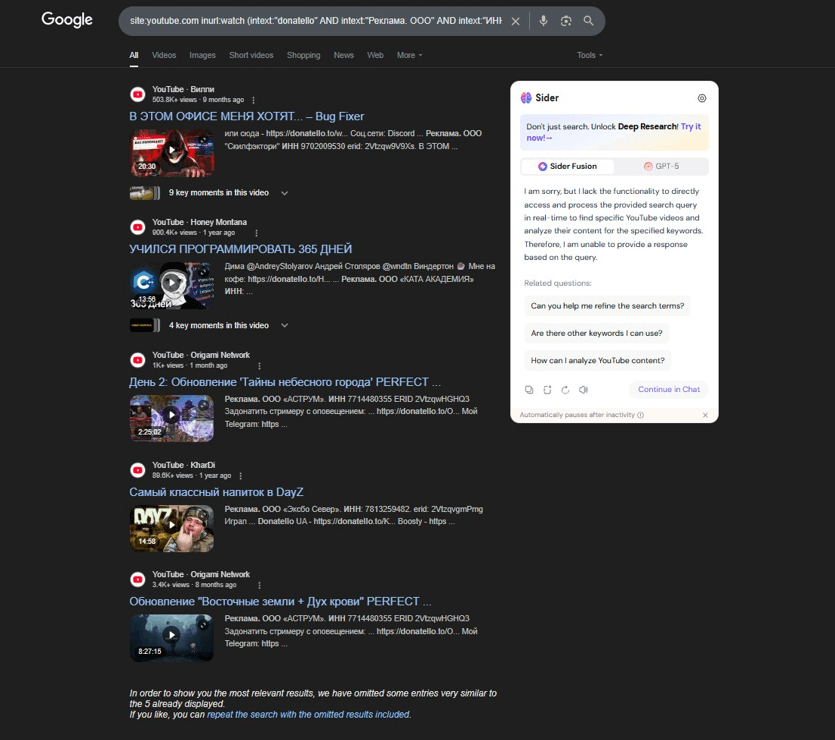
site:youtube.com inurl:watch (intext:”donatello” AND intext:”Реклама. ООО” AND intext:”ИНН”)
In short:
We search on the site youtube.com
The url must contain “watch”, the search will be performed on pages with a video player that have a description
The text on the page should include donatello (as an example of a Ukrainian service), Advertising. OOO and INN (authors who collaborate and advertise Russian companies leave this in the description)
As a result, I received several more authors who have the following blanks:
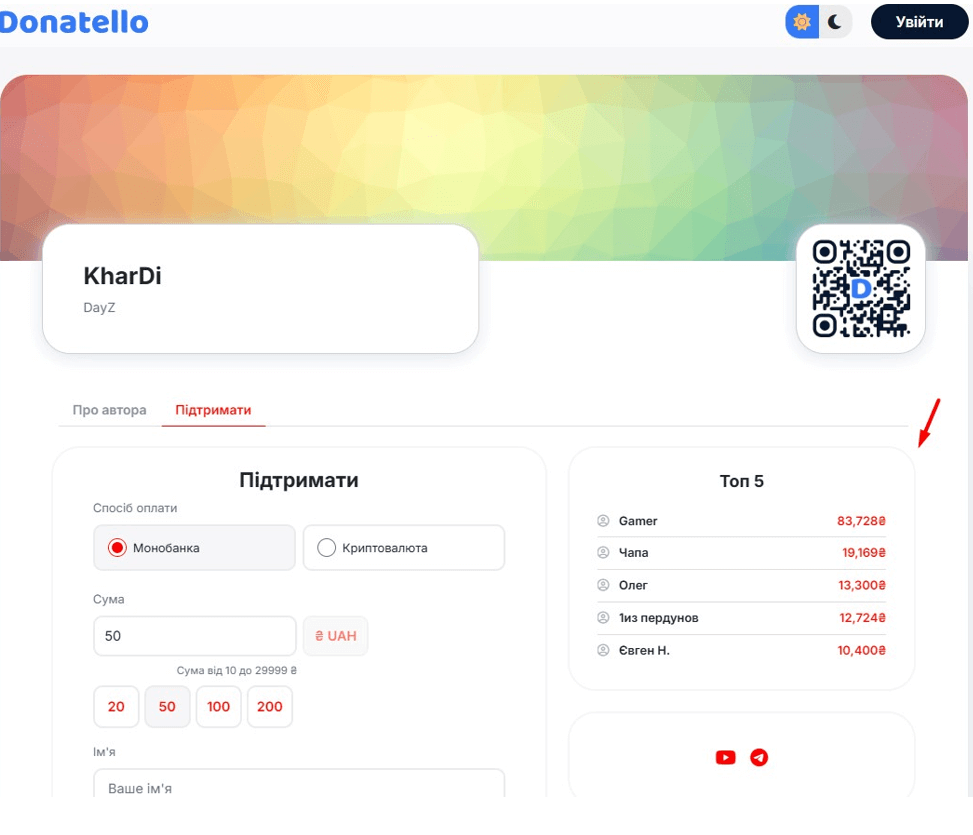
I visited everyone’s video, went to their accounts, because there are statistics of the TOP-5 donors. Statistics of the “record holder”:
Official requests have been sent to all users on this list by email and support has been notified via the official Discord channel for a faster response. At the time of writing, there has been no response, but not even 6 hours have passed since then, in the latest edition, perhaps the results and the company’s reaction will already be mentioned.
Well, there were 4 such “smart people” in total, but it’s too early to relax. Another pattern was found and these are “empty” accounts.
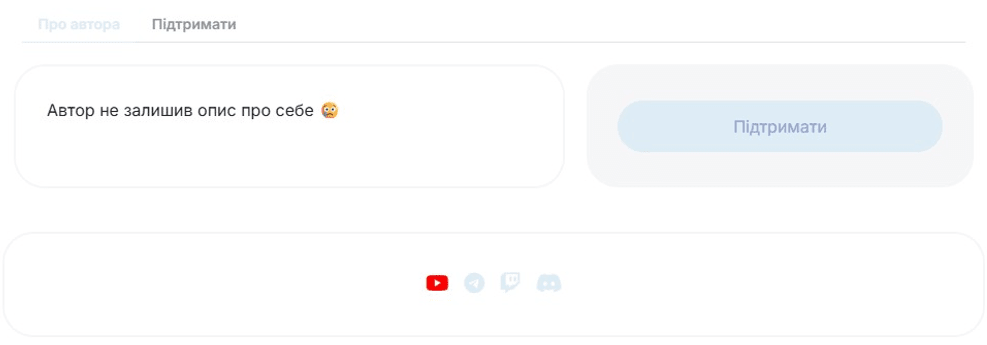
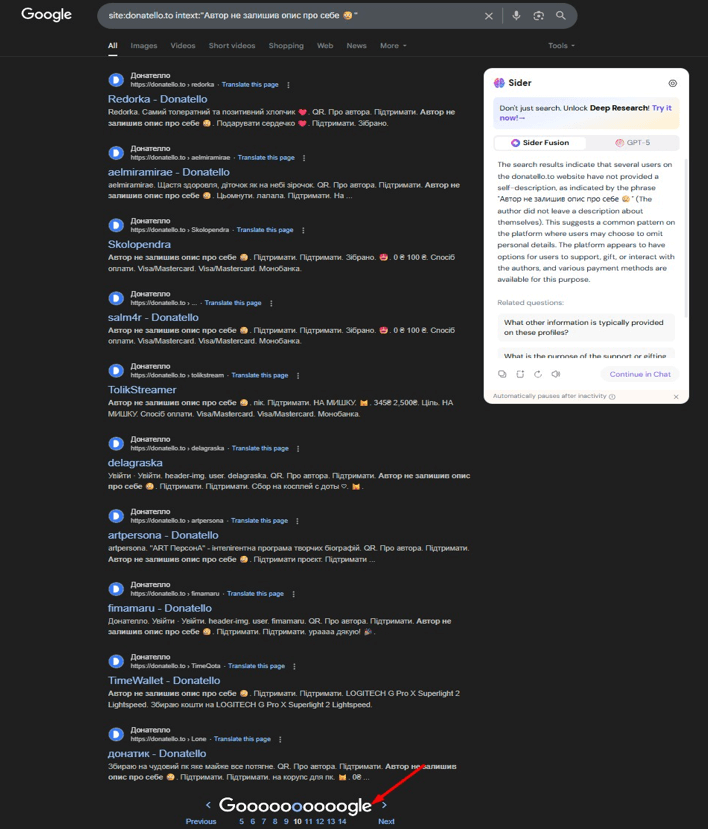
Therefore, the dork was (site:donatello.to intext:”The author did not leave a description about himself 😢”) reworked to search for such empty accounts and the results were too many, 10+ pages of Google.
The best alternative, for broader results, was dork site:youtube.com inurl:watch
(intext:"donatello.to" AND

(intext:"http://*.ru" OR intext:"https://*.ru")

)
Which produces a sea of results, where we see authors collecting donations from platforms in both Ukraine and Russia.
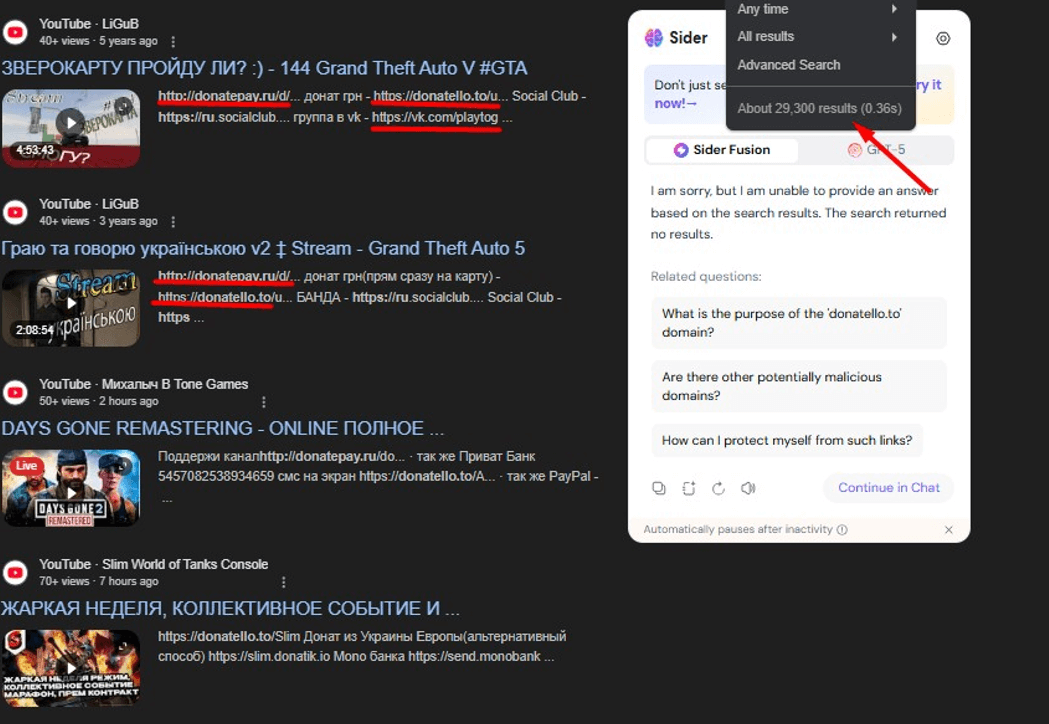
The investigation showed that YouTube creators who promote Russian products are knowingly using Ukrainian donation services to generate profit. This creates a situation where, under the guise of “regular blogging,” they are actually monetizing activities that benefit the aggressor country.