
28.08.2025
2 min
773



Researchers at the University of Colorado at Boulder have created microdevices that act as “pacemakers” for jellyfish and allow them to control their movement in the depths of the ocean. This opens the way to cheaper and larger-scale data collection from almost unexplored parts of the planet.
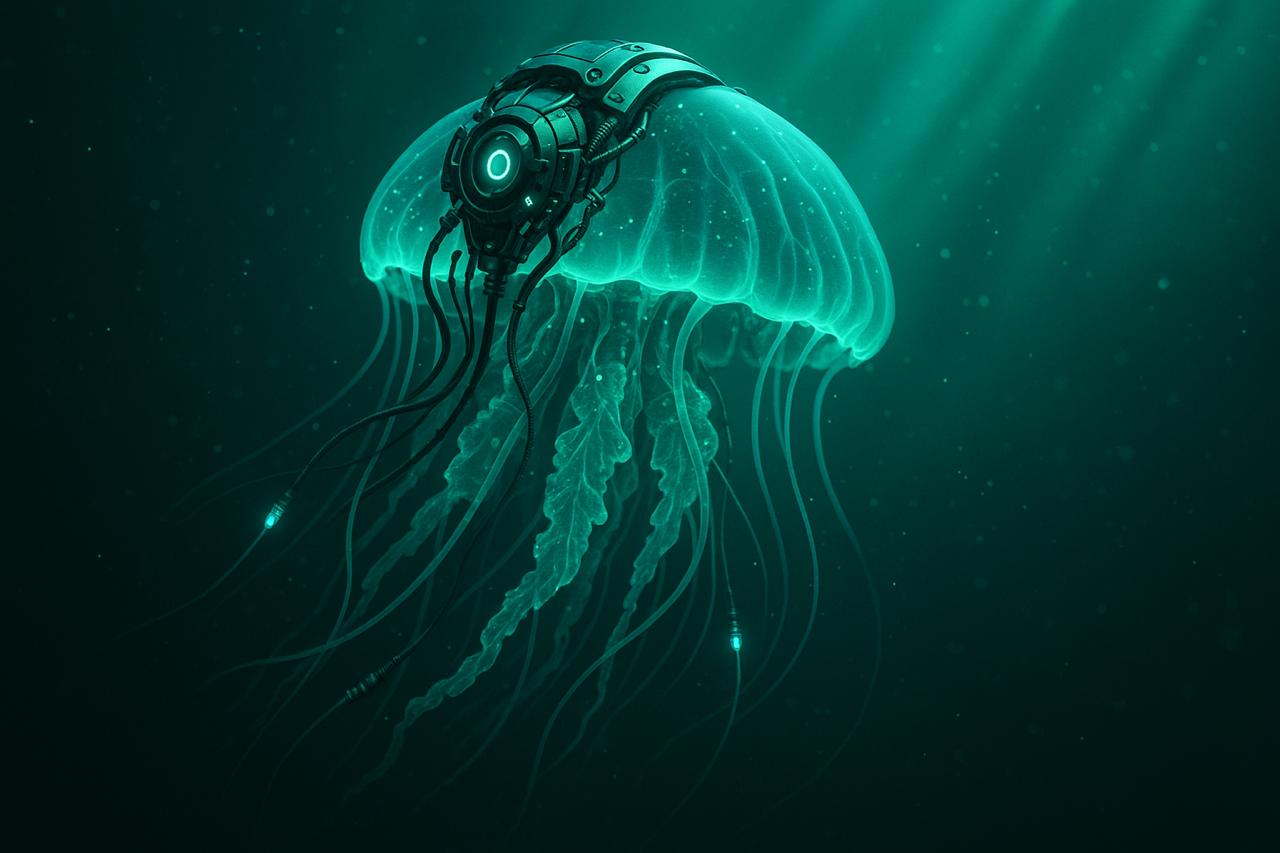
Only 5% of the world’s oceans have been explored to date, with most expeditions limited to shallow waters. The deep-sea zones remain a mystery, although it is there that cures for deadly diseases or solutions for renewable energy may be found.
Engineer Nicole Xu’s team has developed tiny electronic modules that attach to the jellyfish’s body and stimulate its muscles. This way, the animal can be directed in the right direction to collect data on the temperature, acidity and chemical composition of the water, even at depths that robots cannot reach.
“Our device works like a pacemaker for the heart: we force muscles to contract and direct movements,” the developers explain.
The study also uses biodegradable particles that allow us to analyze water flows without using toxic synthetic markers. This reduces risks to the environment. In 2024, NASA launched a satellite mission to monitor air and oceans, highlighting the global need for a deeper understanding of the effects of climate change. The new approach with “cyborg jellyfish” could become a cheaper and more effective alternative to expensive robotic devices.
The “cyborg jellyfish” technology opens up the prospect of large-scale and environmentally safe study of the ocean. Using living organisms as natural researchers can change the approach to science: from expensive devices to biointegrated solutions that can shed light on the secrets of the depths and provide answers to global challenges for humanity.