02.02.2026
9 min
947



The goal of this article is to define what the term “crowd control weapon” (CCW) really means and what specific types of equipment have been used as CCWs in recent years. The article also examines how these weapons have been used in actual scenarios and why some may be mistaken for regular weapons. Additionally, the article looks into when the use of CCWs would be acceptable or legal and the potential repercussions associated with the use of CCWs. Overall, the article will provide readers an enhanced comprehension of the ways in which crowd-control technology has evolved over time.
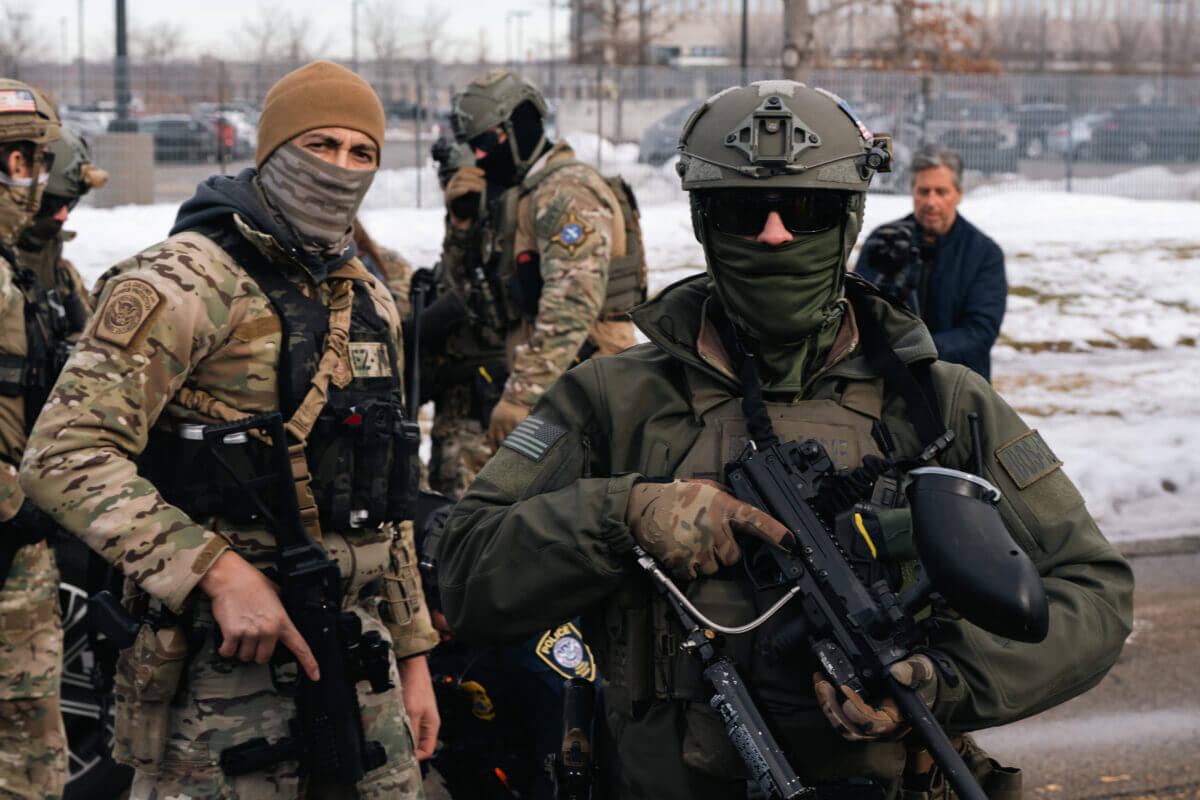
Federal authorities have been using what are called “less lethal” weapons on protestors since last year’s immigration raids across the country began. The least lethal weapons include impact rounds, tear gas, and pepper spray which are intended to either incapacitate or otherwise stop a person from acting aggressively, but may be harmful to them and/or others if they are misused or used improperly.
A few weeks ago there was a report that two protestors who were shot with less-lethal rounds at close-range to the face were permanently blinded as a result of being shot by U.S. federal agents in California. There were many other incidents around the United States of DHS agents clashing violently with anti-ICE protestors as a response to the fatal shooting of Renée Nicole Good by an ICE agent in Minneapolis.
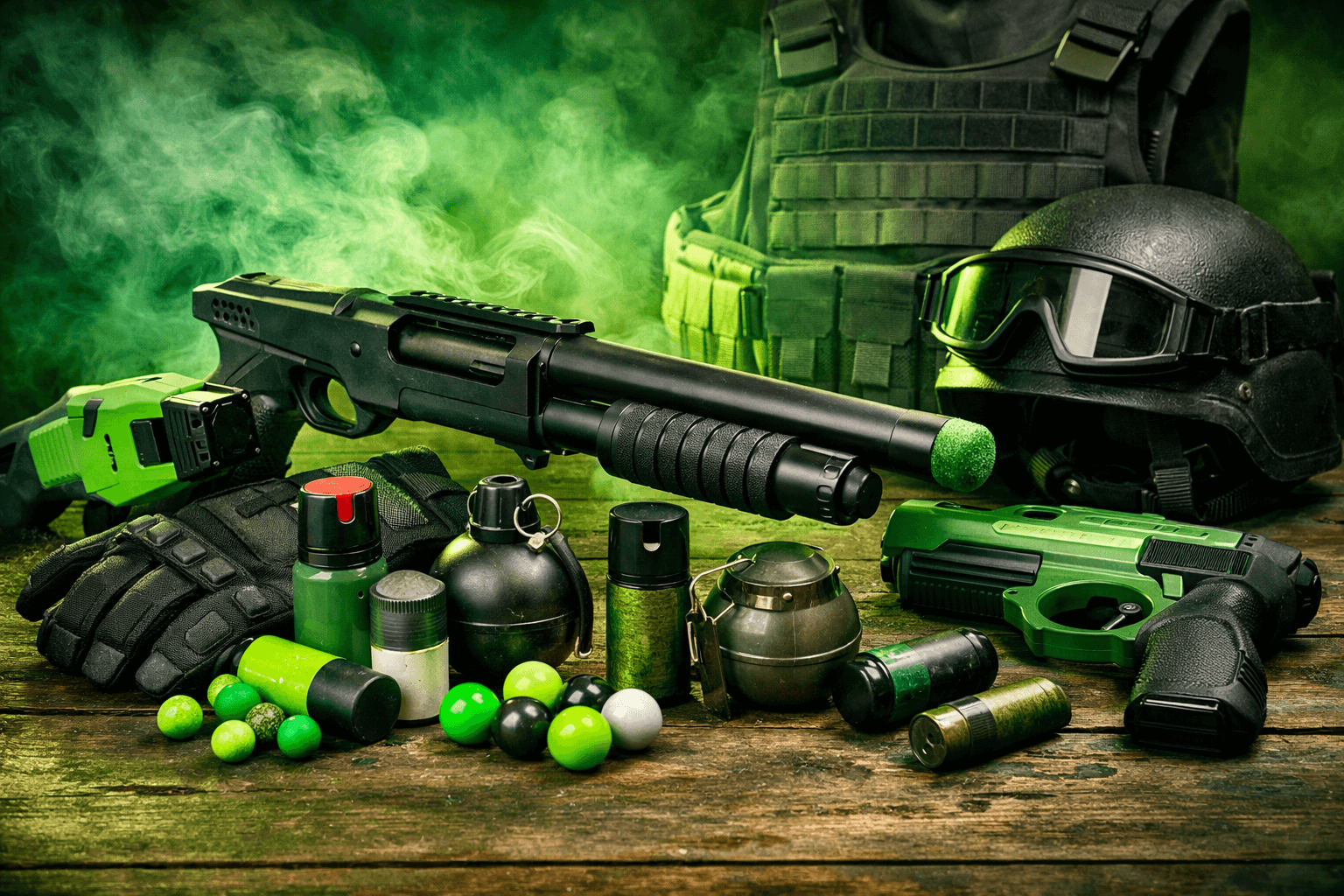
The following is a list of some of the less lethal weapons DHS has been using, and some information about the policies surrounding their use:
• Pepper balls are small plastic balls that contain oleoresin capsicum (OC), which causes irritation to the eyes and respiratory system. The pepper balls will not cause serious injury, but they will cause significant discomfort. In order for a law enforcement officer to use pepper balls, there must be an immediate threat of physical harm to either themselves or others.
• Pepper ball guns fire multiple rounds of pepper balls at one time. These guns have a range of over 100 yards and can hit targets from 30 feet away with great accuracy. Because these guns fire multiple rounds at once, they can create large amounts of pepper balls that cover large areas.
• 40mm Less Lethal Launchers are designed to shoot rubber pellets and other projectiles. These launchers are often referred to as “less lethal” because they are capable of causing pain and discomfort, but not serious injury. However, according to CBP’s own policy, the 40mm Less Lethal Launcher should only be fired directly at the legs, and should never be fired into crowds.
• Tear Gas is commonly used by law enforcement to disperse crowds. While tear gas is not typically considered a weapon of war, it can still cause serious injury if not used properly. According to CBP’s policy, officers must avoid shooting tear gas into crowds, and should only shoot tear gas directly at rioters.
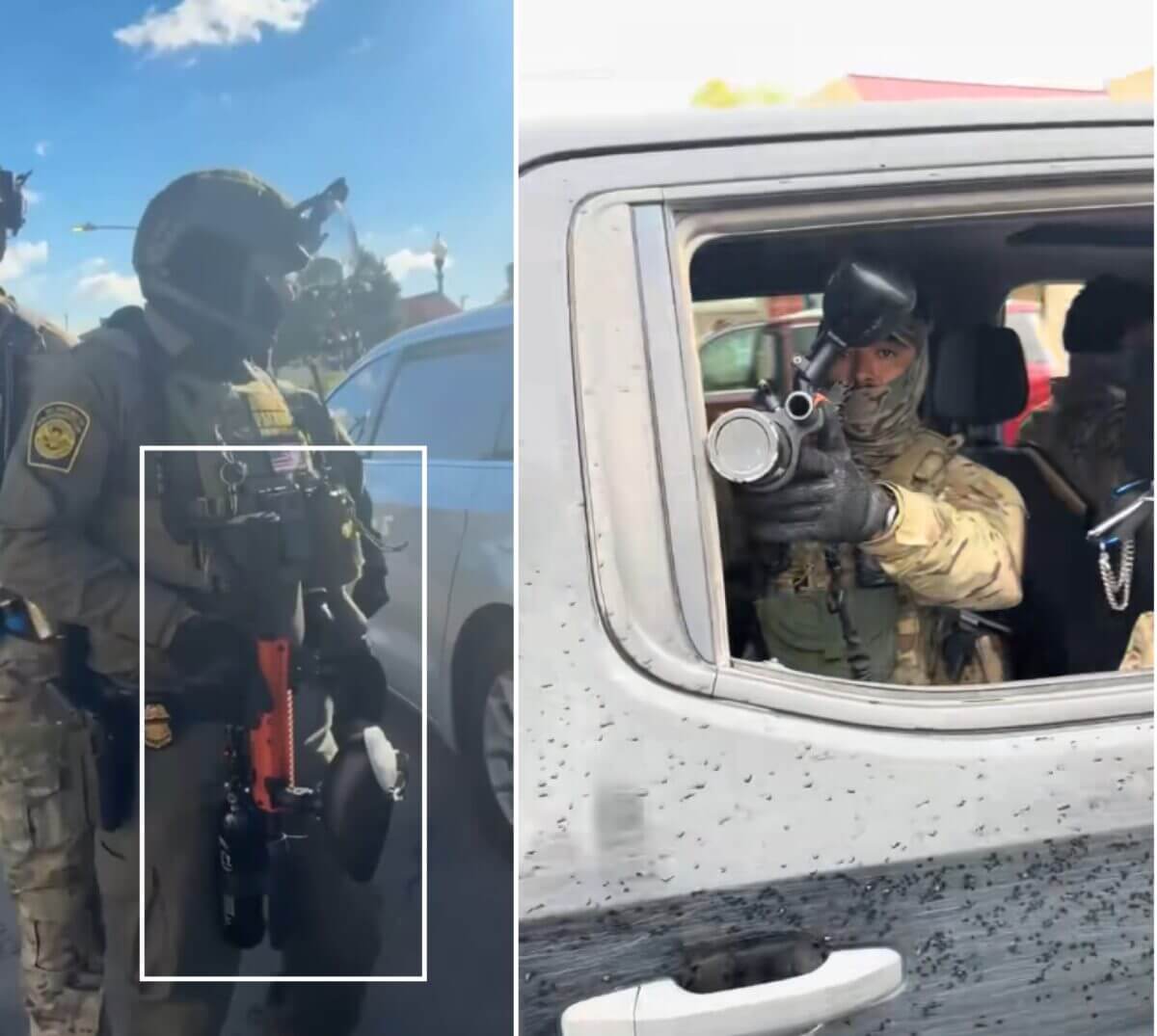
Compressed air launchers, which are typically called pneumatic launchers, are essentially paintball type guns using .68 caliber projectiles that break upon contact. The projectiles typically contain a powdered chemical irritant such as oleoresin capsicum (OC) or PAVA powder; the same chemicals used in many pepper sprays.
Compressed air launchers can be fired with a variety of different projectile types, including marking rounds that use dye to help identify the target for later arrest, and specialty rounds that are designed to break windows.
The most common term for these devices is “PepperBall” launchers because they are made by the company PepperBall. But there are other manufacturers whose products are being used by DHS agents, such as the FN303, made by FN America.
Most compressed air launchers look very much like paintball markers and feature a separate hopper or magazine located above the gun to hold the projectiles. They also have an air tank, which can be placed either on the side, under the barrel or incorporated into the stock at the rear of the gun.
Many compressed air launchers and other less lethal devices are made in bright colors, such as orange, so that they are easily distinguishable from lethal firearms.
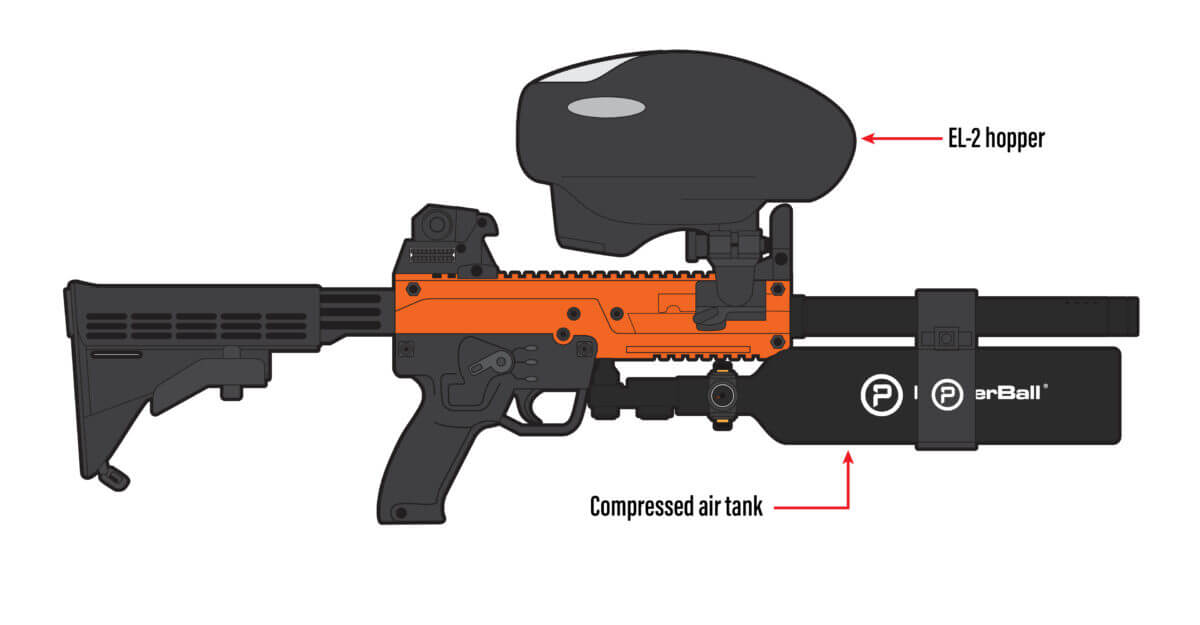
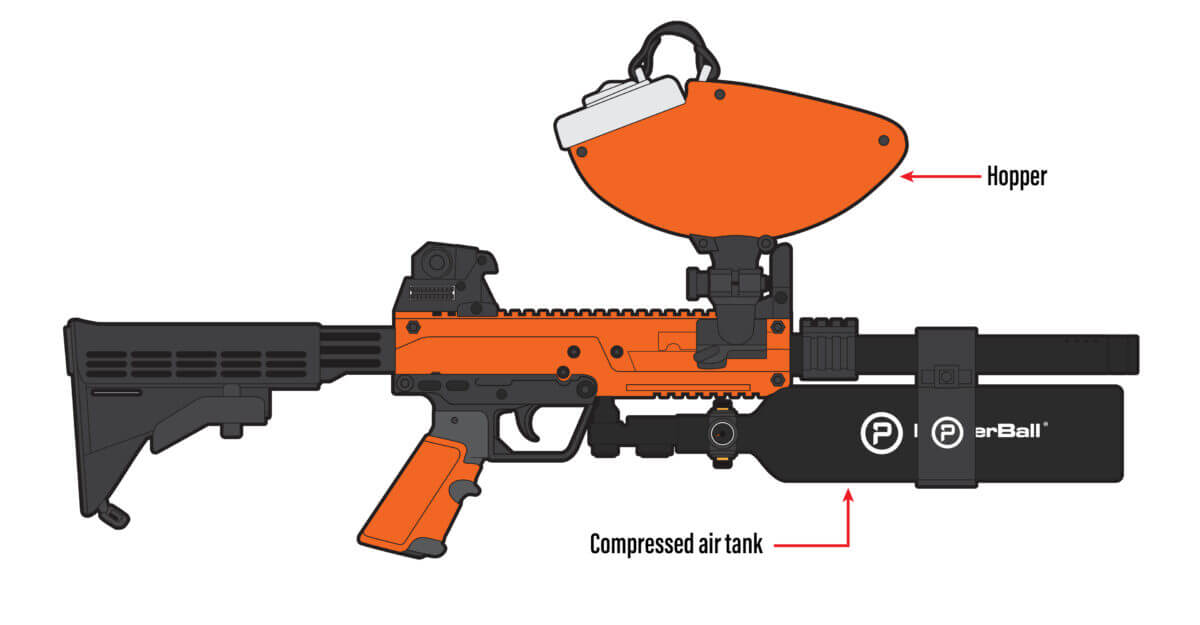
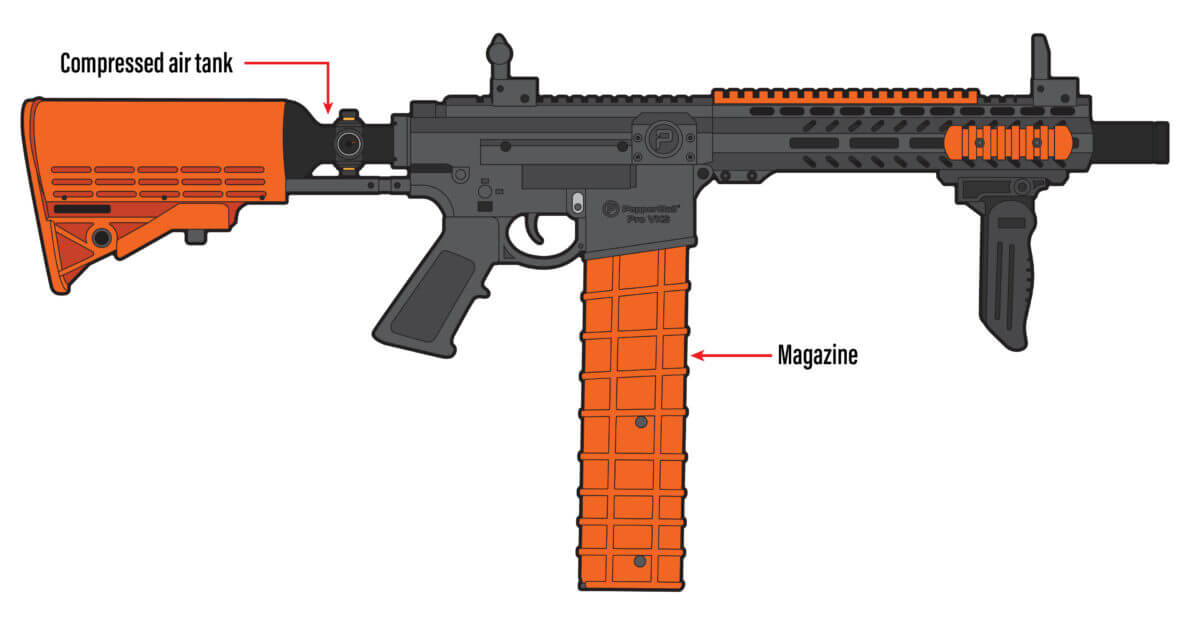
Although some compressed-air launchers may be difficult to identify compared to common firearms due to their design, an evaluation of some designs can help you determine if they are a compressed-air launcher or a conventional firearm.
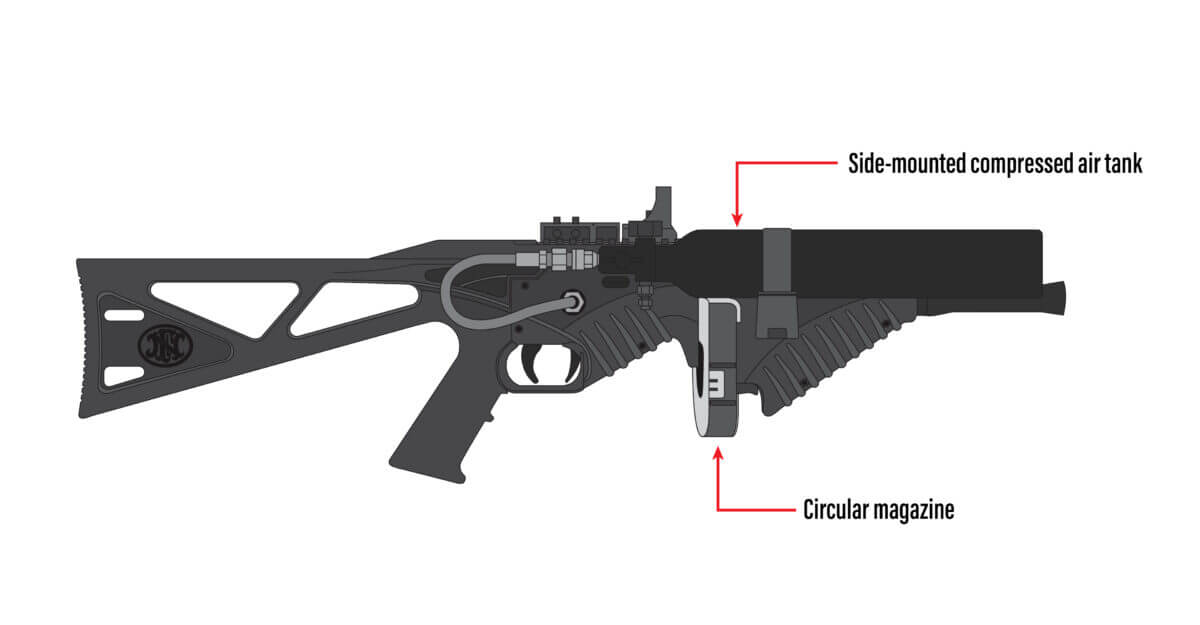
For example, in videos showing federal agents engaged in immigration enforcement operations, agents have carried the FN303 pneumatic launcher. The FN303 resembles a rifle or other firearm, and it is normally all black. Unlike the TAC-SF series PepperBall launchers, there is no visible hopper on the FN303.
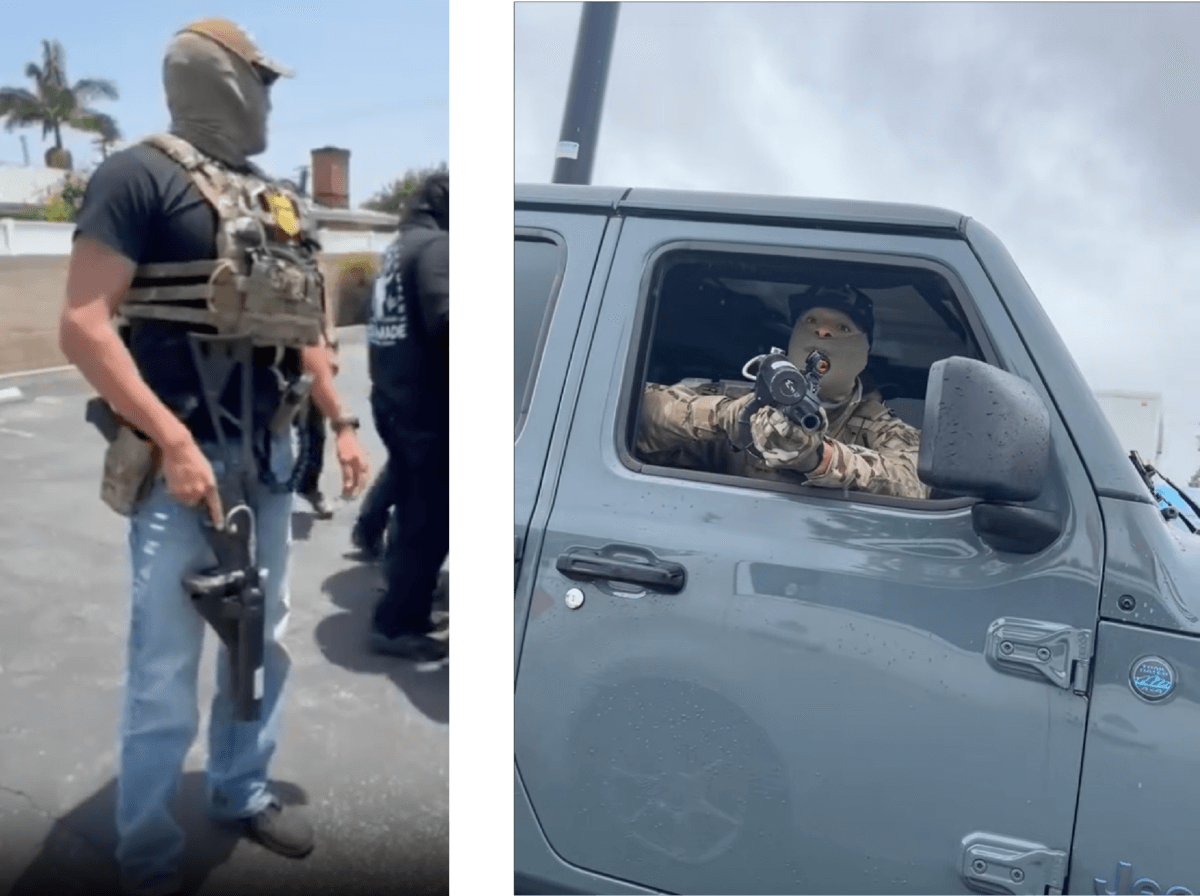
On closer inspection, the weapon can be identified by several distinctive features, including a round magazine, a side-mounted compressed-air tank, and a hose connecting the launcher to the air tank.
The U.S. Customs and Border Protection (U.S. CBP) has updated its use-of-force policy as of January 2021 which limits when and how pneumatic launchers can be used. Specifically, CBP’s policy restricts the use of pneumatic launchers against small children, elderly individuals, visibly pregnant women, and individuals who are operating a vehicle. Additionally, the policy limits the distance at which a PepperBall launcher can be fired; specifically, it is prohibited to fire a PepperBall launcher at a distance less than three feet (approximately 90 cm) from an individual, unless the agent believes deadly force is required and would be justified. If an FN303 is deployed, then the minimum distance that must exist for the deployment of the FN303 is ten feet (approximately 3 meters).
CBP’s use-of-force policy also provides specific guidance with respect to what constitutes the use of deadly force. Specifically, CBP’s policy instructs agents not to deploy the FN303 or PepperBall launchers in such a way that creates a “substantial risk of serious bodily injury” or death. Moreover, both PepperBall and FN America caution users to avoid vital areas when using their products because firing the weapons at these areas could result in serious injury or death.
A 2021 report by the U.S. Office of Inspector General found that CBP requires its agents to complete annual certification training to demonstrate proficiency with the use of the PepperBall and FN303 launchers. In contrast, Immigration and Customs Enforcement (ICE) does not have this same requirement.
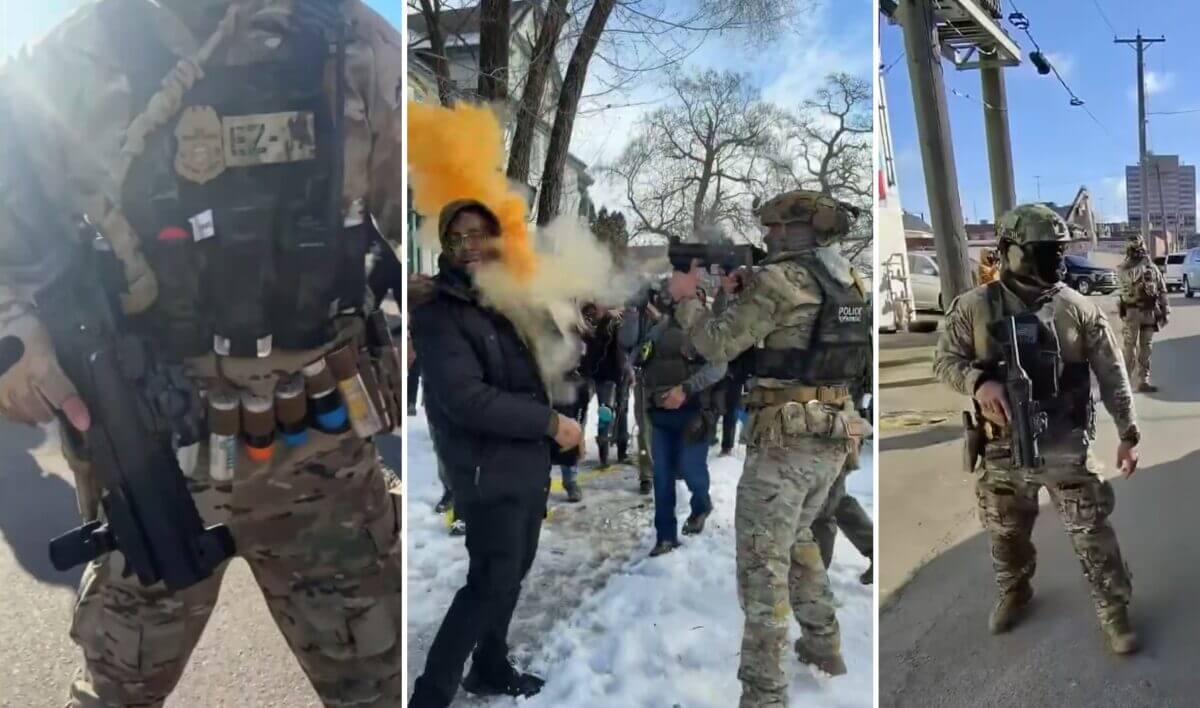
Federal agents often use 40mm launchers to shoot “less-lethal specialized impact and chemical munitions” (LLSI-CM) . The launchers look like military-style grenade launchers but are made to shoot less-lethal rounds; for example, sponge projectiles which will dispense a chemical irritant when they hit the ground.
Agents have also been shown on video using and carrying the B&T GL06 launcher as well as other 40mm systems (including multi-shoot Penn Arms launchers, with a six-round cylindrical drum) in various incidents.
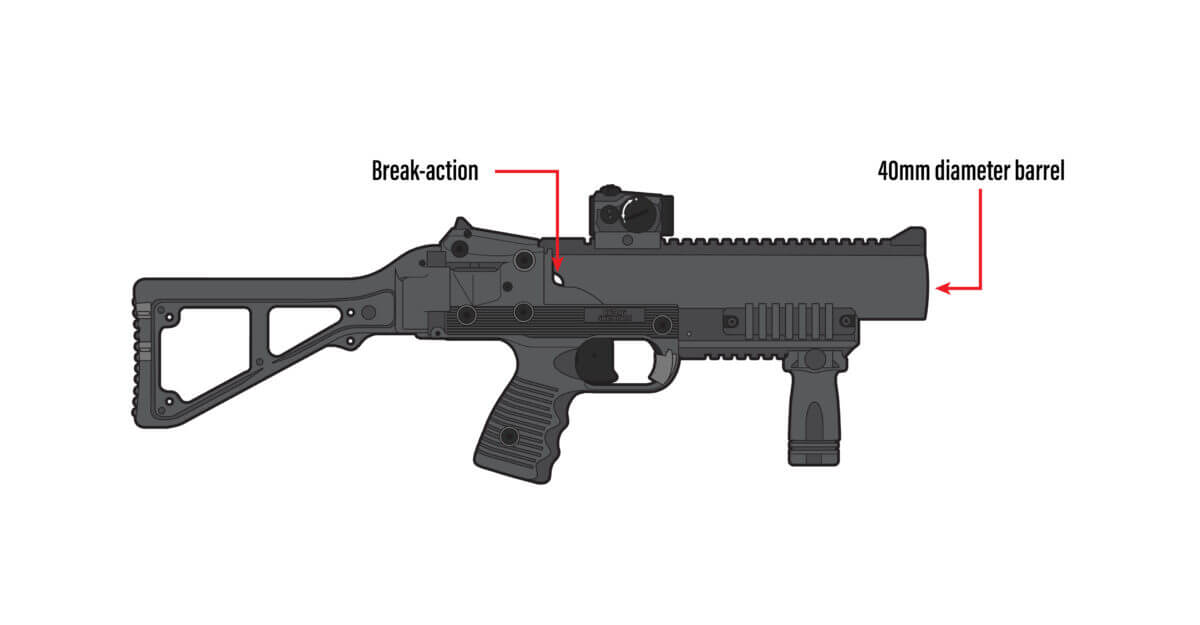
A variety of less-lethal munitions are available for 40mm launchers, including rounds designed primarily to induce pain through blunt impact, those that deploy chemical irritants, and others that combine both effects.
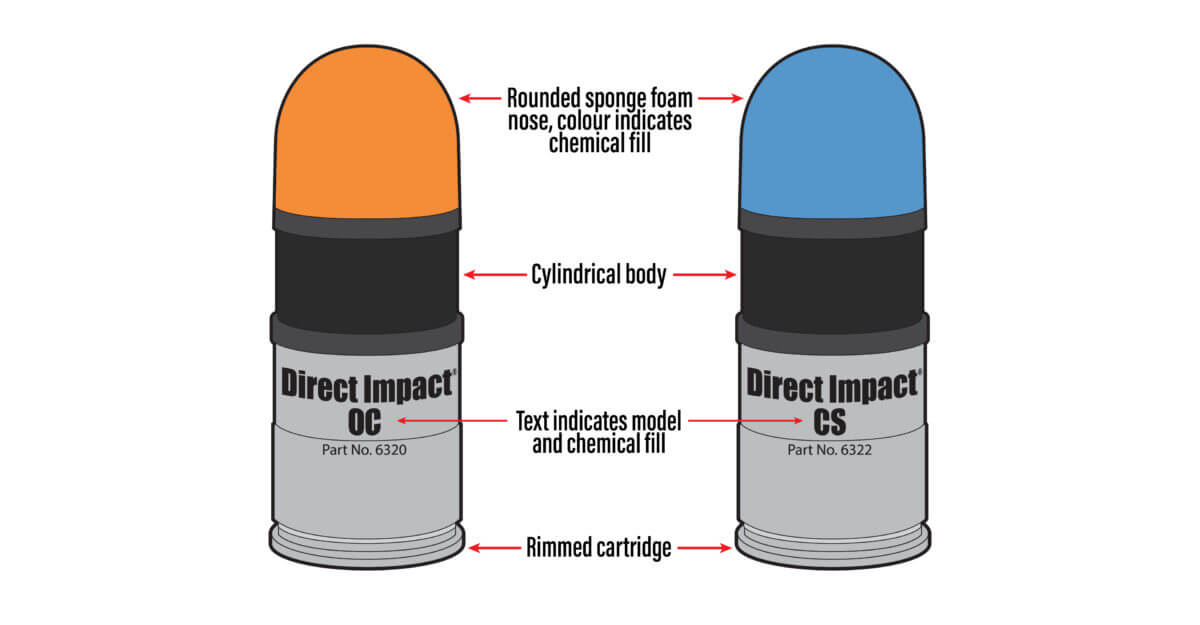
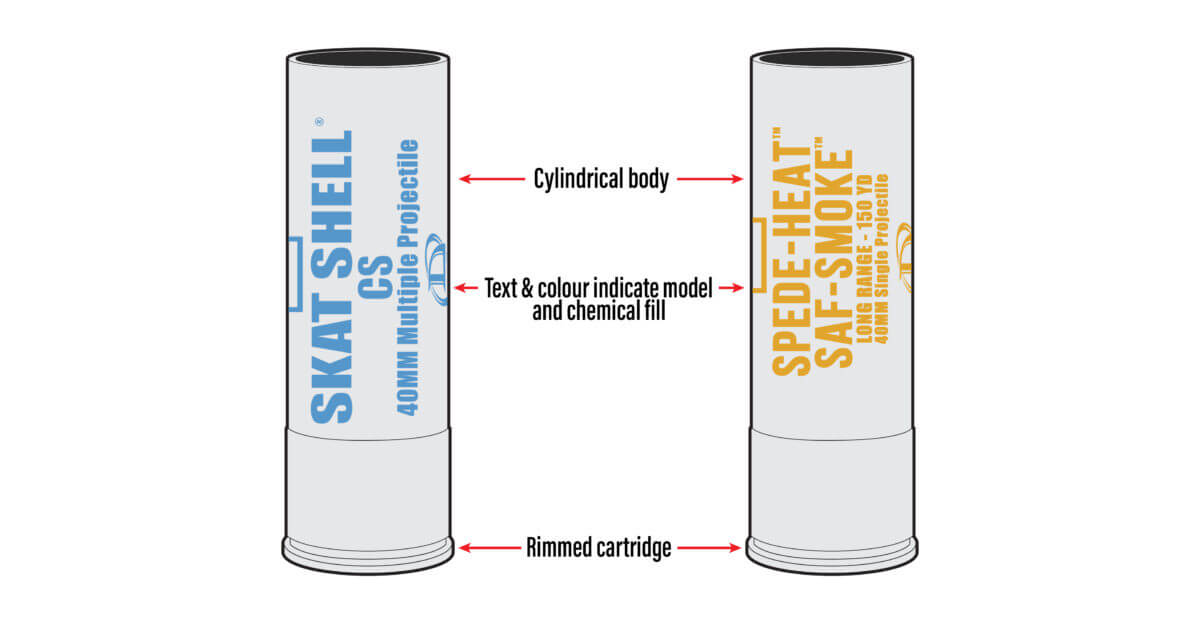
Other munitions are designed to disperse chemical irritants or smoke after being launched. For example, during the protests following Good’s death, a Border Patrol agent was seen firing a 40mm round that released multiple projectiles emitting chemical irritants in a single shot — consistent with Defense Technology’s “SKAT” round.
The January 2021 United States Customs and Border Protection use-of-force policy has established certain limitations for the application of Pneumatic Launchers. In this policy, it is specifically prohibited to deploy Pneumatic Launchers against children, senior citizens, pregnant females who appear to be visibly pregnant, or drivers. Additionally, the policy indicates that agents are to refrain from firing PepperBall Launchers at a range of less than 3 feet (or approximately 90 centimeters), unless the agent has deemed the use of deadly force to be justified and necessary. Similarly, the policy indicates that the minimum safe distance for agents firing the FN303 launcher would be 10 feet (or approximately 3 meters).
In addition to establishing ranges of fire for the specific firearms, the CBP Use-Force Policy also establishes specific guidelines regarding when an agent may intentionally aim for areas with a “substantial risk of serious bodily harm or death.” Specifically, the policy instructs agents to avoid targeting the head, neck, spine or groin area unless the agent has determined that the use of deadly force is warranted. The manufacturers of both the PepperBall Launcher and the FN303 Launcher provide users with similar warnings which advise users to avoid vital areas to minimize the potential for severe injuries or fatalities.
A 2021 report issued by the Office of Inspector General for the United States Department of Homeland Security found that CBP requires its agents to annually recertify their training related to the use of both the PepperBall Launcher and the FN303 Launcher; whereas ICE has no such annual recertification requirements in place for its agents.
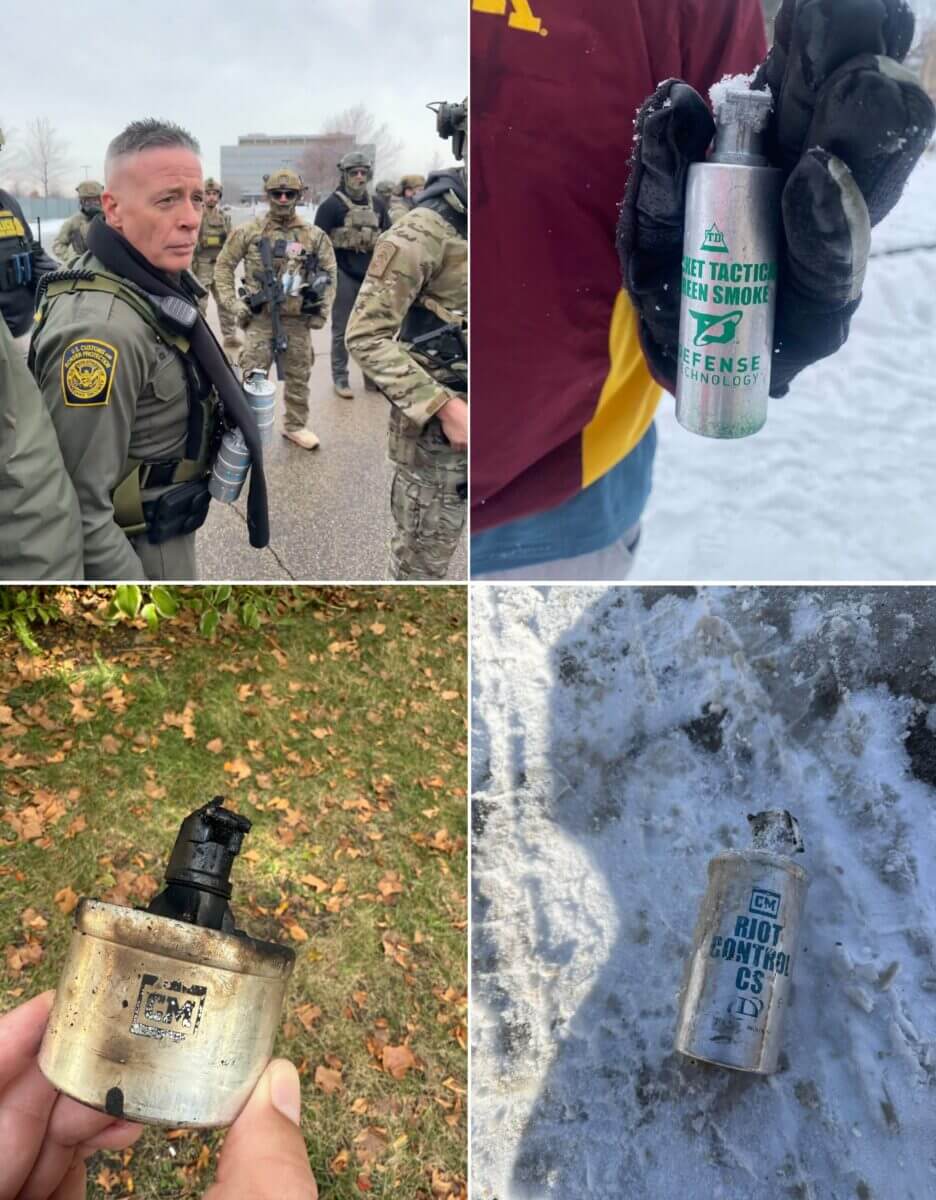
DHS agents were seen throwing some of the less lethal munitions with their hands. These include the flash bang grenades; as well as smoke, and tear gas grenades or canisters.
Upon deployment, the delay is short before the munitions are triggered. Flashbangs — commonly known as stun grenades — are meant to disorient others when they produce a bright flash of light and an extremely loud, explosive sound. Smoke grenades create a heavy cloud of smoke to make it difficult to see, while tear gas — known as CS gas, or OC gas — releases a heavy cloud of smoke, but it also has chemical irritant properties that cause burns to the eyes and respiratory system.
Most Defense Technology smoke grenades contain hexachloroethane, although the majority of its smoke products utilize “SAF-Smoke,” which is a less toxic smoke composition made from terephthalic acid.
Although it is toxic, hexachloroethane is not a nerve agent; however, misinformation was spread regarding DHS personnel using green smoke grenades in Minnesota.
The size, color, and any other markings on the munition can assist in identifying it.
Typically, less lethal munitions will display the manufacturer’s logo, model name, and product/model number. The text and branding are usually color coded to denote the payload: blue is generally used for chemical agents, orange is used for dispersal rounds, yellow is used for smoke, green is used for dye/mark agents, and black is used for munitions that do not have a chemical payload.
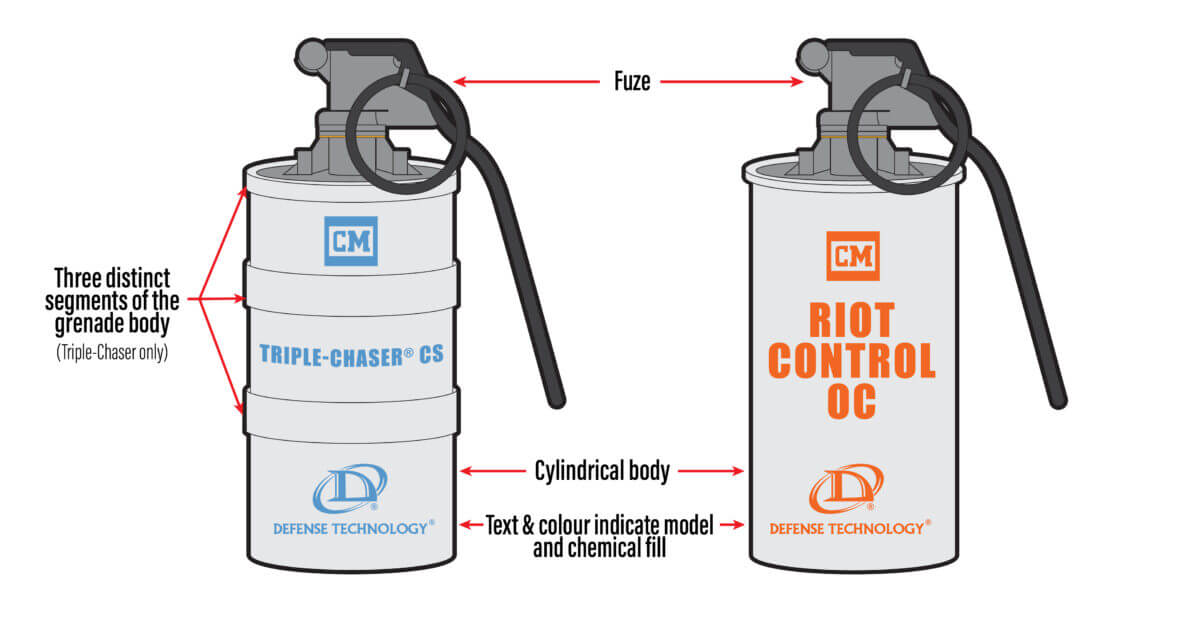
A 2021 study identified that Defense Technology and Combined Tactical Systems — the two companies responsible for producing a large majority of the less lethal ammunition employed by Federal Agents — have made their model number identification publicly available through posting them on-line. Additionally, using publically available price lists from Defense Technology and Combined Tactical Systems will allow you to identify specific types of ammunition (using their respective model numbers) that are being purchased by law enforcement agencies.
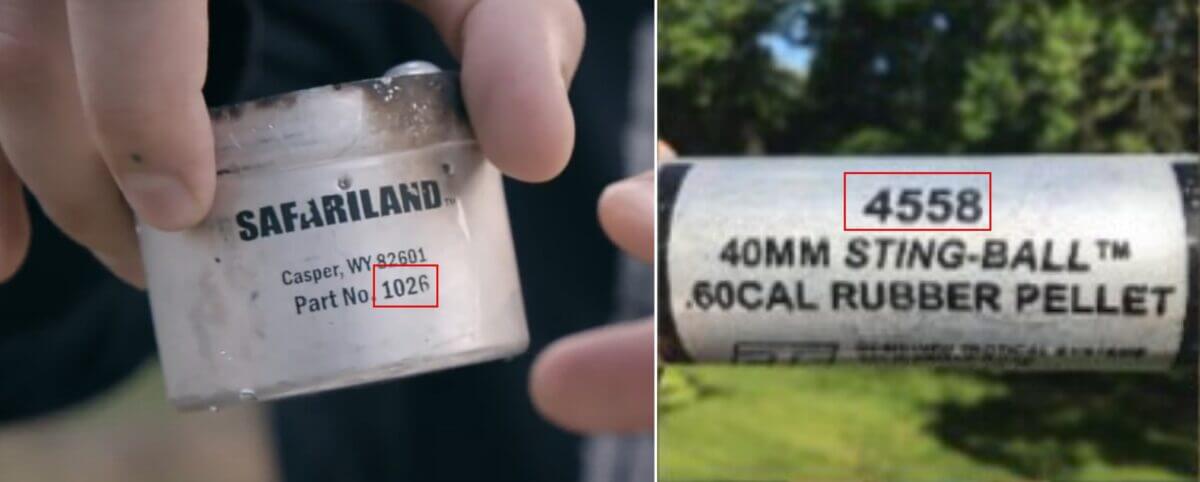
The 2021 U.S. Customs and Border Protection use-of-force policy states that hand-thrown munitions are subject to the same usage restrictions as impact and chemical rounds fired from launchers.
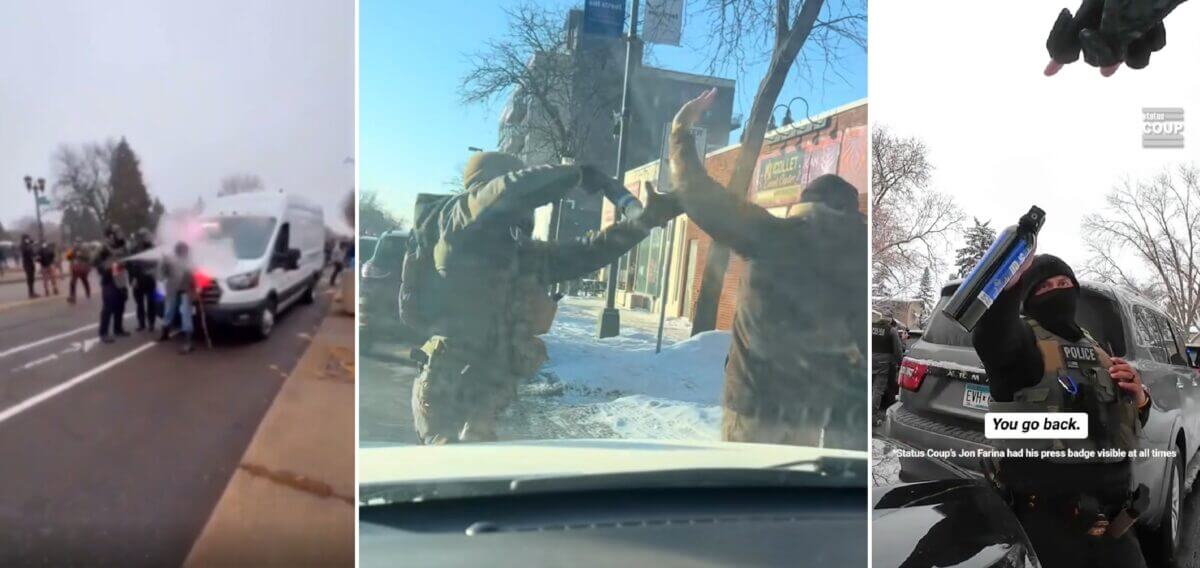
DHS agents also carry handheld chemical irritant sprays, commonly referred to as “pepper spray.”
These sprays come in various sizes and concentrations and may contain CS, OC, or a combination of both. Law enforcement versions are typically labeled with an “MK-” designation followed by a number, with higher numbers indicating a larger canister size. The concentration of the chemical irritants contained in the spray is also marked on the canister itself.
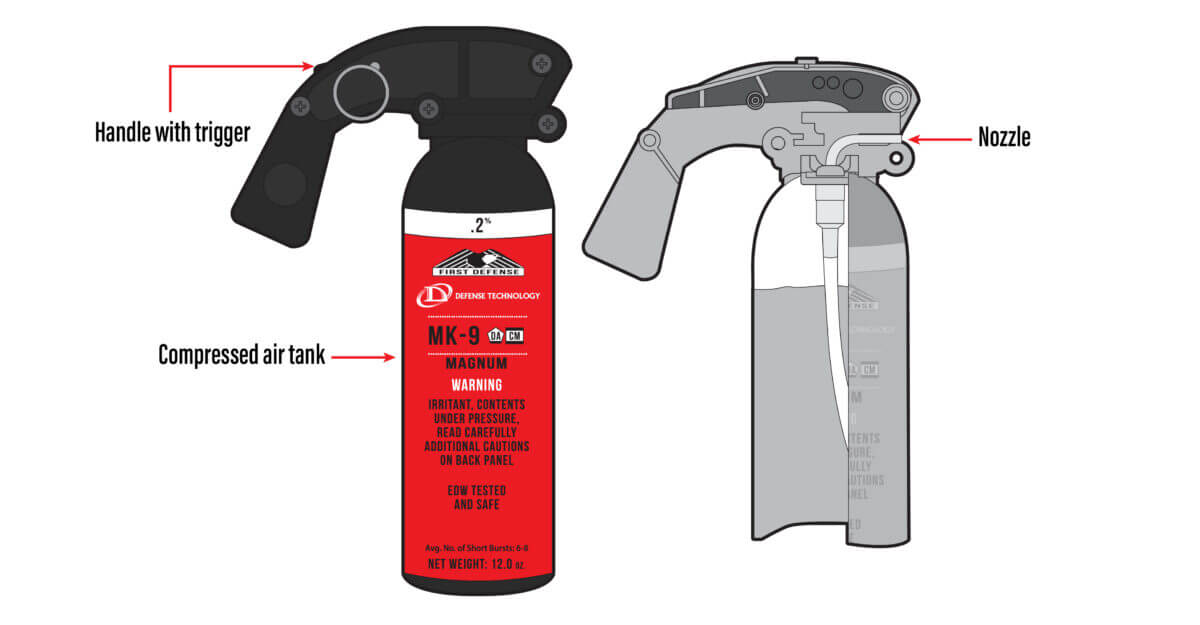
A major factor in determining the effectiveness of an OC (Oleoresin Capsicum) Spray is the percentage of Major Capsaicinoids contained within the product. As Major Capsaicinoids are the active compounds in an OC Spray that cause irritation, their effects depend on the type of aerosol pattern or stream being utilized.
Depending on the pattern of the aerosol being produced different patterns will affect how far the effective range is and what size of area is covered.
The concentration of Major Capsaicinoids contained in SABRE Sprays, which are designed for both Law Enforcement and Civilian Use, vary from .18% to 1.33%. In the United States, civilian sprays may have the same concentration of capsaisinoids as those used for law enforcement purposes, however they may be restricted to smaller canister sizes.
Sprays made by Defense Technology contain color-coded bands around the bottom of each canister to indicate the amount of major capsaisinoids in the OC Spray. The concentration of CS (Chemical Agent) is always standardized at 2% and the percentages of OC (Capsaicin Oil) in each product are indicated by:
White Band = 0.2%
Yellow Band = 0.4%
Orange Band = 0.7%
Red Band = 1.3%
Gray Band = Either CS (Chemical Agent) only OR A Combination of OC (Capsaicin Oil) and CS (Chemical Agent)
SABRE produces a wide variety of concentrations of Major Capsaicinoids for Law Enforcement use, such as 0.33%, 0.67%, 1.33%, as well as a variety of CS only and a combined OC / CS sprays. Most SABRE products can be identified based upon the label placed on the canister and their specific concentration and spray pattern.
According to a study completed by the U.S. Air Force Research Laboratory there appears to be some sprays that may create a considerable risk of severe eye injuries as a result of corneal damage created when large droplets of aerosol enter into the eye.
The Technical Specifications for Defense Technology products recommends a deployment distance of 0.9 to 1.8 meters from the individual being sprayed to be considered safe, depending on the specific spray model used. Although SABRE has no publicized information regarding a minimum safe deployment distance, the Mesa Police Department has documented that the SABRE Red MK-9 requires a minimum deployment distance of 1.8 meters. The 2021 CBP (U.S. Customs and Border Protection) use-of-force policy does not address a required deployment distance.
As part of the 2021 CBP use-of-force policy OC Spray can only be used against individuals who are actively resisting and cannot be used against small children, visibly pregnant individuals, or individuals operating vehicles.
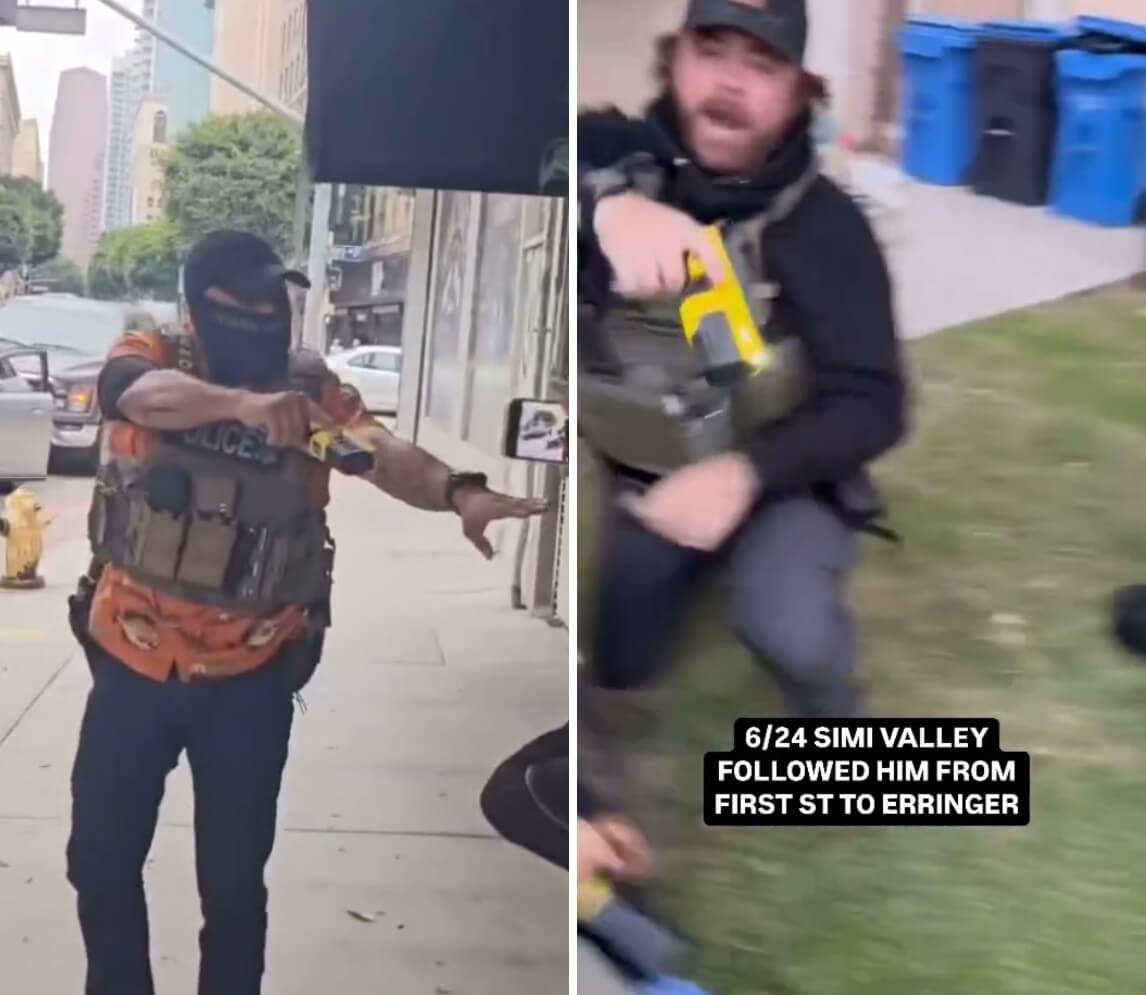
DHS agents have used electronic control weapons (ECWs) – more commonly referred to as TASERs — which was named after the first device produced for law enforcement use, on immigrants during immigration-related raids.
ECWs cause an electric shock in people they come into contact with and fire probes which insert into a persons clothes or skin to temporarily incapacitate them.
A “drive-stun” occurs when an agent places the ECW against a person’s skin causing local pain where the device makes contact with their skin. When the probes are fired from the device, it delivers electrical impulses throughout the person’s body causing involuntary muscle contractions. A person’s body stiffening or locking-up as a result of these contractions is usually indicative that an ECW has been used. ECWs can be used in either method.
ECWs are typically a mix of colors – black and bright yellow – however, the color of each model varies. The bright coloration is one way to visually identify that an ECW is different than the firearms used by federal agents; a firearm typically has a single round barrel while the ECW will have multiple round probe openings or rectangular cartridge covers. In addition, many ECWs are equipped with built-in flash lights and laser sights. Similarly, some firearms may also have these same features. Some ECW models produce a distinctive audible signal when they are armed or fired.
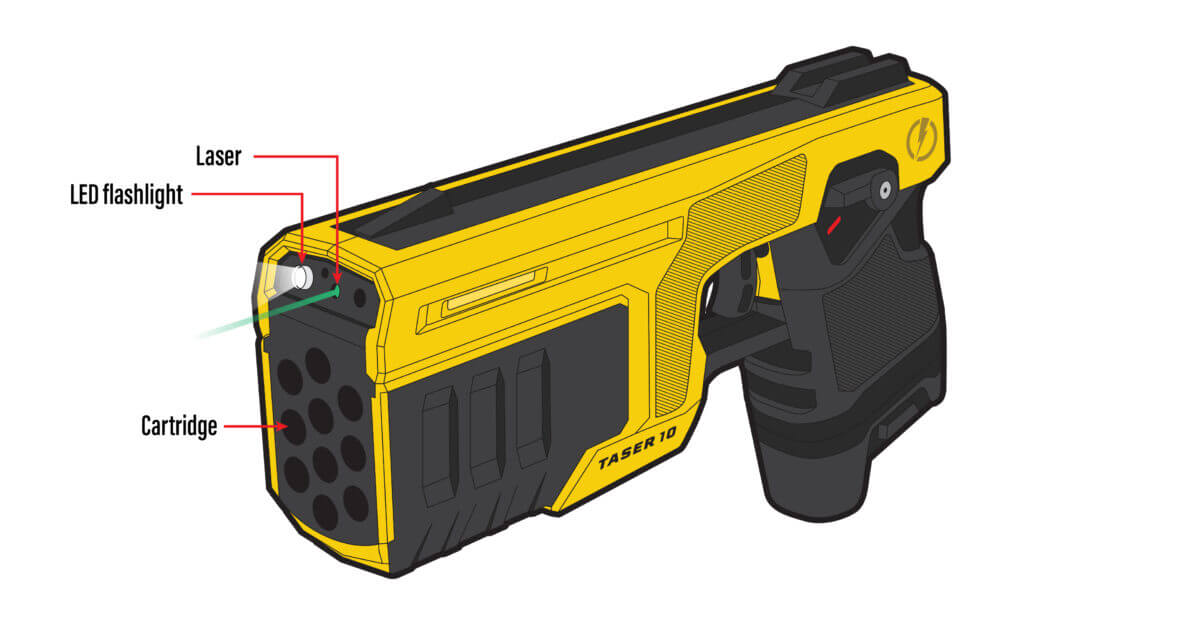
Axon is the main supplier of Electronic Control Weapons (ECW) and offers multiple weapon systems in this area, but most well known are the TASER 10 and TASER 7. Axon gives a great deal of information to the law enforcement community regarding the proper use of their TASER products, specifically that officers should be shooting at a location below the neck from the backside, or at the lower body from the front side. Officers should avoid sensitive areas when using their TASERs, which include the head, face, throat, upper chest, and groin.
Axon advises against deploying ECWs on very young children, the elderly, those who are pregnant, and on those who have less than average weight, as well as those in higher risk positions, such as running, operating a vehicle, or being elevated, except where justified by the added risk.
The U.S. Customs and Border Protection’s 2021 Use of Force Policy limits the deployment of ECWs in similar ways; that is to say, small children, the elderly, obviously pregnant women, and those operating motorized vehicles are all prohibited targets for ECW deployment. Additionally, CBP’s Use of Force Policy prohibits the deployment of ECWs against those who are running, or already restrained in handcuffs. Exceptions can be made to the above prohibitions provided that an agent has “reasonable cause” to believe that the person is an immediate threat to the safety of either the agent or other people. That threat must however exceed the potential danger of injury to the individual through an uncontrolled fall while running.