
10.04.2025
11 min
680



This piece takes a close look at the use of U.S.-made weapons during the fighting in Gaza. It is not about dramatic accusations, but about tangible technical traces: fragments of munitions, markings, design features, and other details that help determine where they came from. It is through these small but significant elements that the broader picture begins to take shape.

On the night of January 7 this year, three 250-pound bombs slammed into a residential building in the Al-Tuffah neighborhood in northern Gaza. Footage from the scene shows collapsed walls, piles of rubble, and blackened household items scattered across the debris.
Although a ceasefire has been in place since October, and the Peace Council led by U.S. President Donald Trump announced the start of its second phase, Israel has continued carrying out strikes in Gaza. The Israel Defense Forces said the target of the January 7 strike was a senior Hamas operative, describing it as a response to a violation of the ceasefire agreement.
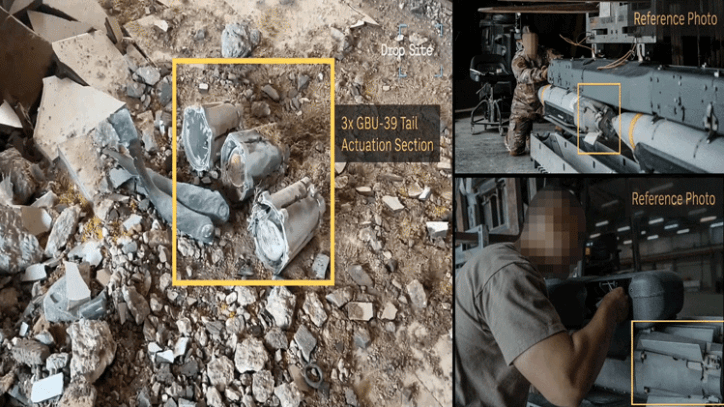
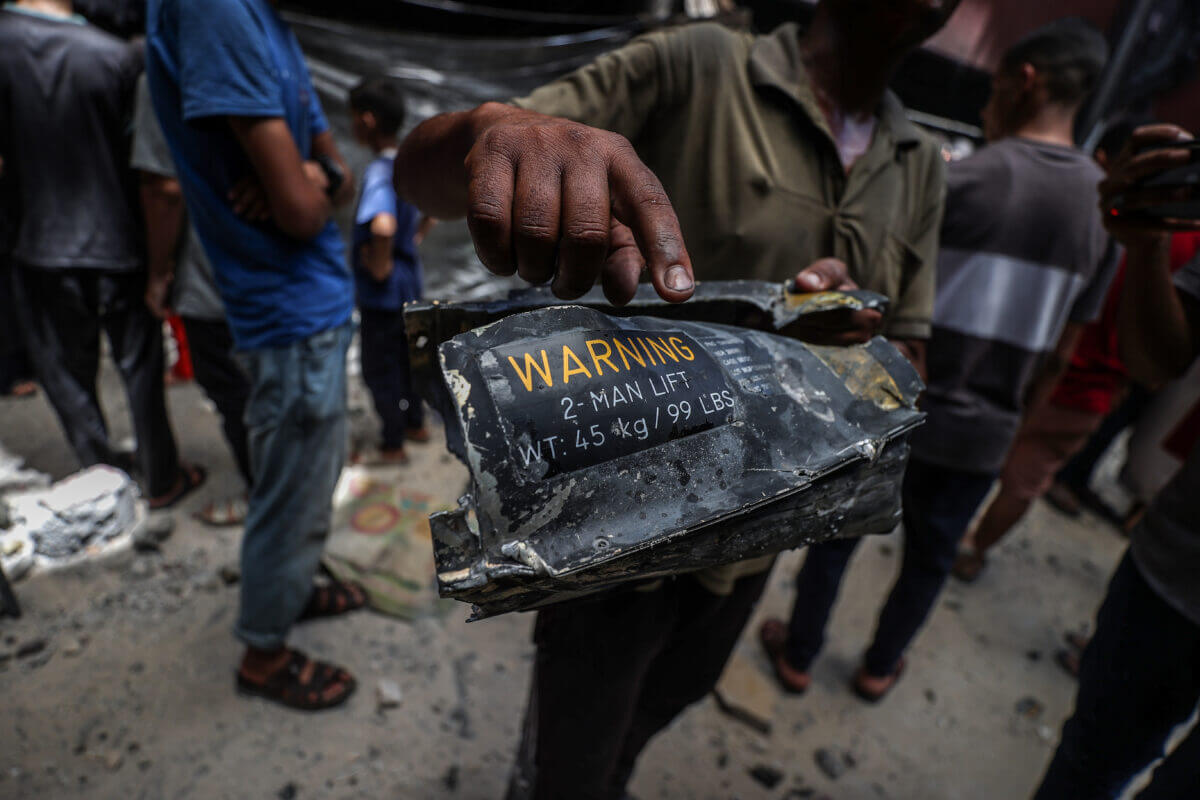
Two people were reported killed. While the strike was carried out by Israel, investigators found remnants of at least three U.S.-made GBU-39 small diameter bombs in the debris, including one that failed to detonate.
For years, the U.S. government has provided billions of dollars in military aid to Israel, which has become an important part of its warfare in Gaza.
Since the beginning of the latest war, Congress has passed laws that provide at least $16.3 billion in direct military assistance to Israel, while since the early months of the Trump administration, there have been approvals for nearly $12 billion in major arms sales to Israel, with the deliveries continuing for many years.
Amnesty International, Human Rights Watch and other international human rights organizations have made claims that U.S.-made weapons were used in Gaza by Israel in a manner that violated international law. International news agencies have also reported on several occasions about individual instances where Israeli military actions using U.S.-made weapons in Gaza resulted in the alleged death or injury of civilian populations.
A 2024 report from the U.S. State Department, published during the Biden Administration, indicated that the U.S. provides a significant portion of the weaponry used by the Israeli military, and that there may be some examples where the use of U.S. weapons may not have complied with international humanitarian law, or with best practices that are designed to reduce harm to civilians.
In response, Israel officials argue that they operate according to international law and attempt to limit their military actions to avoid harming civilian populations. The stated goal of Israel continues to be the neutralization of Hamas’s military capability.
However, due to the lack of data and the fact that most foreign correspondents have been excluded from reporting in Gaza, much of what we know about the extent of civilian casualties is based on social media videos and the reports of local correspondents who operate in extreme danger and whose numbers include some casualties themselves.
Individuals researching incidents of the use of U.S. made munitions compiled evidence of at least dozens of separate incidents, one example being a January 7 attack in Al-Tuffah neighborhood in which U.S. made munition components were visible among the wreckage of buildings attacked by Israeli aircraft.
Each of the cases studied were determined solely through open source materials, i.e., photos, videos, newspaper articles and social media postings. At least 79 specific cases were identified as being related to the use of U.S.-made munitions. While many of the cases included casualty totals and property damage to private residences, schools and medical facilities, the study did not attempt to document all incidents of the use of U.S.-made munitions, but rather only those that could be publicly verified.
Following Hamas’s October 7, 2023 terrorist attacks against Israel, resulting in the deaths of more than 1200 Israelis and the taking of hundreds of hostages, the violence escalated rapidly. As a result of the escalation in violence, Israel initiated extensive bombing campaigns against Gaza. Over the course of the first seven weeks of the conflict, estimates indicate that at least 30,000 munitions were fired by Israel into Gaza. On some days, more than 100 different targets were hit by Israel in a single day.
If each incident involving U.S.-made weapon components is tallied, it would likely be a small percentage of the overall total number of incidents over the more than two-year-long period of warfare.
Another complicating factor exists. Certain types of munitions, such as the MK-80 series, are manufactured by both the United States and Israel. Because the components of the munitions do not have unique identifiers, such as lot numbers, etc., without additional documentation, it cannot be definitively determined whether the munitions came from either country.
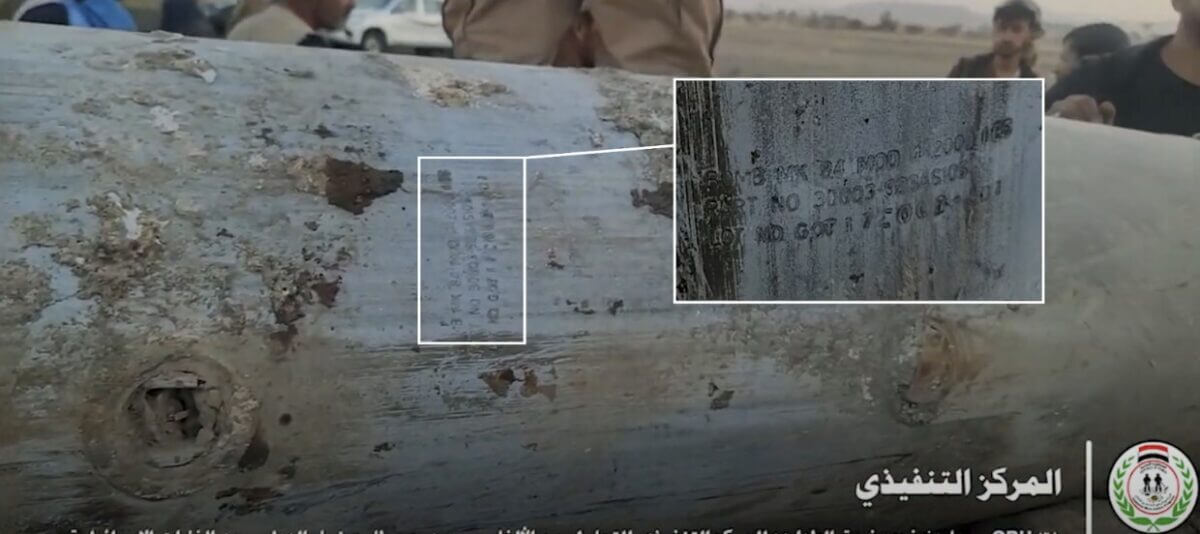
As a result, it was determined that the focus would be placed on only three different types of munitions, which are all produced solely in the U.S., and therefore are not made in Israel; the munitions include Hellfire missiles, GBU-39 small diameter bombs, and JDAM (Joint Direct Attack Munition) guidance kits. This reduced the number of possible incident cases that could be studied, as a result of the limited options.
While the review did not track the MK-80 series bombs themselves, the JDAM kit is one of several guidance systems that may be added to bombs such as the MK-84 and is only produced in the United States.
The full dataset is available at this link. The munitions identified in the data have been reviewed by Frédéric Gras, an independent expert and consultant in the area of Explosive Remnants of War.
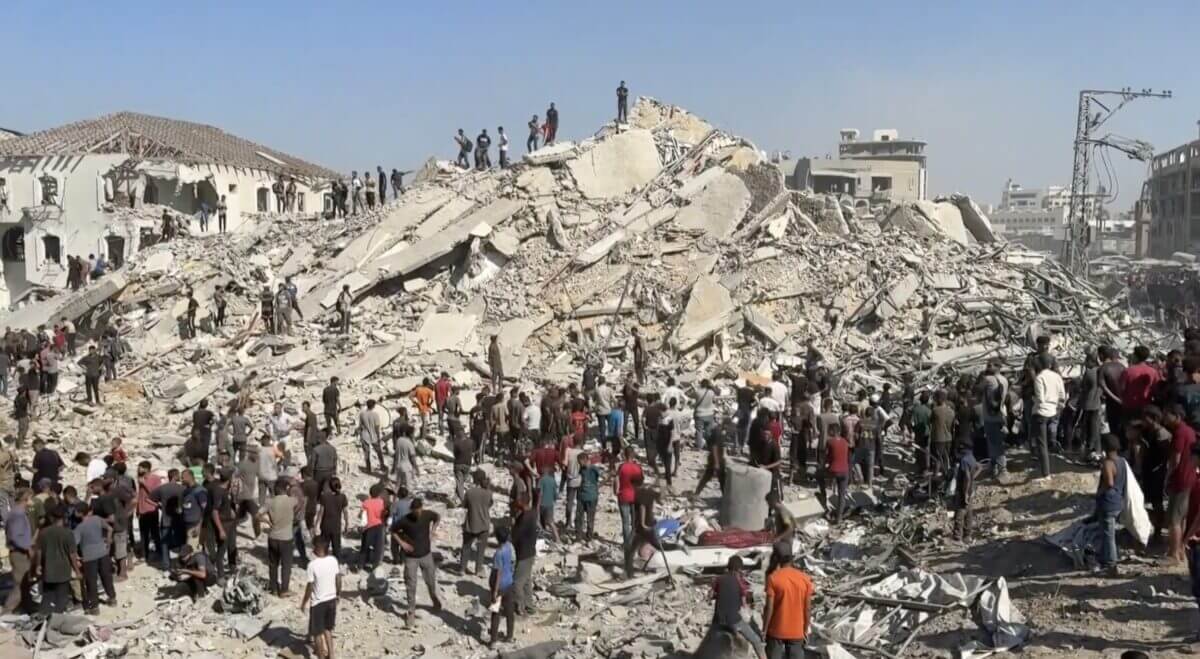
Although there are clearly numerous reasons to question and restrict the extent to which this analysis is valid, the authors document 79 examples of where the remnants of three types of U.S.-produced munitions (GBU-39s, MK-82/83/84/85s and MK-84/86) were located in the aftermath of a U.S. aerial attack or were present in footage seconds before an airstrike.
Besides the 79 examples documented in the data set, there were another 26 examples of U.S.-produced munitions being utilized in other attacks; however, the authors could not geolocate the point of attack or the recovered pieces of the munition before releasing their report. Therefore, some of the unverified examples may still potentially be geolocated in the future.
Additionally, a large number of the geographic locations listed within the data set were initially identified through the work of independent geolocation researchers, and/or volunteers associated with the GeoConfirmed community (Anno Nemo, Abu Location, fdov , Кріса Осіека, Цві Адлера and Вілла Кобба). All of the previously mentioned locations were subsequently confirmed and verified by the authors.
There is a wide variety of documentation available (some of which reference health officials in Gaza), suggesting that at least 744 people were killed during the 79 examples of strikes documented in the study. There were at least 78 female victims, and at least 175 male victims that were under the age of 18.
Although Israel does occasionally release their own estimates regarding the numbers of civilians that have been killed due to their airstrikes, they do not typically provide their own estimates for the number of civilians killed during a particular incident. Additionally, Israel has also accused Gaza’s Health Ministry of exaggerating casualty numbers after a particular incident occurs. Upon reviewing reports made to the general public about each of the 79 strikes documented in the study, the authors were able to find evidence to suggest that the Israel Defense Force (IDF) stated that at least 69 of the people killed were militant members of Hamas or other organizations.
Following a strike in which at least 33 people were reportedly killed, the IDF stated that they had targeted “dozens” of Hamas members, and they provided the names of 17 people they believed to be members of the organization.
A spokesperson for the IDF stated that Israel “attacks military objectives and strikes military targets according to international law, and that it uses all possible means to prevent injury to civilians and civilian structures.”
Palestinian health officials claim that over 70,000 Palestinians have died since the beginning of the conflict in Gaza. Israel has repeatedly denied these claims. However, in recent weeks, Israel’s media have referenced anonymous IDF sources stating that the numbers reported by Palestinian health officials are substantially accurate. Israel states that they have killed approximately 25,000 militants in Gaza.
The study documents the use of U.S.-made munitions in 28 strikes against schools, mosques, shelters, and residential buildings. GBU-39 munitions were found at the location of 20 of the school strikes. The majority of these strikes took place prior to the January 2025 ceasefire.
For example, the Khadija School in Deir al-Balah suffered two separate rounds of airstrikes on July 27, 2024. The two rounds of airstrikes consisted of both GBU-39 bombs and MK-80 series bombs equipped with JDAM guidance systems. Satelite images taken of the school before and after the attacks show significant damage to the structure.
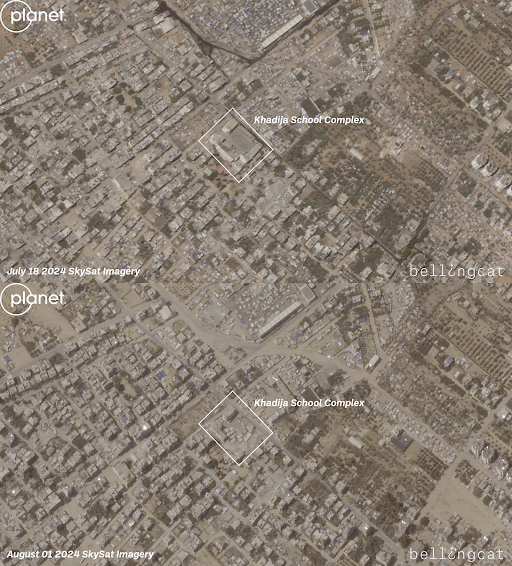
Footage from the ground provided additional detail, showing that the first wave of airstrikes hit five different areas within the school complex.
An unexploded GBU-39 bomb casing was found inside the school, and the fuze from a detonated GBU-39 was photographed near the destroyed gate.
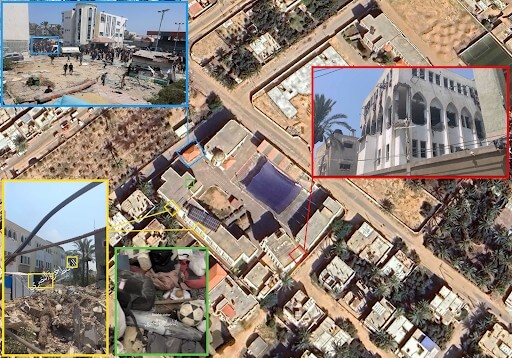
An evacuation notice was reportedly issued afterward, and two buildings on the eastern side of the complex were then struck with larger bombs, leveling them completely. Another evacuation warning was reportedly given before the third strike.
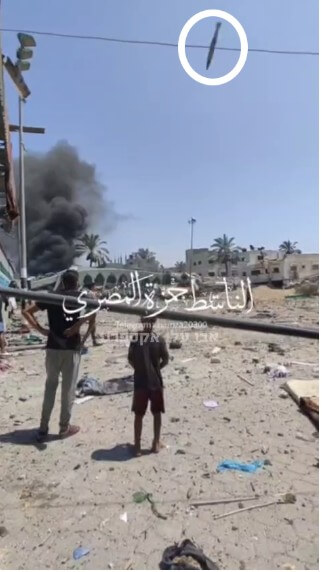
Video of the third strike shows at least six people, including a child, standing roughly 55 meters from the point where a U.S.-made JDAM-equipped bomb hit one of the already damaged buildings on the eastern side of the complex.
According to reports compiled by Airwars, at least 30 people were killed in the three strikes, including 15 children and eight women. The same reports say that at least 100 others were injured. The Office of the UN High Commissioner for Human Rights stated that most of the casualties occurred during the initial strikes.
In late February 2025, the United Nations stated that 403 out of 564 school structures in Gaza were damaged as a result of either airstrikes or some other type of munition. It is also common for schools to be used as shelter, particularly during times of conflict. Israel, on occasion, has suggested that some of these buildings were functioning as Hamas command centers at the time of an airstrike.
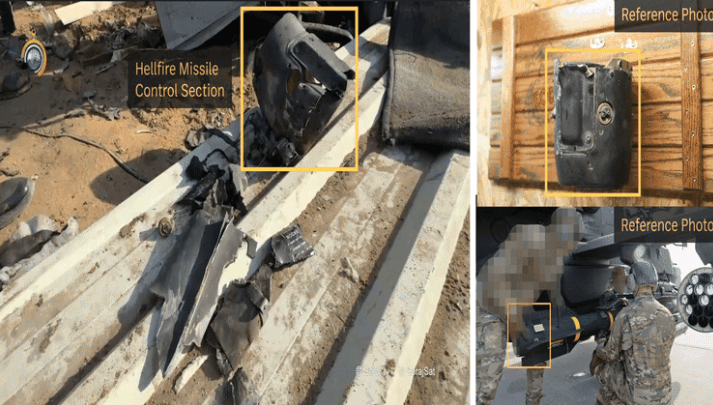
The majority of the strikes against schools since fighting resumed in March 2025 have been with munitions made by Israel. Two school strikes have been identified as being with U.S.-made munitions since that time. The first was a May 2025 attack on the Fahmi Al-Jarjawi School; the U.S.-made GBU-39s used by Israel killed 36 people, based on reports from hospitals in Gaza. The second was a July 2025 attack on the Cairo Elementary School, which resulted in the deaths of five people, and remnants of a Hellfire missile were recovered at the scene of the attack.
There is no additional documentation to support the presence of other strikes in schools utilizing U.S.-made munitions during that time frame. While this does not preclude the possibility of strikes occurring, it illustrates the limitations of what can be documented and confirmed with enough evidence to support claims made publicly.
The documentation identified two incidents in which U.S.-made munitions were intentionally fired at medical facilities. On June 2024, a Hellfire missile struck an ambulatory clinic in Gaza City. Hani al-Jaafarawi was killed in the incident; he had served as director of the ambulance and emergency response service for Gaza. Military officials stated the intended target was Muhammad Salah, whose military involvement included weapons development for Hamas.
On September 2024, a GBU-39 bomb was dropped on the Civil Defense headquarters located in the Al-Daraj neighborhood of Gaza City. The munition penetrated the multi-level structure of the Civil Defense headquarters and failed to detonate upon impact. No fatalities resulted from the bombing, but multiple individuals sustained injuries.
There were also five more incidents in which U.S.-made munitions were used to attack or strike close proximity to medical facilities. Four of the five instances included Hellfire missiles striking tents approximately 150 meters away from the primary location of Al-Aqsa Martyrs Hospital in Deir al-Balah.
During the fifth strike, a U.S.-made JDAM guidance kit was reportedly used, likely attached to a 500-pound MK-82 bomb, targeting the Al-Aqsa Mosque across from the hospital, roughly 50 meters from the main hospital complex. According to Gaza’s Health Ministry, 26 people were killed in that strike.
A U.S. Marine Corps manual on close air support states that an MK-82 bomb delivered within 425 meters is considered “danger close,” and that a bomb delivered within 250 meters is one hundred times more dangerous than the minimum standard defined as “danger close.”
Twenty-six strikes were identified in which U.S.-made munitions were used to hit buildings, including homes, schools, and mosques, after the Israel Defense Forces had issued evacuation notices. In 23 of those cases, no damage was reported. In others, however, significant destruction occurred despite prior evacuation warnings.
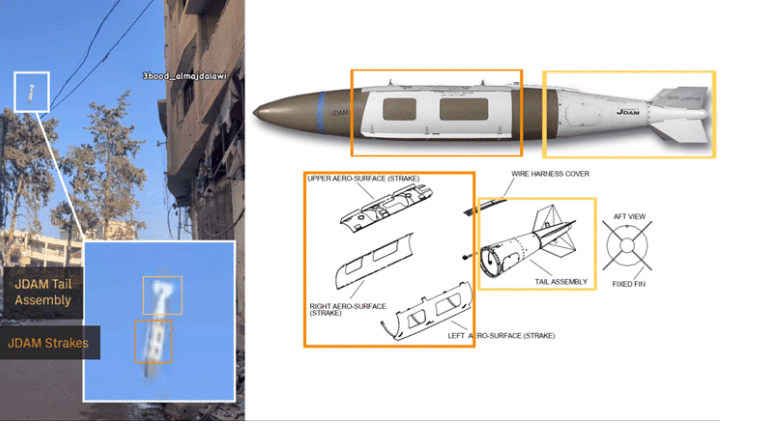
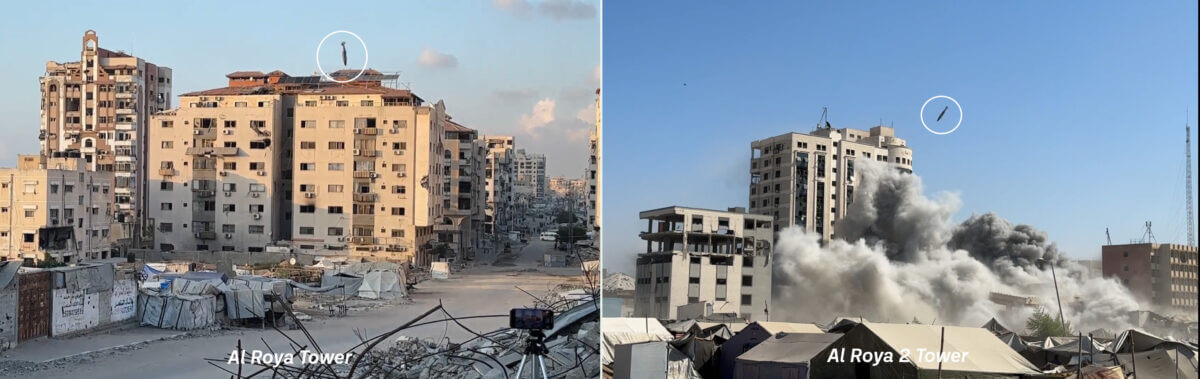
Evacuation notices are alerts issued ahead of strikes and may be posted on social media or sent directly to people’s phones. These warnings often give journalists on the ground time to set up cameras to record the upcoming strike. Some of this footage is clear enough to identify the guidance system attached to the falling bomb, including JDAM kits visible in mid-air.
By September 17, 2025, Israel said it had destroyed 25 high-rise buildings as part of preparations for an assault on Gaza City. At least seven high-rise buildings in Gaza City, including the Al-Soussi, Al-Roya, and Al-Roya 2 towers, were identified as having received evacuation notices before being demolished with MK-80 series bombs fitted with JDAM guidance kits.
The 13th Century Aibaki Mosque was also hit with MK-80 series bombs fitted with JDAM Kits. The Israel Defense Force (IDF) stated that the target was Khaled Nabil Saleh Shabat, described as the Deputy Commander of a Hamas Heavy Machine Gun Unit. The IDF states that high-rise buildings in Gaza house Hamas infrastructure, such as observation towers and prepared firing positions.
Public warnings by the IDF in Gaza City in September 2025 provided specific neighborhood areas along with residents within the targeted buildings and nearby tent dwellers with evacuation instructions to leave and proceed south to an area designated by the IDF as a humanitarian zone.
Unlike strikes in Lebanon where evacuation notices were issued with maps to instruct civilians to move a minimum of 500 meters away; there has been a review of IDF evacuation notices directed to Gaza in September 2025 forward, which show no evacuation notices with recommended safe distances.
When asked if the evacuation messages sent via mobile phone differed from the evacuation messages posted publicly and why the Gaza notices did not contain a recommended safe distance similar to those posted in Lebanon; the IDF replied “we give clear and detailed advance warnings via several means including postings by our Arabic language spokesman, and allow civilians to leave prior to an attack.”
Since bomb shrapnel or building collapse debris can cause injury or death to individuals hundreds of meters away; the distance civilians are allowed to move may matter.
Following an airstrike against the Harmony Tower, Anadolu Agency released video footage depicting a group of approximately 120 meters distant from the strike location, who were killed or injured while having received an evacuation notice.
U.S.-made munitions were also used in other Israeli strikes including one reported to have killed Hamas Military Leader Mohammed Deif. It was reported that the strike resulted in the killing of at least 90 people, and remains of components from the U.S.-made JDAM kits were located at the site of the strike. U.S.-made munitions were also employed in a September 2025 strike reported to have killed a Hamas Spokesperson known as Abu Obaida, and at least six other individuals; where pieces of U.S.-made GBU-39 bombs were retrieved.
U.S.-made munitions were also employed in conjunction with unknown munitions during the Israeli Hostage Rescue Operation in Nuseirat in June 2024, where approximately 274 people were reported killed. Since those 274 deaths are not included in the total number of 744 fatalities contained in the data set, due to unknown munitions being utilized in at least 13 strikes during that operation.
When asked how many civilian deaths in Gaza may be attributable to the employment of U.S.-made munitions; a U.S. Department of State spokesperson replied that the U.S. Government “cannot determine” that number.
Additionally, when asked by the department if they had conducted an independent assessment of U.S.-made weapon utilization by Israel outside of NSM-20, and if they determined that the U.S.-made weapons had been used by Israel in instances that did not meet international humanitarian law, or did not comply with established best practices to reduce civilian casualties; the spokesperson replied “that NSM-20 is no longer United States policy”.
Additional inquiries concerning the munitions mentioned in this article were referred by the U.S. Department of State to the Israel Defense Forces. The IDF replied that they do not disclose the specifics of the munitions they employ and stated that Hamas utilizes civilian infrastructure for terrorist activities.