13.05.2024
26 min
1657



Global maritime logistics runs on trust in paperwork: a vessel’s flag, registration records, safety certificates, technical inspections. But what happens when those documents turn into fiction — and any ship can effectively “acquire legitimacy” on demand? That is exactly what this article explores: how certain entities emerge on the market selling the appearance of legality, and why that façade becomes a convenient cover for high-risk operations.
In this piece, we break down how false flags work, why an “official-looking” certificate does not guarantee authenticity, and how maritime schemes are built in ways that blur responsibility between contractors, registries, and intermediaries. To an ordinary reader, it may sound like dry bureaucracy. In reality, it is about human safety, environmental consequences, and the ability to bypass restrictions when oversight is weak or purely formal.
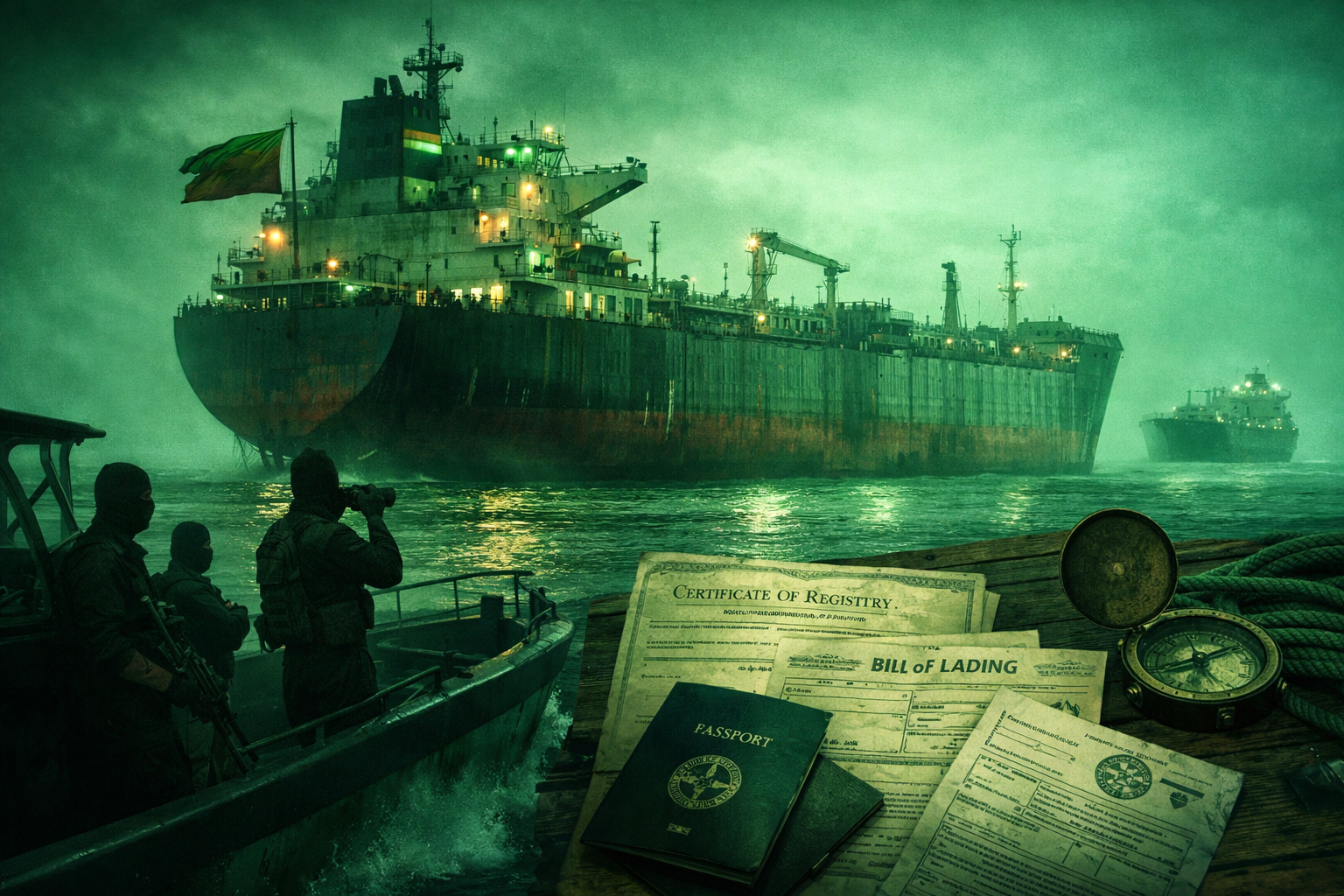
Incidents have included an aging vessel found abandoned in India; a shipment of ammunition seized in Senegal; and an attack on an oil tanker in Malaysia — all involved aging vessels using forged documentation, and one common element: Captain Suniel Kumar Sharma.
The Governments of Dominica, Guyana, Samoa, Federated States of Micronesia, and Eswatini, along with the United Nations’ International Maritime Organization (IMO), have been accusing Sharma of providing false documentation to ships for over a decade, including certification to allow ships to operate under another country’s flag.
Sharma told the Financial Times during a recent interview, that his best known flag registry, the International Maritime Safety Agency of Guyana (IMSAG), is no longer in operation. The investigation discovered IMSAG-issued certificates were produced as late as December 2025. Sharma also stated during the interview he had never established any other registries.
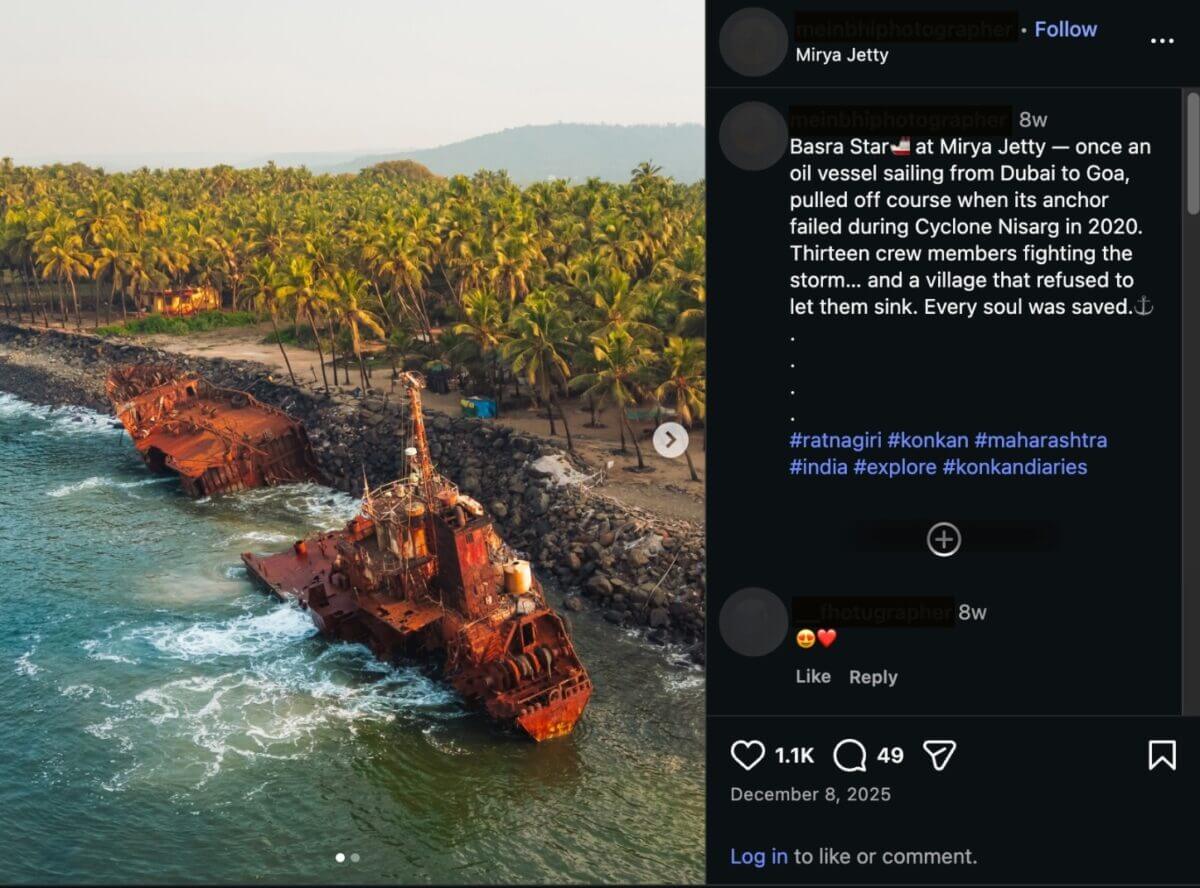
A Typhoon that occurred in June 2020 forced the 38-year-old oil tanker MT Basra Star (IMO 8515817) to run aground offshore India. An insurance surveyor’s report indicated the ship should be immediately dismantled after the incident. However, the ship remained stranded for five years, being consumed by rust on the beach until it was eventually broken up in January of this year.
Two years prior to MT Basra Star running aground, it was reported by the IMO and Samoa’s Government regarding an alert to the public of a company called Ascent Navals and its director, Captain Suniel Kumar Sharma, which appeared to represent Samoa, however, was found to have no governmental authorization.
Ascent Navals was the classification society for MT Basra Star and the vessel was flying the flag of Samoa at the time of the grounding of MT Basra Star as stated in the insurance report.
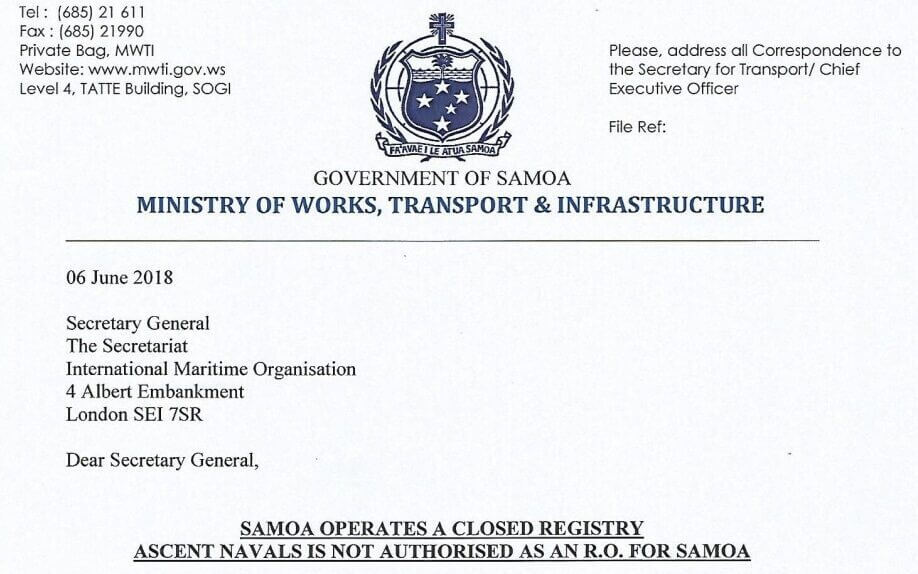
The vessel sailed under a fake “Samoa False” flag and relied upon an invalid classification society, Ascent Navals. Therefore, it was ultimately left unaccountable in terms of a responsible authority once the worst case occurred. Neither a Flag State had legal accountability to the stranded vessel.
Journalists contacted the owner of the vessel, Shat Al Arab Marine Supply LLC, the insurance surveyors Uday Bhogate & Associates, and the owner of Ascent Navals and its director, Suniel Kumar Sharma. All parties declined to provide comments.
A little over two years from the time the Basra Star incident happened, a second old vessel, operating under a false flag and carrying illegal cargo, was discovered by Senegalese customs at the Port of Dakar. Customs inspectors on board the 39-year-old cargo ship, Eolika (IMO 8214968), found three secret containers loaded with ammunition valued at approximately $5.2 million USD. Eolika was sailing under a false Guyanese flag.

The IMO, together with the authorities of Guyana, issued a public condemnation of the flag of the vessel “Eolika” and the flag she sailed under as being illegitimate in an open letter. This condemnation was made due to the existence of a non-legitimate registration process operated by International Maritime Safety Agency of Guyana (IMSAG). IMSAG has been found to register vessels for a fee without first obtaining authorization from a legitimate flag state.
Guyanese law enforcement officials have also publicly committed to investigating this “fraudulent enterprise” led by Captain Suniel Kumar in conjunction with Interpol. There is no evidence that either Sharma, nor his companies, were involved in shipping illicit commodities. As such, the IMO issued their alert regarding the provision of fictitious documentation by IMSAG. Fictitious documentation provided by IMSAG enables vessels to be registered and subsequently sail without legitimate oversight; and as previously illustrated by the Basra Star, sailing under the flag of a registry that does not exist is invalidating insurance, endangering the lives of sailors and crew, and creating environmental hazards.
However, Sharma’s companies are far from the only entities issuing fictitious documentation. In 2019, a group of marine analysts from Windward identified 285 international tankers that had been issued false flags by one of 18 fraudulent registries. These false flags were primarily issued for sanctioned ships seeking to circumvent sanctions. As reported in Lloyd’s List Intelligence, the fraudulent registry established by IMSAG in Guyana became the largest entry point for sanctioned tankers seeking to reflag.
For example, earlier this year, the sanctioned tanker Nora (IMo number 9237539) was detained while anchored offshore of Malaysia, and had switched to a false Guyanese flag issued by IMSAG on 1 February 2025. Nora, along with another sanctioned tanker, Rcelebra (IMo number 9286073), was intercepted by the Malaysian Maritime Enforcement Agency while participating in an unauthorized ship-to-ship cargo transfer.
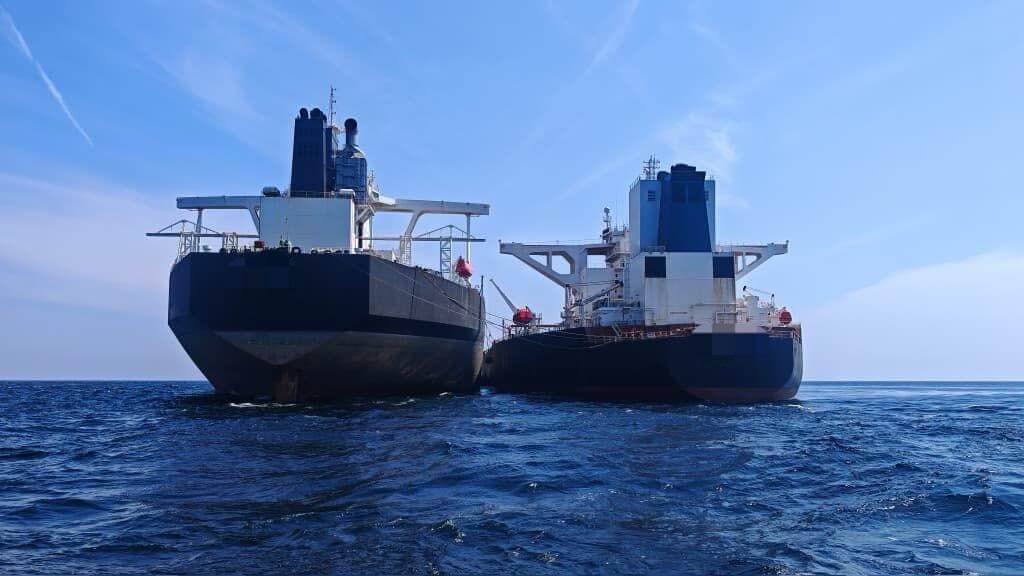
Both captains and 53 crew members were detained. According to the Malaysian Maritime Enforcement Agency, the crude oil cargo was valued at more than 512 million ringgit, approximately 130 million US dollars.
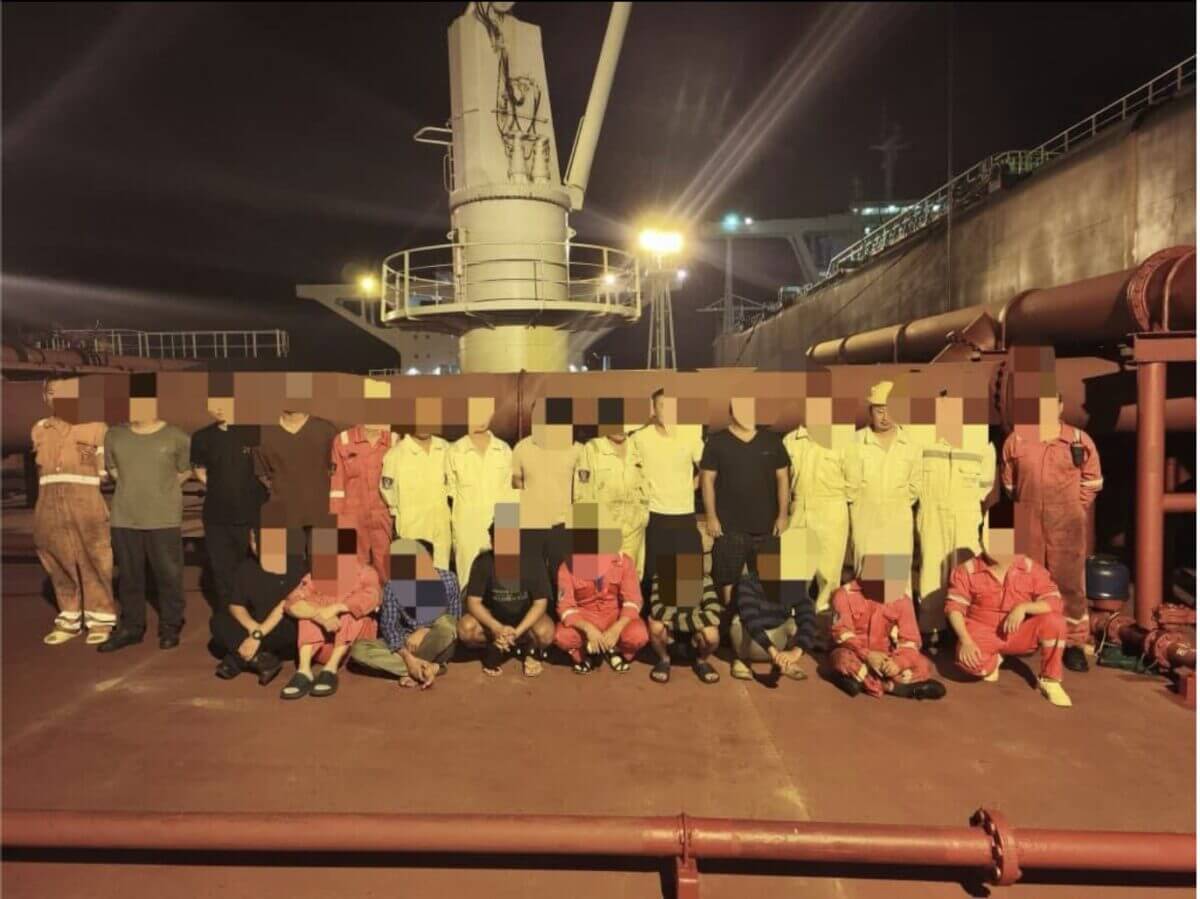
However, within days both tankers were released. The Malaysian Maritime Enforcement Agency imposed the maximum fine of 300,000 Malaysian ringgit, about 76,000 US dollars, for the unauthorized ship-to-ship transfer. While the MMEA stated that it acted to enforce Malaysia’s environmental and maritime safety laws, it did not address international or UN sanctions. When asked whether sanctions enforcement falls within its mandate, the agency did not respond to our request for comment.
There is no evidence that Sharma or IMSAG knowingly issued flags to criminal actors. However, the IMO has warned that by providing forged documentation, fraudulent flag registries enable high-risk vessels to continue operating.
A key factor in understanding how IMSAG managed to function as a fraudulent registry for so long is that it was once legitimate.
As recently as 2021, Guyanese media reported that IMSAG had pledged a 35 million US dollar investment, promised to create hundreds of jobs, and announced the construction of a modern training center, all presented as part of efforts to develop Guyana’s maritime sector.

Sharma also signed a Memorandum of Understanding with Guyana’s Ministry of Public Works, which oversees maritime affairs. However, less than six months later, Guyana quietly terminated all agreements with Sharma and his companies.
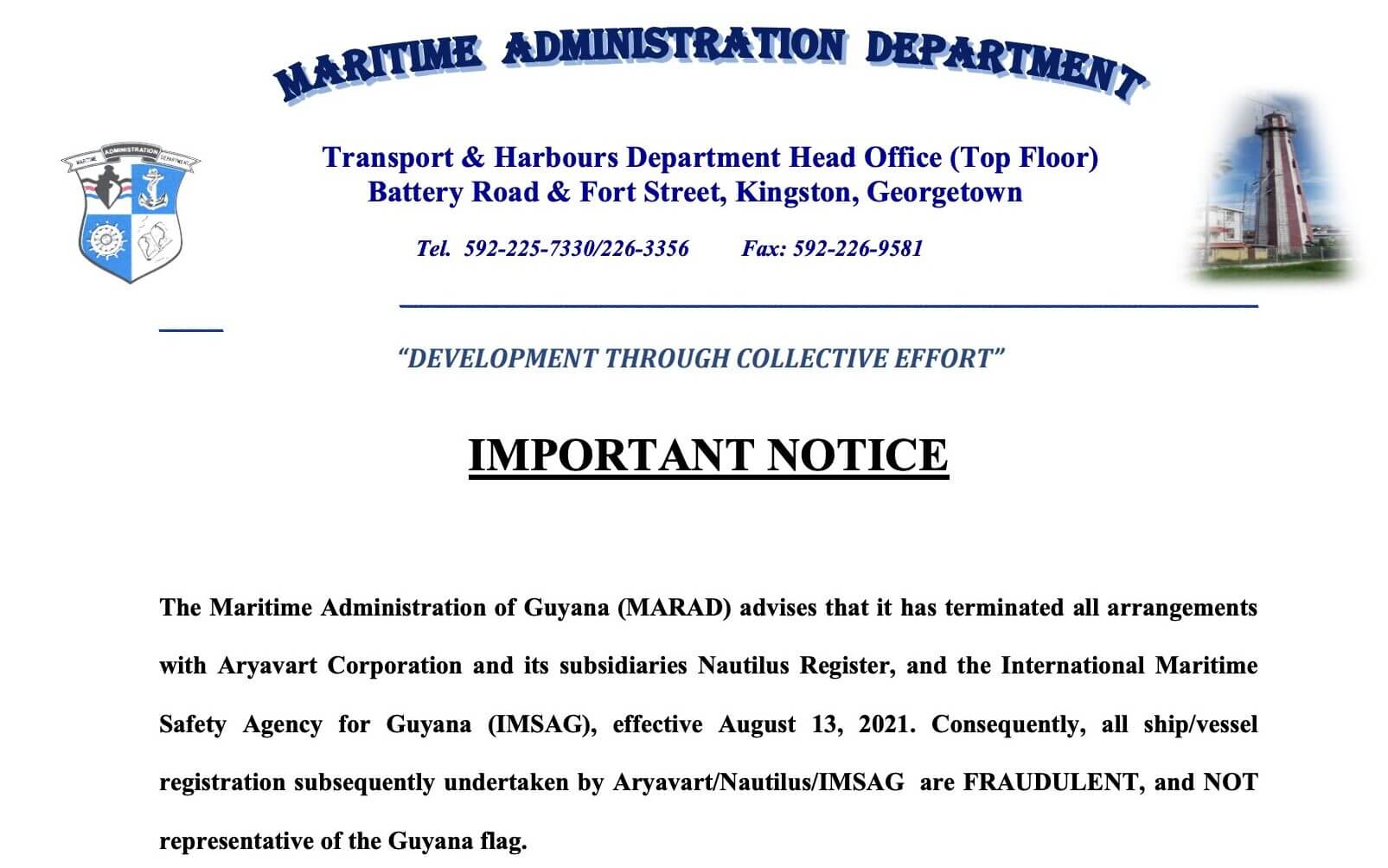
While the Memorandum of Understanding was still in force, IMSAG officially operated as Guyana’s international ship registry. Through the domain imsag.org, it handled vessel registrations and issued flags on behalf of the country.
After the agreement was terminated, however, the company did not shut down. Instead, IMSAG continued operating without official authorization from Guyana. Moreover, an edited version of the Memorandum can still be found on the website, presented as if it remains valid and used in the company’s public communications.
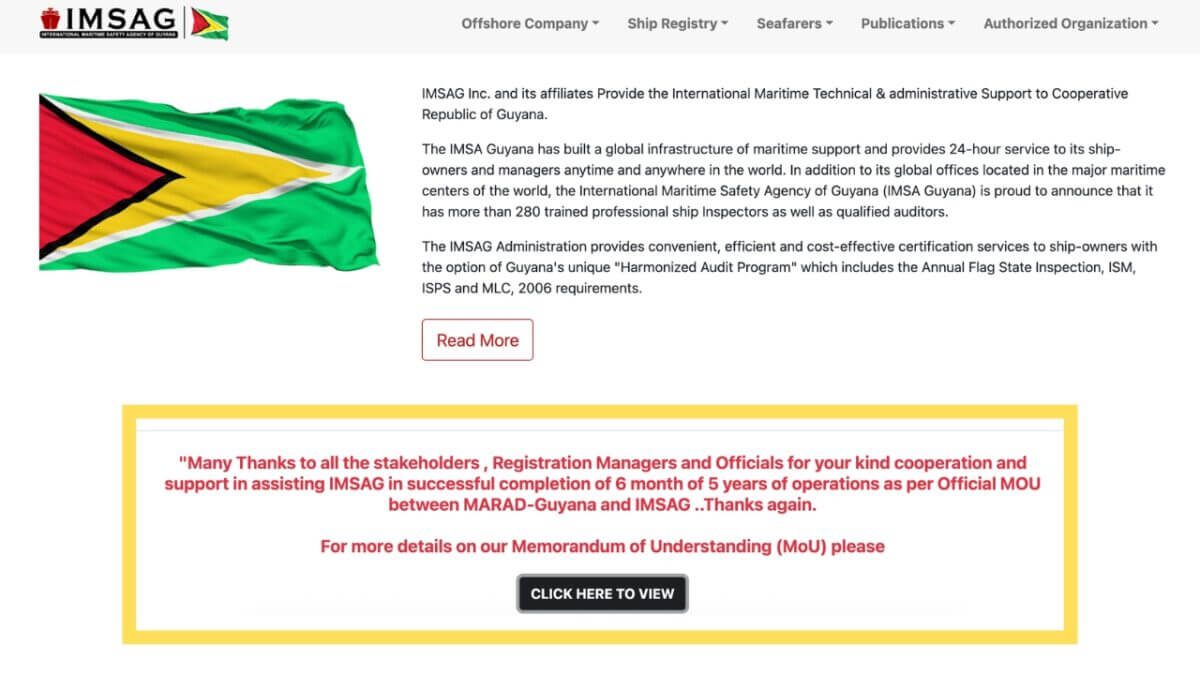
In an interview with the Financial Times, Sharma confirmed that he created a ship registry in Guyana; however, he stated it is currently “suspended” as the governing body of Guyana removed its support. Sharma also stated the site imsag.org is “not operational and has only informational uses.”
Bellingcat recently obtained certificate files (87) on 230 documents for ships from imsag.org directly. One of these certificates was for the tanker Nora, which was recently seized by Malaysian officials while under sanction.
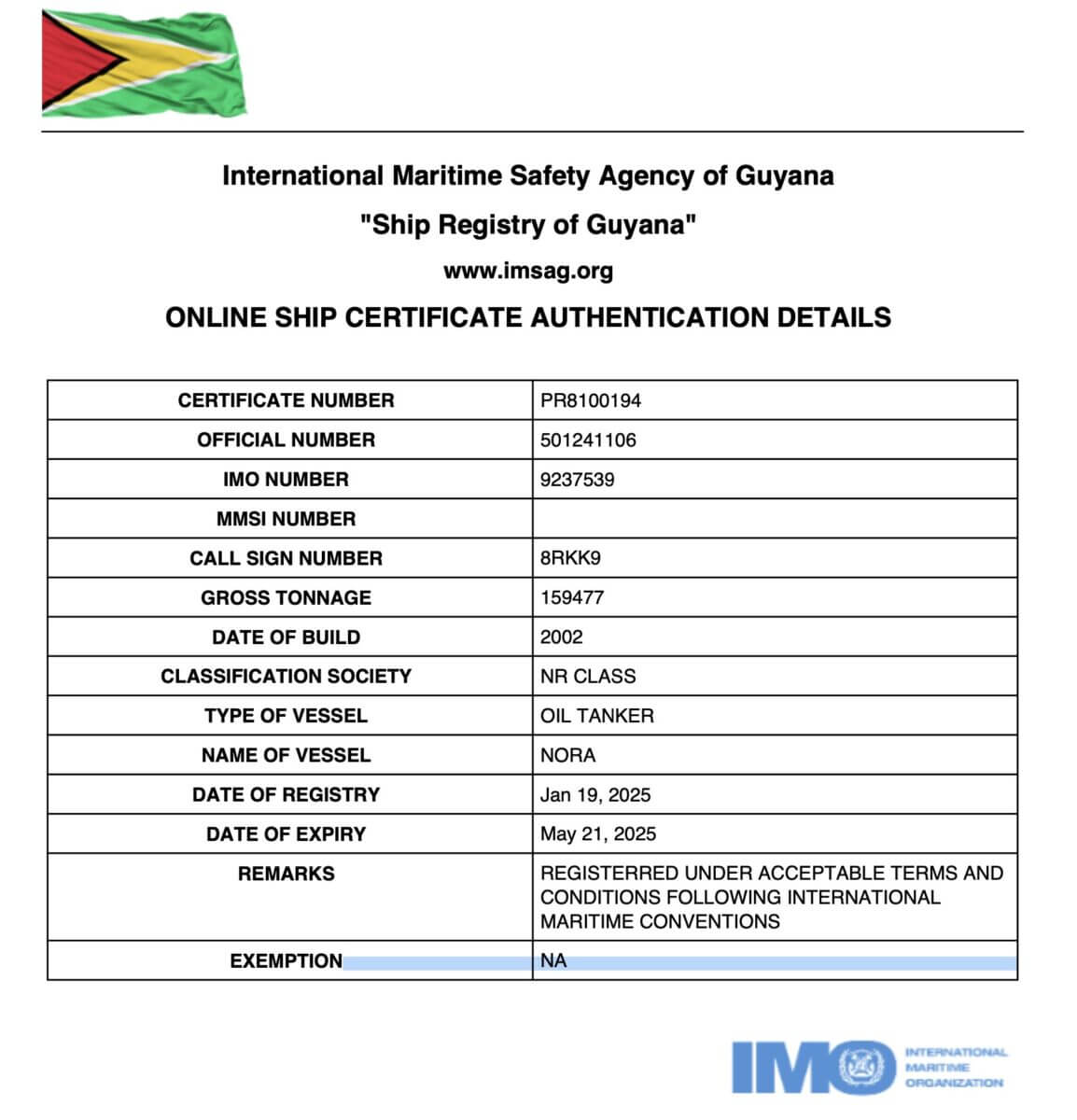
Sharma has repeatedly stated in public statements that IMSAG has not been issuing certification for a number of years, however the documents indicate otherwise. The majority of the 230 certificates were issued after March of 2021, with the most recent being in December of 2025.
In total, there were 87 vessels to have received these certifications. Of those 87 vessels, 63 were oil tankers. The average age of the 87 vessels was 24 years of age, therefore they are not new vessels; they are older vessels.
One example of an older vessel that received one of these certifications is the 26 year old oil tanker, Diana 1 (IMO # 9212229) that was last reported off the coast of Libya and received its certification from IMSAG on 6/26/2025. This certification issuance indicates that IMSAG is continuing to issue documents even though IMSAG has made public statements stating it has stopped all certification activities.
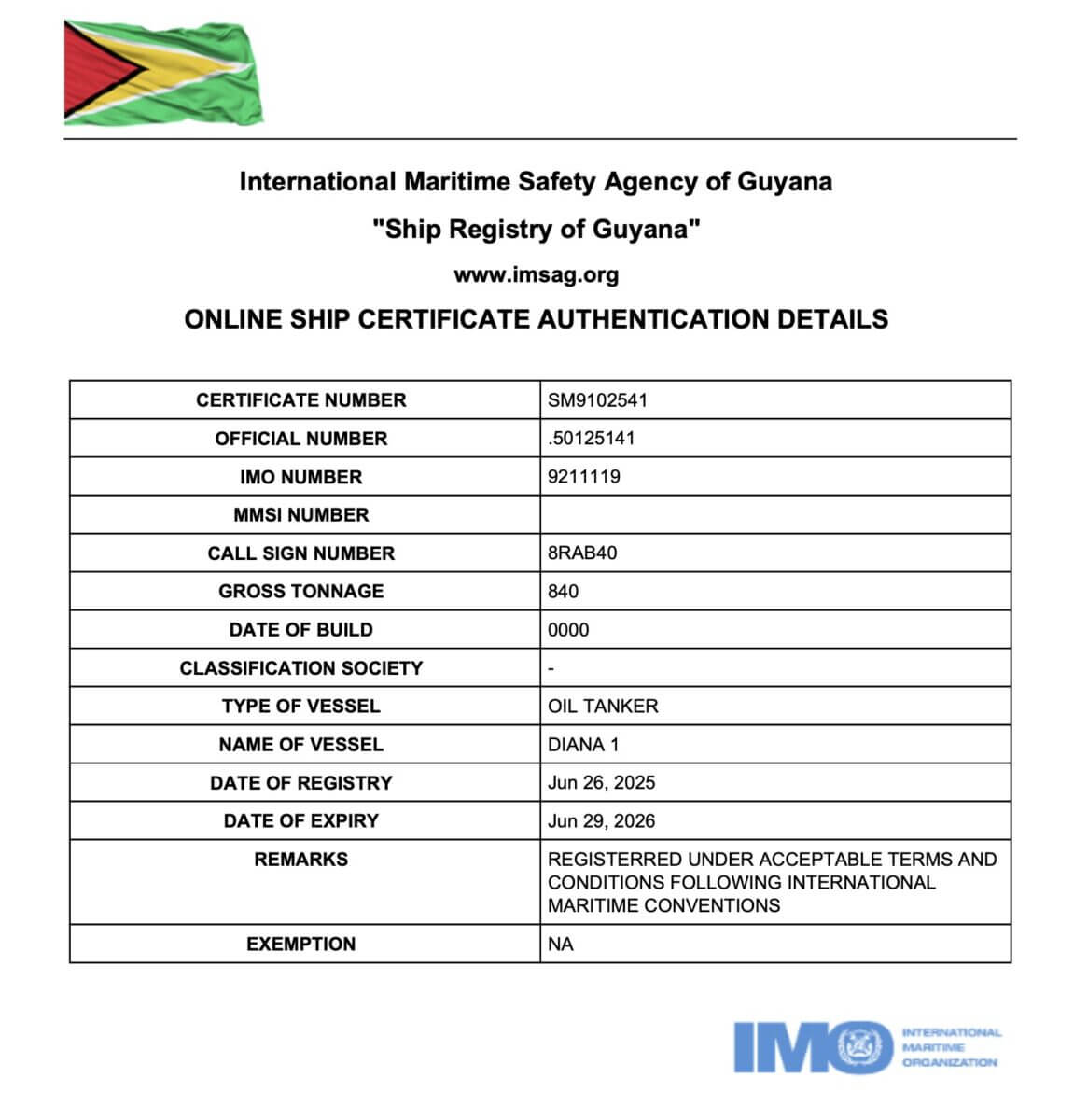
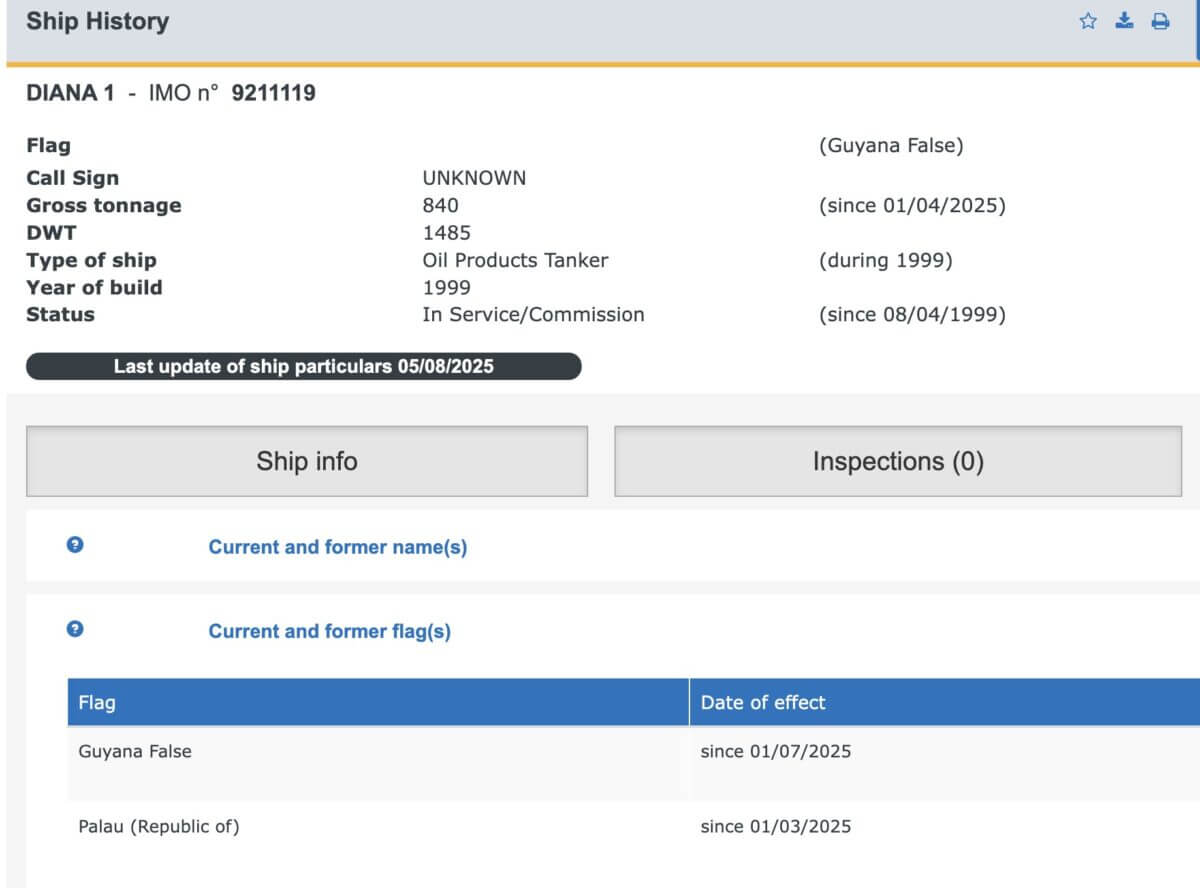
According to Equasis data, Diana 1 switched to a false Guyanese flag on 1 July 2025.
No response to our inquiry about our finding that IMSAG issued certificates until December 2025 after the MOU was terminated by Guyana and they withdrew their authority was received from either Sharma or IMSAG.
Sharma stated in an interview to the Financial Times that he did not create any additional registries and that he had completely exited the maritime industry.
However, there is evidence of a new registry tied to Sharma that appears to be offering Nicaragua flag registrations. The domain name niataregister.com was registered in July 2025 and promotes the Nicaraguan International Aquatic Transportation Administration (NIATA).
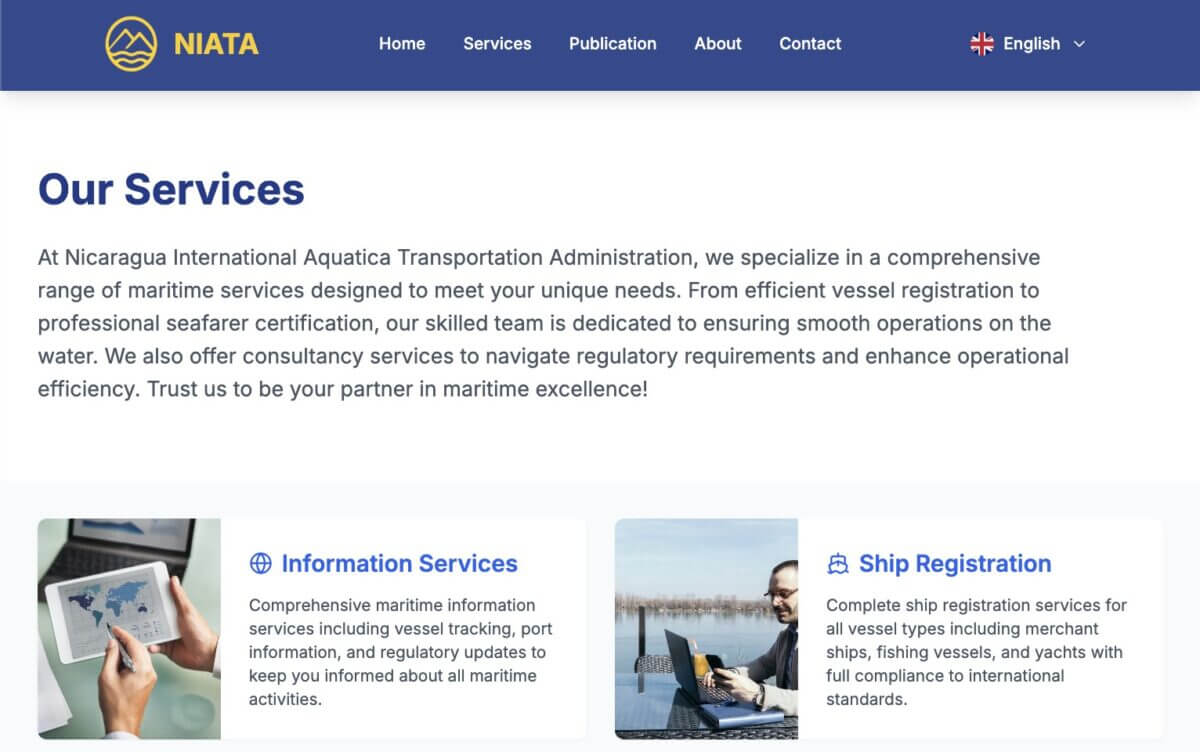
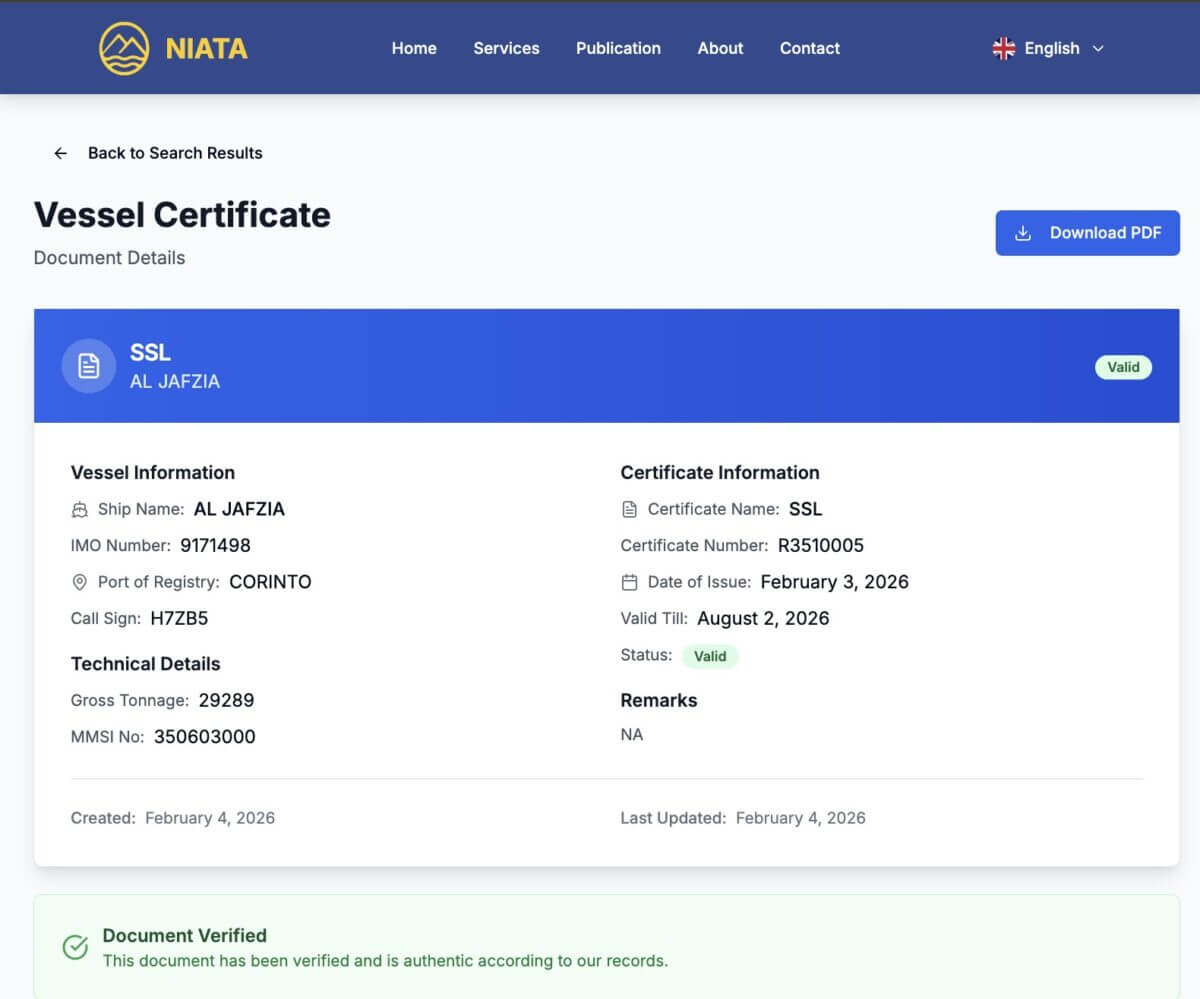
The site is online right now. There was an issuance of a certificate on February 2 for the sanctioned tanker Al Jafzia (IMO 9171498, sanctioned under the name Chil 1) that was less than two weeks ago.
Maritime tracking records show that on February 6th while flying a false flag from Aruba Al Jafzia was stopped by the Indian Coast Guard due to illegal transfer of Iranian crude through a ship to ship transfer. On February 11th, the vessel changed flags to Nicaraguan and lists its home port as Corinto which is Nicaragua’s largest port; the MMSI number is visible on the certificate above.
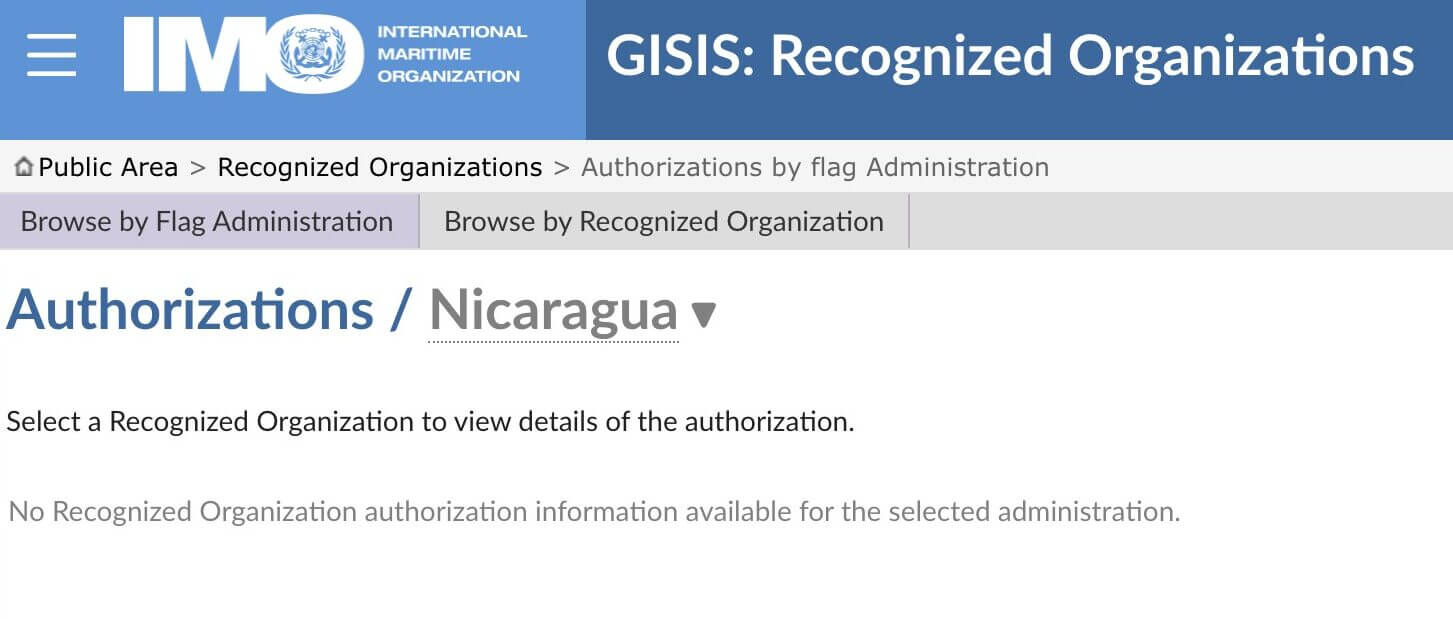
Despite multiple inquiries, Nicaraguan authorities did not respond to our questions about whether they were aware of NIATA or had any official partnership with the company. According to the IMO’s GISIS database, Nicaragua has not authorized any organization to issue flags on its behalf.
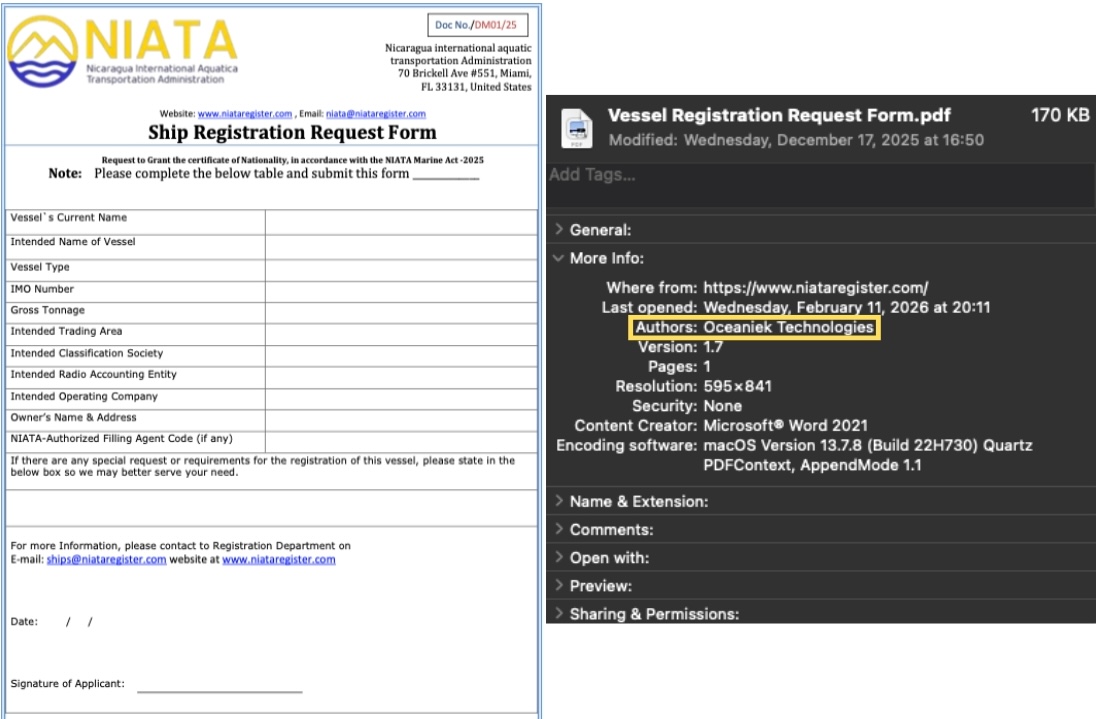
Bellingcat downloaded all publicly available forms from the NIATA website. An analysis of the documents’ metadata revealed that they were authored by “Oceaniek Technologies.”
Upon visiting the homepage of Oceaniek Technologies, shown below, the section titled “Our Products” featured a carousel promoting 11 companies as of August last year. It now displays only five, spanning a wide range of industries, including a cricket league, a hospital, and streaming services.

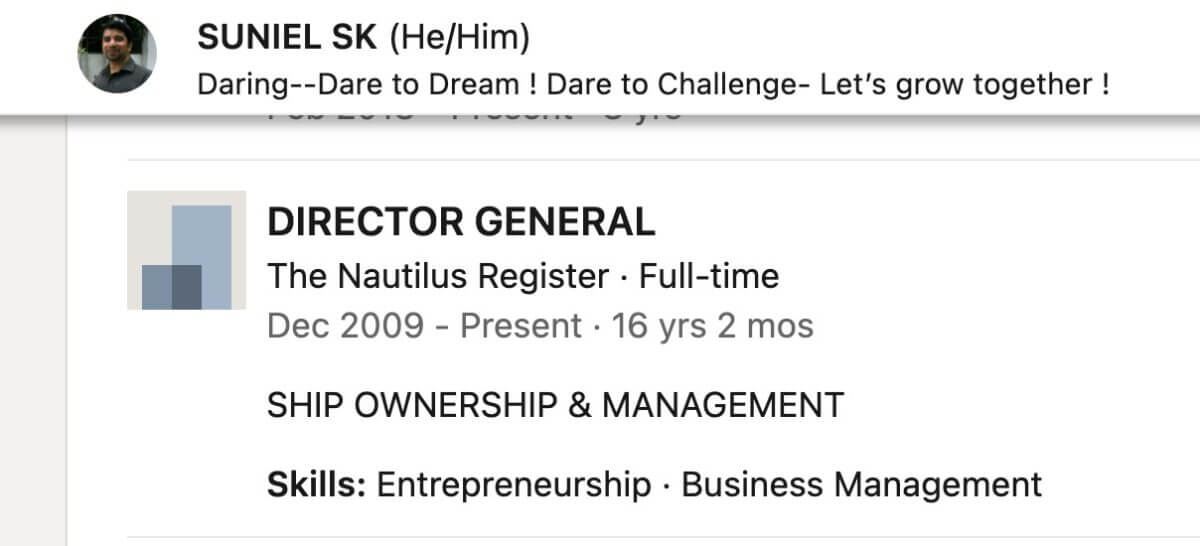
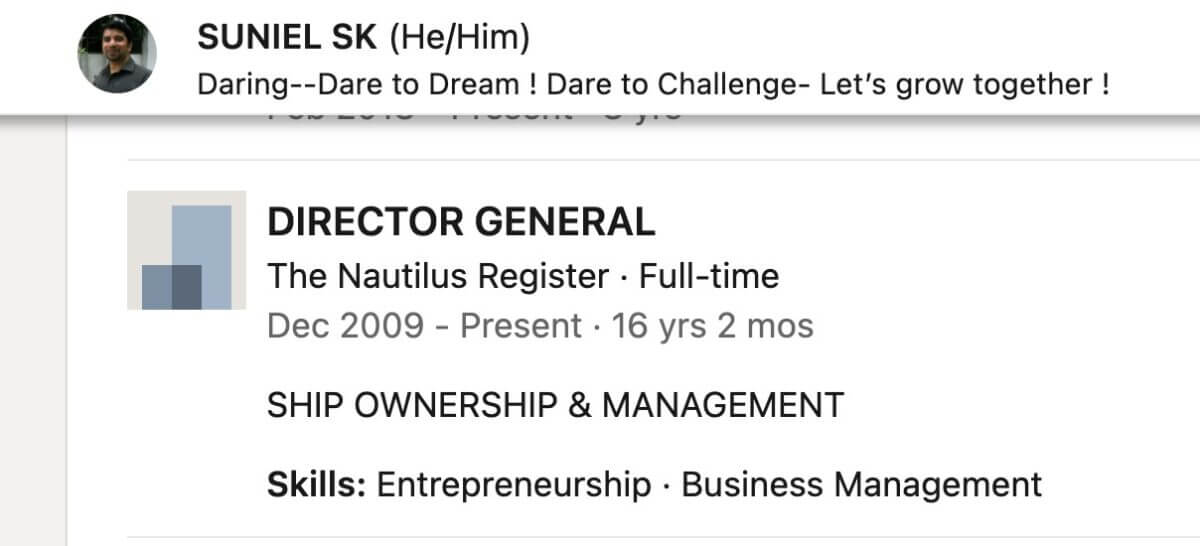
According to his own LinkedIn page, the Managing Director of Oceanik Technologies is Suniel Sharma. Local Indian media have also photographed Sharma and referred to him as the “Managing Director of Oceanik Technologies.”
Among the 11 companies promoted until August last year were also Nautilus Times and Nautilus Register.

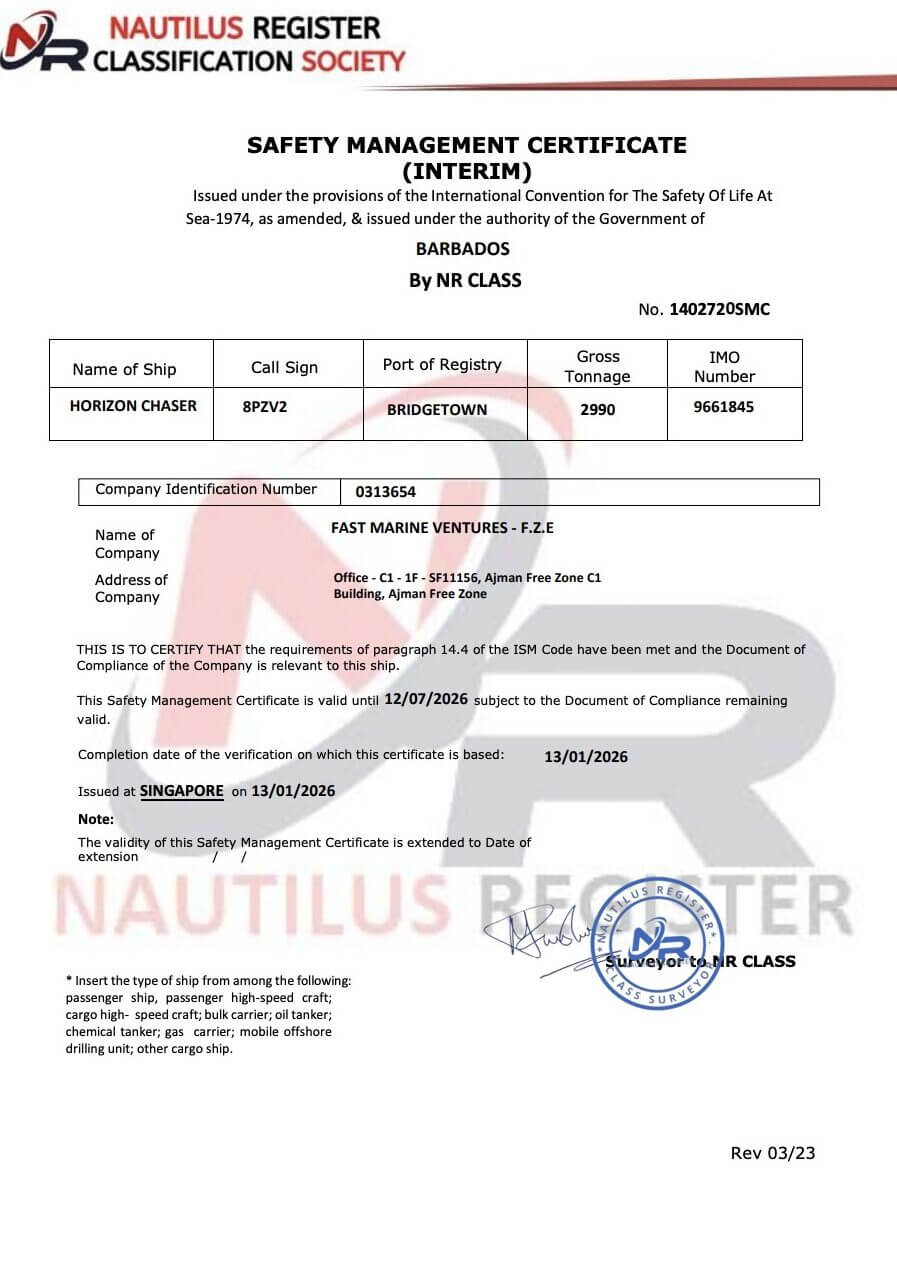
Nautilus Register, a company promoting vessel classification services, is listed as an interested organization in OpenSanctions due to its links to several sanctioned vessels, including members of the shadow fleet. On his own LinkedIn profile, Sharma identifies himself as the CEO of Nautilus Register.
It has been confirmed that nautilusregister.net remains active, issuing classification certificates as recently as January 2026, as shown below. The IMO stated that Nautilus Register is not listed as a recognized organization in its GISIS database.
A search for the second company, Nautilus Times, led to a website offering dozens of training courses, ranging from cadet programs to firefighting, as well as refresher training.
Refresher training is mandatory for all seafarers. Crew members can complete courses in any jurisdiction, but whether that training is officially recognized ultimately depends on the flag state, the country where the vessel is registered.
According to the Nautilus Times website, a crew member can enroll under any of six jurisdictions listed below, including Guyana and Nicaragua.
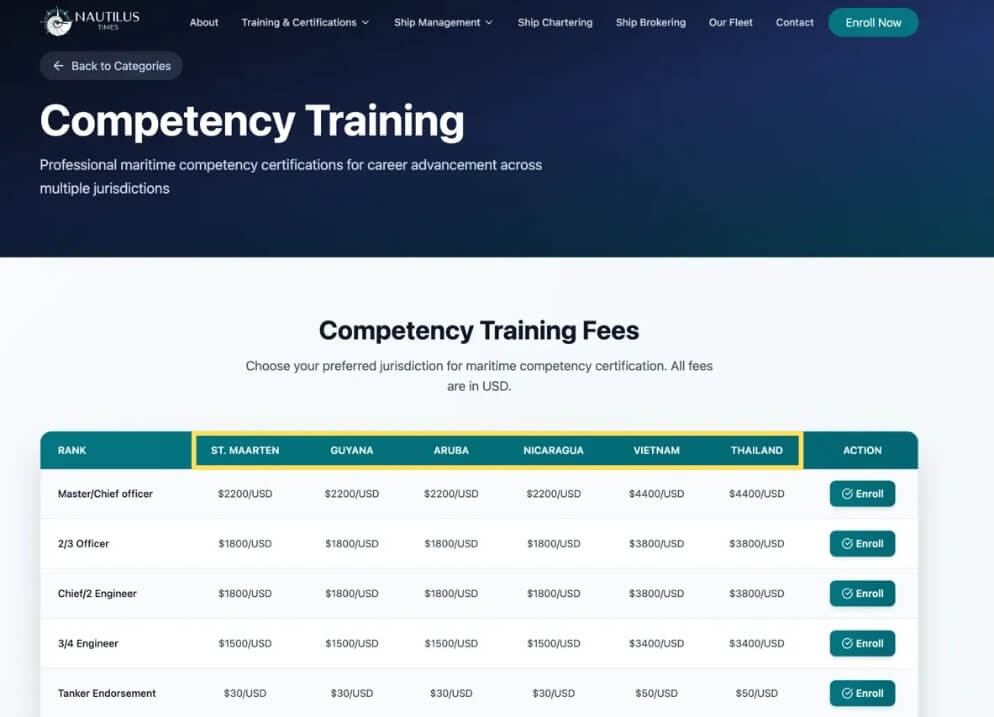
After contacting all six jurisdictions, Guyana’s official Maritime Administration Department (MARAD) confirmed that Nautilus Times is not authorized to issue seafarer certificates on its behalf. The department reiterated that it has no affiliation with Nautilus Times or Sharma. Saint Martin has previously stated that it does not operate an international flag registry and therefore does not issue certificates of competency. None of the other jurisdictions responded to our inquiries.
Bellingcat contacted Nautilus Times and Sharma to ask why the website advertises courses under the names of Guyana and Saint Martin without their authorization. Neither responded to requests for comment.
Finally, two additional companies that previously appeared in the carousel on the Oceaniek Technologies homepage, but were removed after August 2025, are MSTA Registry and Aruba Maritime.

The MSTA Registry was mentioned in a warning issued by Saint Martin and the IMO in May 2025 for issuing fraudulent flags to vessels under the guise of Saint Martin. Aruba Maritime was sanctioned by the European Union in October 2025 for fraudulently issuing false Aruba flags to oil tankers.
Neither Oceaniek Technologies nor Sharma responded to our request for comment regarding the nature of these companies’ links to Oceaniek Technologies.
As more vessels seek illegitimate documentation from fraudulent registries such as IMSAG, the number of such cases is likely to grow. Despite criminal charges, official warnings, and published investigative findings, Sharma’s activities have continued. They now appear to have expanded into Nicaragua and to be part of a broader network connected to Oceaniek Technologies.