Researchers are working to combat covert surveillance by developing technology that helps detect hidden cameras using a smartphone.
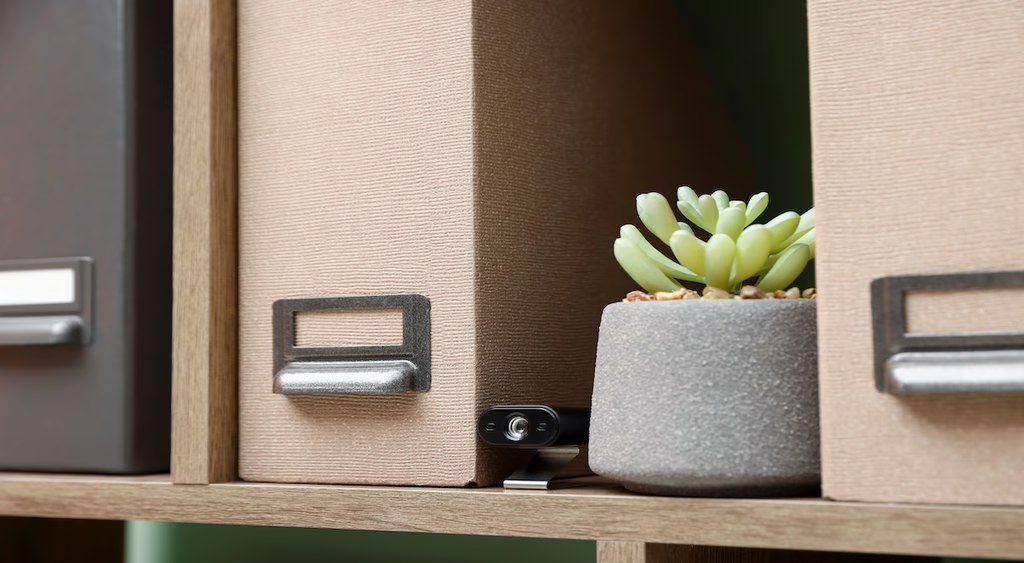
There have been numerous disturbing cases of people being filmed without their consent. Hidden cameras have been found in Airbnb rentals, changing rooms, and even restrooms.
Many online guides explain where to look for such devices and how to identify them. However, most of these methods depend on a person’s attentiveness and ability to spot an almost invisible camera lens.
Researchers at the Korea Advanced Institute of Science and Technology (KAIST) have now developed an AI-powered tool that turns a smartphone into a hidden camera detector.
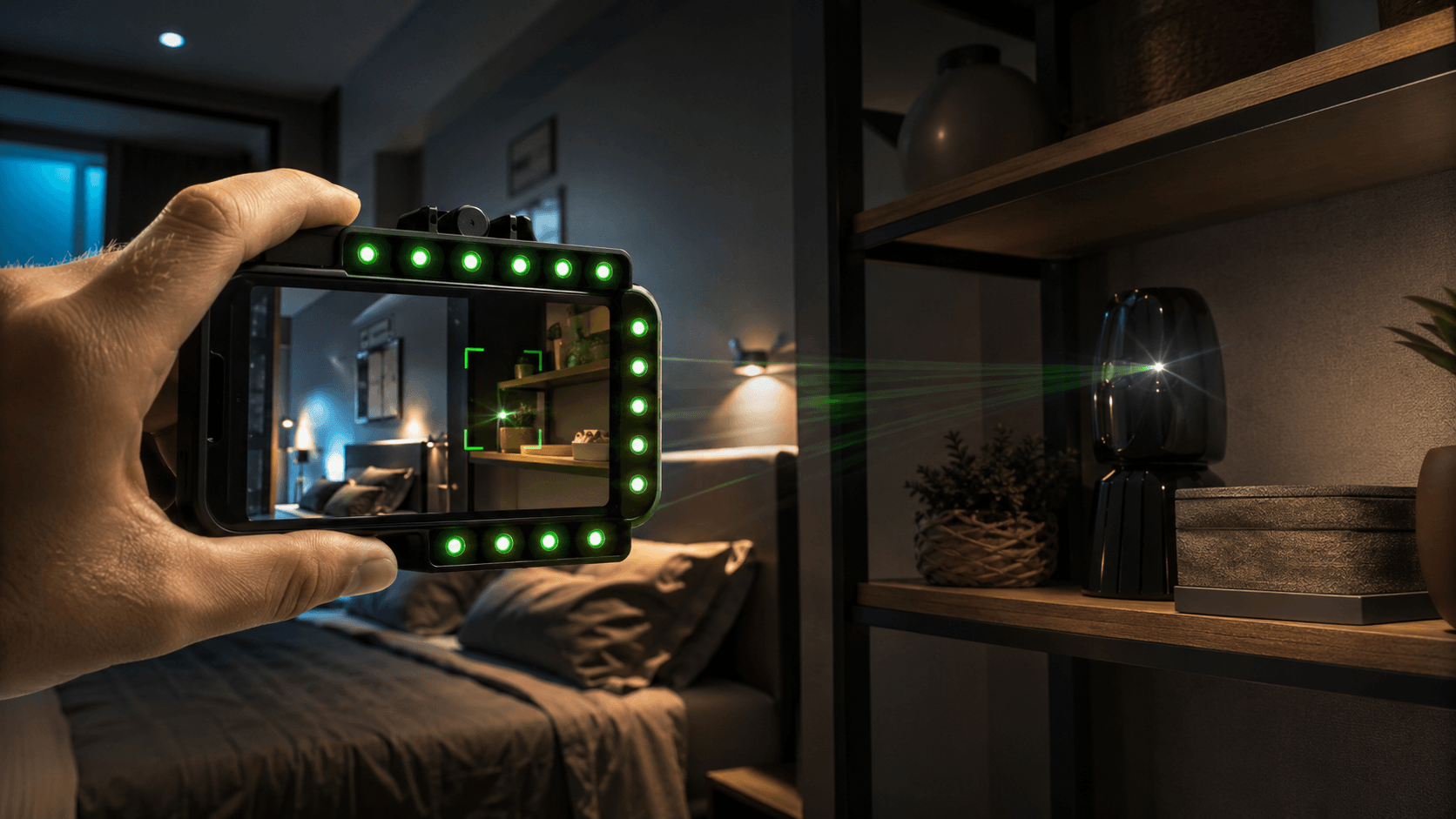
The KAIST team created SweepLED, a technology that combines a smartphone-mounted attachment with 15 LEDs and an AI-powered image-processing system.
During operation, the LEDs illuminate objects in front of the smartphone’s camera while the system analyzes the resulting light-reflection patterns.
Reflections from ordinary objects shift or disappear as the smartphone moves. Hidden camera lenses, however, remain visible within these patterns, allowing the system to identify them.
According to KAIST, SweepLED was tested on 30 objects and achieved an accuracy rate of approximately 94% in detecting hidden cameras.
Scanning a single object took about five seconds.
Another advantage of the technology is its low cost. The components used in the LED-equipped case cost less than $7, meaning SweepLED could eventually become an affordable solution for a wide range of users.
The technology is not yet commercially available, but it has already demonstrated potential as a simple and inexpensive tool for detecting hidden cameras.
“This research is meaningful in that it combines low-cost smartphone-based hardware with AI analysis to present the possibility of a practical detection technology that even non-experts can use,” said Professor Jun Han, who led the research, in a statement to EurekAlert