21.09.2025
6 min
822



Doxxing is the dangerous practice of publishing personal information about a person without their consent. This article explains what doxxing is, what methods attackers use, and what it threatens Internet users. From residential addresses to phone numbers or social media data, all of this can be publicly available and used for harassment, blackmail, or even cyberattacks. You will learn about common sources of data leaks, real-life examples, and ways to minimize risks: limiting the visibility of profiles on social networks, regularly checking accounts, using VPNs, and two-factor authentication.

Our close connection to the internet and the sheer volume of content we share every day has given rise to the phenomenon of “doxing,” which is now a real threat. The term may be new to some, but it has far-reaching implications for all of us, from everyday users to celebrities.
In this article, you’ll learn what doxing means, where it comes from, what the motives behind it are, and what methods criminals use. More importantly, you’ll learn how to protect yourself from doxing and what steps you can take if you’re a victim.
Derived from the term “document dumping,” doxing is the act of posting someone’s personal, confidential information online, often with malicious intent. The act can strip people of their online anonymity, exposing them to various risks in both the digital and physical worlds. The primary goal is to intimidate, harm, or otherwise exploit the person whose information has been exposed.
The term “doxxing” comes from online disputes between hackers in the 1990s, when “dropping documents” meant revealing the identity of an opponent. Since then, the tactic has evolved from the term “documents” to the more familiar “docs.”
Originally, the term was used to refer to the disclosure of hidden online identities. Today, doxxing has spread beyond the hacking community and affects many who reveal their real names online, especially in the large amounts of content on social media sites such as Twitter and Facebook.
People doxx for many reasons. Some do it because they are angry with someone, others because they don’t like what was said, and still others to show that someone is hiding something, especially in heated debates. The information shared can vary. Some of it may be just innocent data, but others may be harmful or dangerous.
The consequences of doxxing can be quite unpleasant, such as an unwanted pizza delivery, but they can also lead to more serious problems, such as cyberbullying or harassment in real life. High-profile individuals such as celebrities, politicians, or top executives have been targeted, and their safety and well-being have been threatened. Regardless of the reason, doxxing is always an invasion of privacy and can have serious consequences for the victims.
In the shadowy corners of the digital world, doxxers are constantly looking for personal information to exploit unsuspecting victims. Their motives range from personal revenge to financial gain. Here’s a closer look at the specific types of data they seek:
Phone numbers: Allows them to call or text people, which can lead to fraud or harassment.
Home addresses: A major privacy issue. People’s safety is at risk because they can be traced.
Bank account details: Reveal financial problems such as unauthorized transactions or theft.
Credit card details: Allows fraudsters to buy things without permission or sell information online.
Social Security numbers: Key to identity theft, which leads to fraud such as fake loans or tax scams.
Personal communications: Emails or messages can reveal a lot about a person’s life and relationships.
Previous criminal convictions: Can create a bad image, especially if they are misunderstood, damaging a reputation.
Personal images: Photos or videos can be used for blackmail or to damage reputation.
Personal incidents: Stories or personal items that would be embarrassing to share.
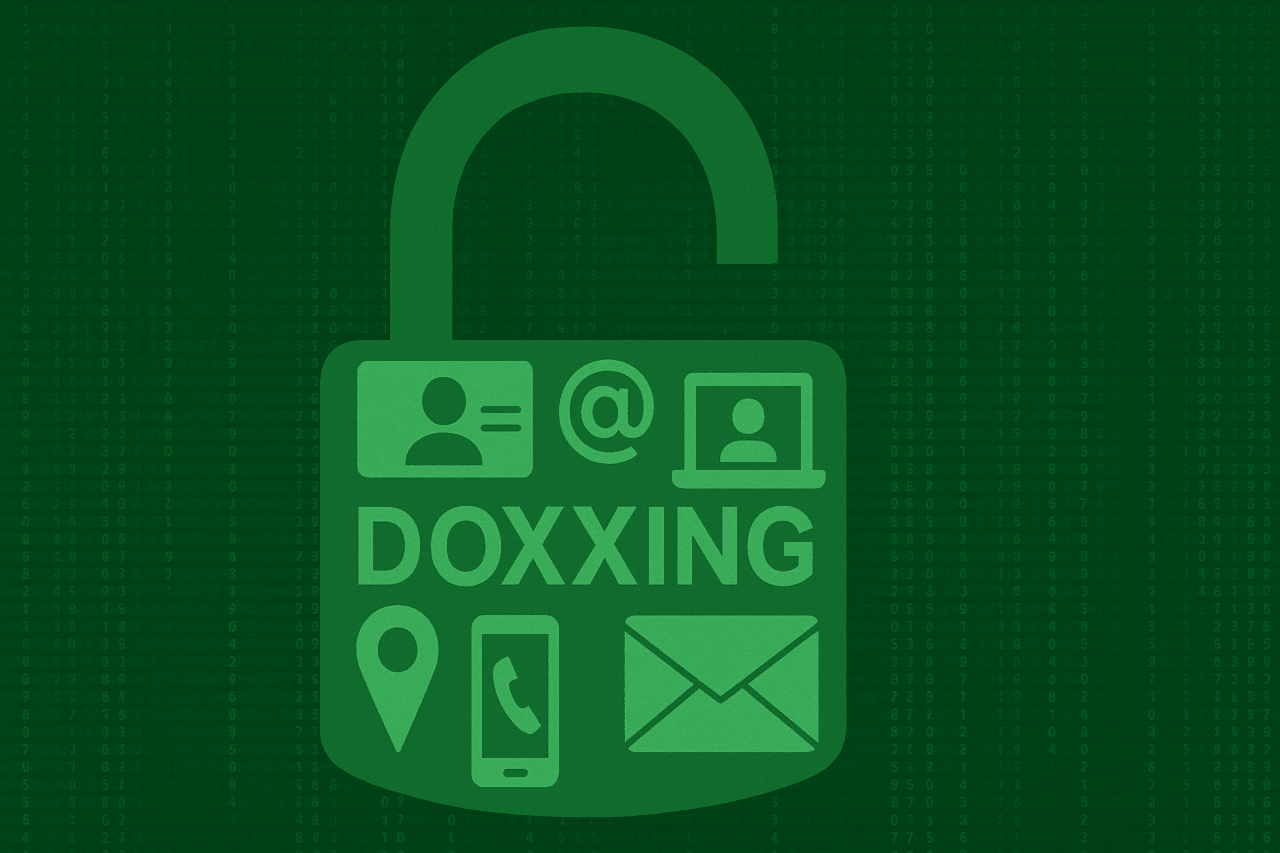
Doxing involves collecting online clues about people, often referred to as “breadcrumbs.” By piecing together these pieces of information—from names and physical addresses to emails and phone numbers—doxers can uncover the true identities of users who would otherwise remain anonymous. The following methods are commonly used in doxing to obtain sensitive data:
Phishing: Doxers use fraudulent social engineering techniques, such as phishing, to manipulate people into revealing personal information. They create deceptive links, emails, or websites that appear to be genuine to trick their victims.
WHOIS: Registering a domain means that your details, such as your name, address, email, and phone number, are put into the public Whois database. While this database is designed to be transparent, it can be a goldmine for doxers looking for personal information.
Government Records: Public databases often store government records, such as property deeds, court cases, and voter registrations. These records can contain vast amounts of information that is suitable for a doxing attack.
IP address tracking: Every online device has a unique IP address that reveals details about a person’s location, online behavior, and the websites they visit. Dockers use IP addresses to obtain such information, which makes VPNs essential for masking your online footprint.
Social media stalking: Social media platforms like X (formerly known as Twitter) or Facebook, filled with user-generated content, are overflowing with personal data — from birthdays and location information to daily activities and travel. Dockers collect this information, sometimes even creating fake profiles, to infiltrate their target’s network.
Packet sniffing: This method involves capturing and analyzing data packets exchanged between a device and the network. By intercepting these packets, attackers can extract sensitive data about their targets.
Reverse Lookup: There are online tools that can uncover personal information from limited data, such as phone numbers or email addresses. While these have legitimate uses, dockers can abuse them for their schemes.
Data Brokers: Specialized firms collect, process, and exchange personal data. Obtaining information from these brokers gives dockers another tool in their arsenal to create comprehensive profiles of their targets.
In general, doxxing as a separate act is not directly illegal, especially when the information disclosed is publicly available and was obtained legally. However, the legal perspective can vary depending on regional laws: in some places, doxxing may be illegal if it results in harassment or threats.
In addition to the legality, the ethical issues surrounding doxxing are significant. The practice can have serious consequences for the person who engages in it, from emotional distress to physical harm. As a result, many online communities, activists, and cybersecurity experts reject doxxing and consider it a form of online harassment that often leads to unjustified harm.
Some companies and organizations already take action against employees who engage in doxxing, considering it a violation of their professional conduct. Public opinion often perceives doxxing as a harmful act, even if the laws do not always classify it as illegal.

Doxing can lead to jail time in certain circumstances. While doxing itself is not always illegal, it can lead to other illegal actions. For example, if doxing leads to harassment, cyberstalking, threats, identity theft, or incitement to violence, these offenses may be prosecuted. It is important to understand the legal consequences of online actions and their real-world consequences.
Protecting yourself from doxing requires a multi-faceted approach to cybersecurity and privacy:
Digital Security Priority: Always use a virtual private network (VPN) and implement multi-factor authentication for additional layers of security.
Strengthen passwords and usernames: Use strong passwords and avoid using the same username across platforms.
Email and communication: Set up different email accounts for different purposes and be vigilant—never open suspicious or phishing emails.
Monitor your digital footprint: Periodically check your online presence to assess your vulnerability to doxing. Consider setting up Google Alerts for your name.
Domain privacy: Mask your domain ownership by hiding your registration information from the WHOIS database.
Social media accounts: Set privacy settings on social platforms to limit public visibility. Make sure personal information, such as addresses or work locations, is not shared publicly.
Financial Security: Keep your financial accounts secure and be careful about sharing sensitive information.
Information Control: Ask Google to remove any personal information that shouldn’t be public. Also, be mindful of what information you share online, avoiding sharing details that could be used maliciously.

If you have been doxxed, you can take steps to prevent your confidential information from being shared. You can also report the doxxing to the appropriate authorities.
Gather evidence: Take screenshots or save any messages, posts, or images that contain doxing information. Your evidence will be critical when filing a complaint.
Contact law enforcement: Contact local law enforcement and share any evidence you have gathered. Stress the seriousness of the situation and, if possible, emphasize the potential harm it could cause to you or others involved.
Report to the platform: If the doxing incident occurred on a specific online platform or social media site, report it directly to them. Most platforms have mechanisms to address such cases. Look for options like “Report Abuse” or “Report Content” and provide detailed information about the incident.
Finding out you’ve been hacked is a real shock. The most important thing is to take a deep breath and act quickly to best protect your data. Below you’ll find a step-by-step guide to help you deal with such situations:
Report it: Report the platform or website where your personal information was leaked. Many platforms have anti-doxxing policies and can help with data removal.
Document the evidence: Take screenshots, save URLs, and archive any related messages before they are deleted. This documentation can be vital to investigations.
Secure your financial accounts: Notify your bank and credit card companies immediately of any potential threats. Monitor your accounts for any suspicious activity.
Secure your online accounts: Update your passwords, enable two-factor authentication, and review the security settings of all your online accounts, especially email and social media.
Get support from family or friends: Tell your loved ones about the situation so they can also be vigilant and protect their own information, as they could be indirectly targeted.
Involve law enforcement: Depending on the severity of the doxing and the nature of the threats you received, you may need to contact the police or other law enforcement agencies. They can advise on next steps and launch an investigation if necessary.
Protect your data from leaks: Take steps to prevent future doxing. This may include using a VPN, avoiding public Wi-Fi, or signing up for services that notify you when your data has been leaked.
Change your phone number: If your phone number has been leaked, consider getting a new one. Only notify close contacts of the change.
Remember, staying calm and proceeding methodically is extremely important. Every step can help mitigate the effects of doxxing and further protect your privacy.
To understand the far-reaching effects of doxxing on individuals and communities, we will look at real-life examples. They illustrate the motivations for doxxing, the ways in which personal information is exposed, and the subsequent difficulties faced by victims. Below are some notable cases of doxxing in recent history that highlight its profound effects:
Following the 2013 Boston Marathon bombings, a group of online vigilantes took it upon themselves to identify the perpetrators. However, as is often the case, their amateur online investigation backfired, with innocent people being falsely accused and exposed.
Many people were outraged when news broke of Cecil the Lion’s death at the hands of an American dentist in Zimbabwe. While the incident drew global condemnation, some people resorted to doxxing. The dentist’s confidential information was leaked, and he faced threats and harassment.
Ashley Madison is a dating site for married people looking for extramarital affairs. After the data leak, private information such as names, addresses, and sexual preferences of many users were exposed, leading to doxing. Many victims suffered from harassment and depression. Some even committed suicide.
The Gamergate incident focused on issues of sexism and harassment in the gaming industry. Gamergate began as an online discussion, but it turned into a toxic war where doxing became the main weapon. Female game developers, journalists, and influencers were usually targeted.
These cases are a stark reminder of the serious consequences of doxing, which affect not only individuals but also the entire community.