08.08.2025
13 min
2031



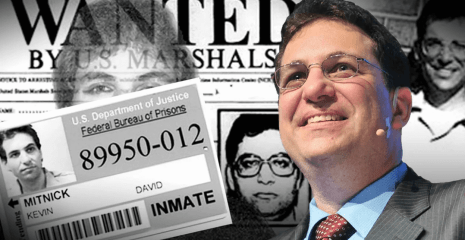
The fifth part of the series “In Memory of Kevin Mitnick” reveals one of the most intriguing stories of the legendary hacker. Here, a phantom number appears – a tool that allowed Mitnick to remain invisible on telephone networks, and a mysterious hacker whose identity is controversial even among cyber detectives.
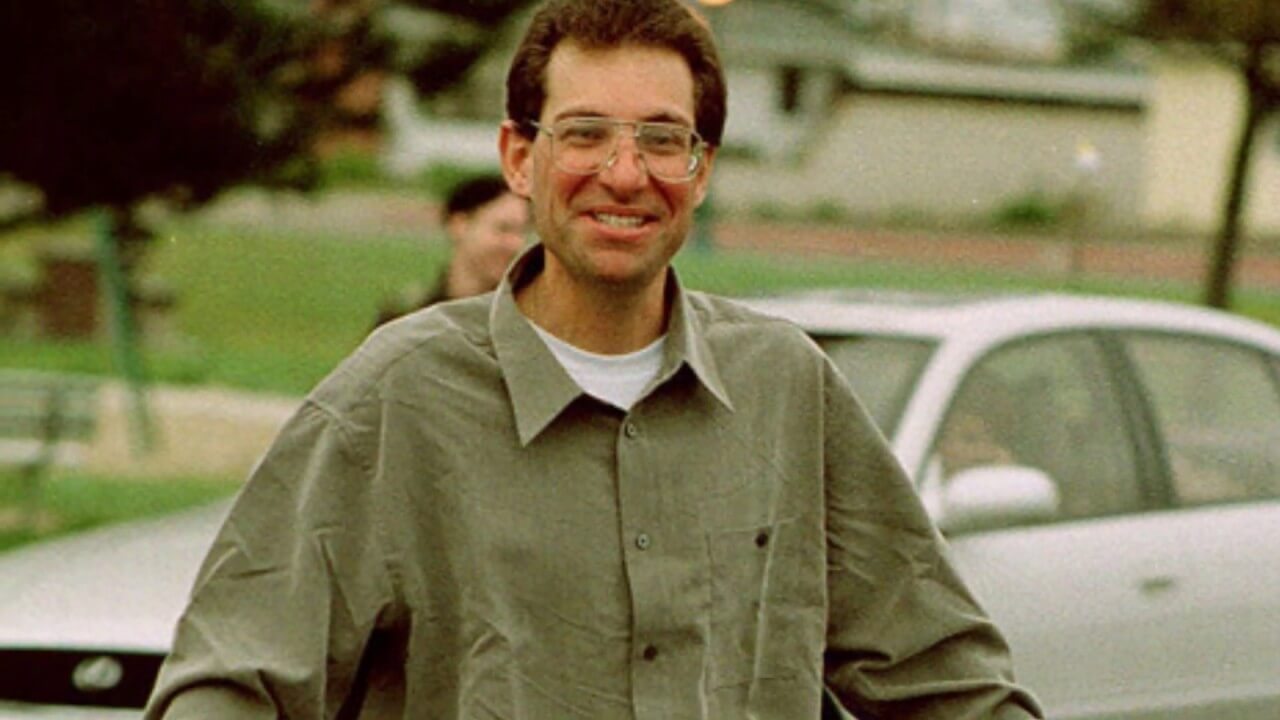
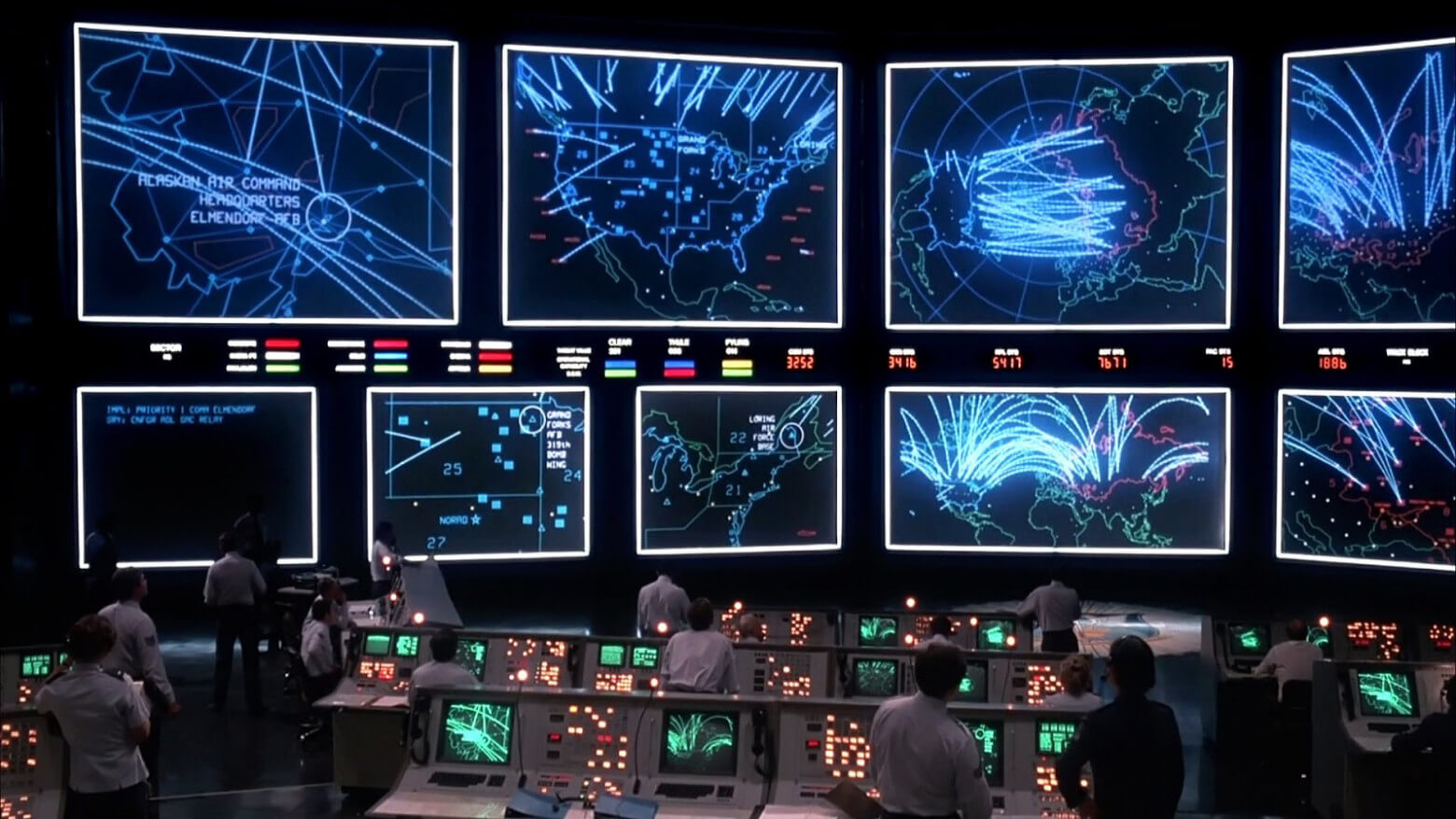
So, Kevin Mitnick, through the betrayal of his friend Lenny di Cicco, who was inappropriately embarrassed by a lost bet, ended up in the clutches of the FBI. In court, he was charged with various acts that he, at least as Mitnick claimed before his death, did not commit. However, many of his real crimes remained unknown at the time. At that moment, in front of the prosecutor, who spoke about his non-existent crimes, including the phrase “He can whistle on the phone and launch a nuclear missile from the NORAD base!”, Kevin began to doubt American justice. As a result, he decided to do everything possible to never get caught. However, law-abiding and refusing to hack were not part of his plans.

The capture and trial of Kevin Mitnick was covered in the American press as a landmark victory for justice over one of the most dangerous hackers, who could break into almost any system using a computer and a regular telephone. Time magazine published an article in January 1989 that said: “Even the most dangerous criminals are usually allowed to use the telephone, but Kevin Mitnick is not. At least not without the supervision of a bodyguard. In addition, he is allowed to call only his wife, mother and lawyer. Giving Mitnick a telephone receiver is like giving a gun to a criminal. The twenty-five-year-old former college student is accused by federal authorities of using telephone lines to become one of the most dangerous computer hackers of all time.”
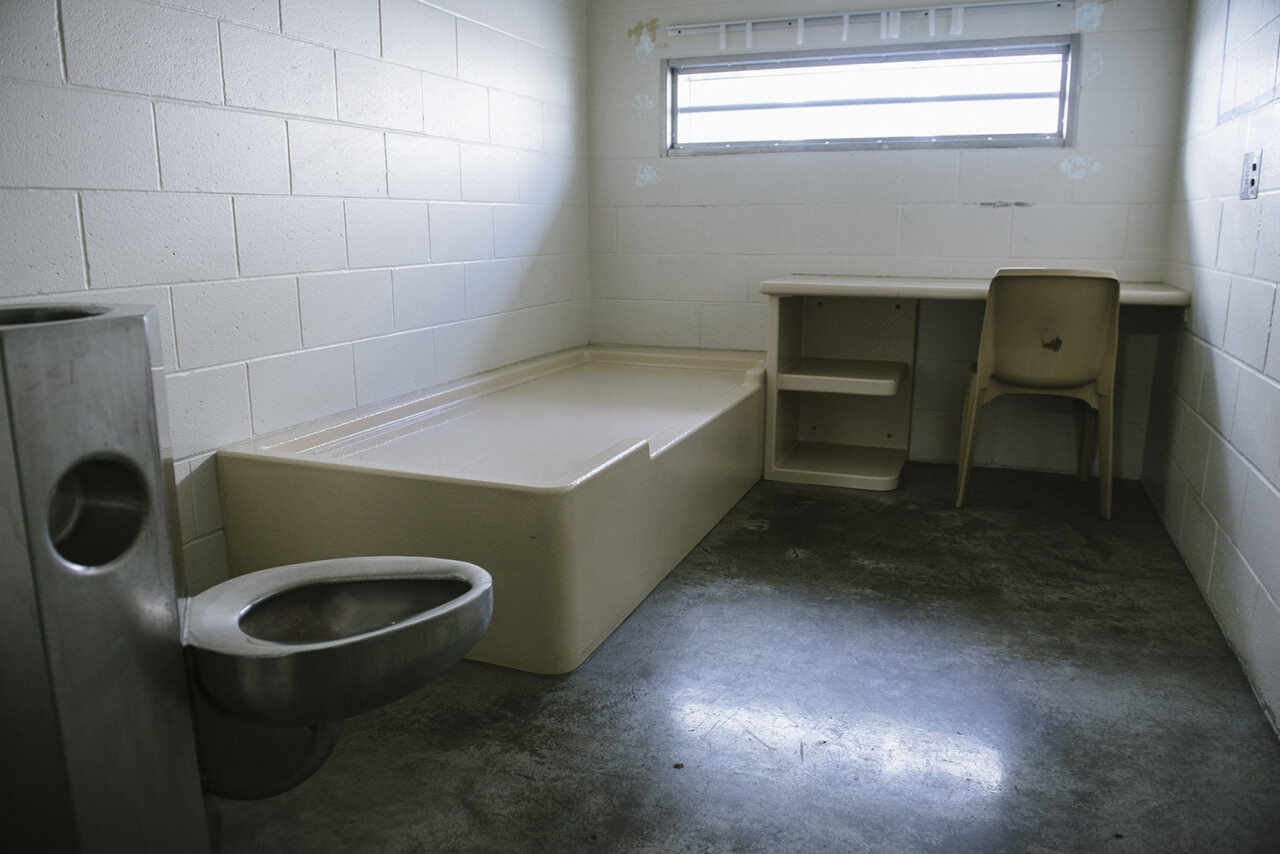
Mytnik was flattered and extremely outraged by such assessments at the same time. At the judge’s request, he was in a solitary cell measuring 3 by 2.5 meters and once again in his young life looked sadly through a narrow window at the center of Los Angeles, which was bustling with life, but was so inaccessible. Later, he would describe this depressing existence as spending many days in a cell for 23 hours a day with a dim light. He was taken out of the cell only to take a shower and take a short walk in a small courtyard-well. Mytnik was helped not to go crazy by rare meetings with relatives, the radio and books he was allowed, and also… mountains of high-calorie and sweet food, which he ordered from the prison store as an anti-stress. As a result, during his stay in the cell with a minimum of physical activity, he gained up to 109 kg.
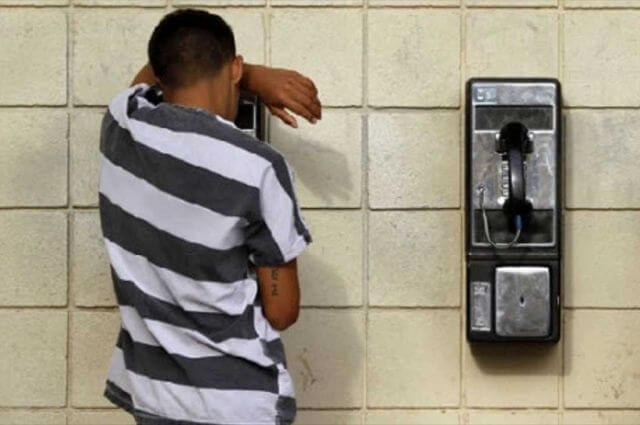
Kevin could only make calls from the phone, to a strictly limited list of numbers of relatives and a lawyer, under the supervision of a guard. He could call his wife Bonnie only during non-working hours. In a combination of longing for his beloved wife, a desire to show the system his independence, and maliciousness, Mitnik learned to make calls to Bonnie at work under the guise of calls from his mother. To do this, he would dial the number on the phone blindly, pretending to scratch his back, and quietly hang up, pressing the receiver tightly to his ear so that the guard would not hear the beeps.
After two weeks of such calls, surprised people in plainclothes came to Kevin Mitnik’s cell. They took him to the interrogation room and began to ask how he managed to make unauthorized calls right in front of the guard. Kevin denied everything, but the phone connections from the prison phone were simply monitored. As a result, he was given his own phone, but with one caveat: the device itself was outside the cell, the number was dialed by a guard, and only the receiver was given to the cell. Now even Kevin Mitnick, with his agility and wit, could not bypass the system, and he was furious.
Initially, DEC, the company whose source code Kevin and Lenny accidentally uploaded to the servers of US military bases, planned to bring the most serious charges against Mitnik. The federal authorities also wanted to arrange a high-profile and show trial of a dangerous hacker who posed a threat to national security. However, while Mitnik was in solitary confinement, the company’s management reconsidered its position and became less strict. As a result, Mitnik managed to conclude a pre-trial agreement: he admitted his guilt, revealed to Andy Goldstein from DEC all his methods of hacking their systems and testified against Lenny di Cicco, which Kevin was very happy about.

As punishment, he was sent to a federal prison for one year, or, as they would say in Russia, to a settlement colony. In addition, Mytnik had to spend another six months in a social rehabilitation center for former prisoners. Fortunately for Kevin, in the colony in Lompoc he was settled not with representatives of the criminal world from South Central or Grove Street, but with people who, like himself, were intelligent and were serving sentences mainly for financial crimes. One of his cellmates literally transformed Mytnik physically: he taught him to take long walks and exercise, and also convinced him to switch to a healthy diet. The hacker’s physical data gradually began to come to a more decent state.

However, just before his release, life again gave Mytnik an unpleasant surprise. His beloved wife Bonnie, whom he dreamed of returning to every day of his imprisonment, announced that she was filing for divorce. Moreover, with the help of the same social engineering and his technical acumen, Mytnik learned that she had been cheating on him for some time with his best friend Lewis de Payne. Attempts to return Bonnie were unsuccessful. In anger and stress, Kevin began to actively engage in physical exercises, and as a result, instead of 109 kilograms, he began to weigh only 64 kilograms.


After some time working in technical support and rehabilitation, Mytnik moved to Las Vegas, where his mother lived. There he purchased one of the most advanced mobile phones of the time – the Novatel PTR-825. Kevin immediately thought about how to use this phone for calls and conversations so that it could not be tracked and listened to by federal services. Thanks to his social engineering skills and ability to bypass office procedures, Kevin, posing as a company employee, received several special chips with modified phone firmware from a certain Kumamoto-san from Novatel.
After that, he had a lot of work to do, including a long game of cat and mouse with the FBI. But even in adulthood, Mytnik considered this divorce of Novatel employees and other companies into chips the pinnacle of his social engineering skills. Each of these chips, with special firmware for technical specialists, allowed the phone’s ESN to be freely changed and hidden from the network, making it look like any other phone from the same manufacturer. Now Kevin became a ghost in American cellular networks, elusive for eavesdropping. As befits a “Condor”, Mytnik took this hacker pseudonym in honor of the main character of the 1975 American spy thriller, who skillfully evaded pursuit by CIA killers.
And it was very successful, because soon Mytnik was given information through mutual acquaintances that Eric Heinz, one of the most prominent hackers of his time, wanted to meet with him. According to rumors, he and his team had penetrated the systems of US telephone companies so deeply that they could do whatever they wanted there, and Eric himself told how he bought himself two new Porsches by rigging the results of telephone telecontests. Kevin hesitated for a while, but eventually his thirst for adventure and hacking won out. He contacted Heinz via his “shadow” phone, and they began to communicate carefully and gradually. Lewis de Payne, the same man who had brought Kevin’s wife, also took part in this. The customs officer never completely forgave him, but the quarrel did not last long, and the old friendship and passion for hacking outweighed the resentment.

Eric clearly wanted something from Kevin and tried to find out as much as possible about his hacking activities and acquaintances in this field. The customs officer, of course, was on guard – all this resembled some kind of trick on the part of the FBI. In his opinion, Heinz even phrased his questions like a cop or investigator, and not like a hacker. But that was not the only problem. The customs officer had to find a normal job because of his reputation as a dangerous hacker. Worst of all, a special supervisor assigned to him according to protocol called every potential employer that the customs officer was supposed to report to him and warned them about the possible risks of working with Kevin. Of course, there were few people willing to take the risk. The customs officer was also kicked out of the advanced programming courses at the University of Nevada. In the first week of classes, he could not resist and hacked the workstation, gaining administrative rights.
Meanwhile, the conversations with Eric Heinz continued. Heinz once told Mitnik that he and another hacker, Kevin Poulsen, who was later caught by the FBI and put in prison, had sneaked into a West Hollywood central telephone exchange at night. There, they found strange equipment and a Switched Access Services (SAS) unit in one of the rooms. As they found out, the system was intended for testing telephone lines, but in fact it provided the ability to listen to telephone conversations on the network. Mitnik was struck by the idea of gaining personal access to this system.

Using the same social engineering talents, he first obtained the contacts of the system developers from Pacific Bell technical staff. Then, from the system developers, under the guise of a Pacific Bell employee, he obtained detailed data on how to work with SAS, including remotely. Moreover, Mitnick managed to obtain complete technical data and instructions from the SAS developers. As a result, Kevin and Lewis were able to listen to any call in Southern California. The scheme had a funny bug: when Kevin connected to the listening system, he had to loudly mumble into the receiver, imitating the beep that should have occurred when the equipment was triggered.
Having received information from Heinz about the existence and capabilities of SAS, Mitnick first used it to calculate Heinz’s number. This number Heinz never indicated directly, contacting him through his other colleagues on a conference call. Then, introducing himself as a telephone company technician looking for a problem, Mitnik also learned the address of the house where Heinz lived. Mitnik especially emphasized that he was able to deceive company employees so easily and impersonate their colleagues not because he encountered frivolous idiots, but because he had carefully studied the typical protocols of processes, the manner of communication of people of different professions, professional slang and habits. Thanks to this, he could easily instill trust by introducing himself as his own on the board from the next office.
A lot changed in Kevin’s life after a family tragedy that occurred in early 1992 in Los Angeles. His brother Adam was found dead in a car near a drug den. Doctors stated that the cause of death was a drug overdose. The LAPD, the Los Angeles Police Department, showed no particular interest in the death of “another fucking junkie” — it was 1992, literally the time and place of GTA San Andreas. However, Kevin decided to investigate his brother’s death on his own. He was troubled by the fact that the injection site of the syringe did not match where it is usually placed. Kevin suspected two people of involvement in his brother’s death: one of his friends and their common uncle Mitchell, who also abused substances and could have set his nephew on them.

Unfortunately, all of Kevin’s hacking and social engineering skills didn’t help him find and collect evidence. It wasn’t until years later that one of Mitchell’s now-deceased ex-wives told him the truth: his uncle and Adam had indeed been using drugs together that night. Adam overdosed after Mitchell injected him, and in a panic, his uncle didn’t call an ambulance, deciding that his nephew’s life should be his own ass, not his own. Instead, he and another drug addict put Adam in a car and drove his body to a notorious dump.
During the investigation that Kevin was trying to conduct in parallel with the SAS hack, he lived in his father’s house and, thanks to a shared tragedy, unexpectedly became close to him for the first time in his life. However, at some point he realized that under the burden of his brother’s death and his father’s comfort, he had made idiotic mistakes that could have cost him very dearly. In particular, he used not his “ghost phone” for some calls, including the SAS hack, but one of the phones that were in his father’s house. These phones could be tapped by the FBI, the police, or the Pacific Bell security service from old memory. The customs officer was still on probation and was at great risk of going to prison for a decent term for this. He, of course, did not want to go to “prison” again.
Using his technical skills and social engineering, Kevin, posing as an employee of the Pacific Bell security service, found out from the switchboard operator at the nearest telephone exchange that there were three gray boxes attached to the wires at the exchange that the security guards had installed there. The customs officer was shocked, but found out from the operator that the tapping was supposedly installed on the lines not at his father’s house, but at the Teltec Investigation company. It was engaged in private investigations and what is now called debt collection. And the company was headed, coincidentally, by an old acquaintance of Father Kevin’s named Mark Kasden.

When Kevin and his father arrived at the Teltec Investigation office and told Kasden that his phones were being tapped, Kasden only laughed and replied that the young man was playing James Bond. A few minutes later, when Kevin, using his cell phone and SAS, playfully turned on the tapping of a call between Mark’s office and his girlfriend, he was no longer laughing, but was surprised and delighted. And he suggested that Kevin consider working for his company. However, Mitnik continued to study the strange gray boxes for listening in on calls to Pacific Bell employees under the guise of their colleagues from various departments … and one day he discovered that the boxes were cunningly listening to three phones in his father’s house, and not Teltec Investigation.
The initial suspicions turned out to be correct: it was just that the Pacific Bell security service understood the level of Mitnik’s intelligence and skills well and took measures to make the surveillance of him as unnoticeable as possible. At the same time, the wiretapping was completely legal, with the consent of the police. Kevin was horrified: the specter of another imprisonment became more tangible than ever. It was unclear when exactly the wiretapping began and how much the wiretapping had time to learn about Kevin’s next illegal adventures. He urgently organized, through his father and Lewis, the removal of his computer and all compromising materials from the house. After that, they thought and managed to find a way to listen to the wiretapping of the Pacific Bell security service. As it turned out, it was not always carried out with the sanction of the police and the court – and in one case Kevin and Lewis discovered wiretapping on the phone of a federal judge.
Then Kevin and Lewis had their first face-to-face meeting with Eric Heinz. They immediately disliked him: his friend behaved very arrogantly, persistently talked about how he changed women like gloves, and clearly assumed that these two would beg him to let them work with him, a great hacker, for a little while. However, no one was going to beg him – and this clearly angered Heinz. He said that during the illegal penetration of the Pacific Bell station he had managed to get a copy of the file on Mytnik, which was kept by the company’s security service. Of course, Mytnik was very interested in receiving this information, but when asked directly, Eric began to evade and say that he did not remember where he had put it and would try to look for it, but did not promise anything.
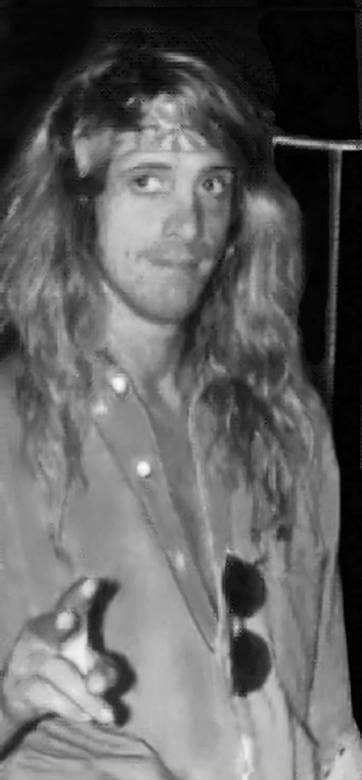
Kevin and Lewis decided to impress the arrogant interlocutor themselves and demonstrated on a laptop that they had full access to the same SAS system that he had told them about. Heinz again could not or did not want to hide his anger that the “newbies” had bypassed him in such an important matter. And miracles began. Eric literally demanded that the interlocutors not touch SAS – they said that it was too dangerous, since this system, which allows easy wiretapping, is used (who would have thought, huh) by the FBI. Then Eric went to the toilet … leaving his laptop on the cafe table, as if inviting his friends to look in there. Kevin and Lewis considered this some kind of excuse and did not take the risk.

Upon returning, Heinz boasted that he had a universal key for physical access to any of the telephone exchanges. The parties parted, clearly dissatisfied with each other, but at the same time interested in each other’s resources. However, Kevin was literally running out of time and the fifth point: he did not know from what date the wiretapping in his father’s house had been installed, and what the security service and the FBI might know. If they knew too much there and were just waiting for an opportunity to arrest him, it was time for him to flee the United States to any country that did not have an extradition agreement with Washington. Kevin and Lewis, knowing the previously calculated address of Heinz’s home, went there and discovered not a hacker’s hut, but a phony apartment complex with a swimming pool and other joys of life.

Eric was furious that they had barged into his house without asking. Kevin asked for the master key. Eric refused to give it to him. Kevin risked telling him about the wiretapping at his father’s house. Eric still refused to give him the key, but suggested that they go to the center together one night. After that, he openly scolded his friends for some time, each time promising “tomorrow for sure.” One morning, instead of another rejection, Eric suddenly said that he had gone there himself, correctly named all of his father’s numbers that were being tapped, and said that the tapping had started on January 27. However, there was a nuance: Eric said that he had not had to break the mechanical lock on the door, because it was not there that night.
However, Kevin often drove past that center and saw that the lock was always hanging in place, especially that morning. They multiplied strangely. Kevin and Lewis increasingly suspected Eric of being at best a pathological liar, at worst an FBI agent. The arrest of Kevin Poulsen, with whom Eric had previously worked and infiltrated the call center, also took on a particularly unpleasant tone in this light. When his friends discovered that all the phones of Impac Corporation, where Lewis worked, and his home, were bugged, they decided to try to get Eric out of the water.
They called him from a ghost phone and told him about the bugging of Lewis. Eric promised to try to figure it out, but for some reason immediately refused to consider the FBI version. The next day, Eric called them himself at the agreed-upon number – saying that he was calling from a phone. But the call was clearly not from a phone. Worst of all, Heinz tried to get Lewis to confess to using illegal mechanisms at work. At the same time, Lewis called Eric’s home number, where an unknown man immediately picked up the phone. An irritated Heinz declared that there should be no one at his house, he did not like these miracles and he was going to bed.

Kevin and Lewis rolled up their sleeves and threw all their knowledge and skills into finding out who this fucking Eric Heinz was. The first discoveries made their hair stand on end: according to the calls from Heinz’s apartment, it turned out that he was dialing, in particular, the Los Angeles headquarters of the FBI. Then – more fun: it turned out that the expensive apartments were given to him without checks on the solvency, which belong in such a case, and so on, and he is listed there under the name Joseph Vernl. There was also a cell phone number … which turned out to be registered with the United States government and the name Mike Martinez. Finally, having obtained a printout of calls from this number, they found out that not only the Los Angeles headquarters of the FBI was constantly dialed from it, but also some numbers in Washington, D.C.
“Eric Heinz” was definitely and very actively working for the FBI, that could be considered proven. The only question was whether he was a career agent undercover, which was not well matched by his appearance as an informal metalhead and strange for an FBI officer manners and complexes, or whether he was simply being used by the feds as an informant and provocateur in the hacker community for money, and/or being kept on the hook upon request. Having extracted a few more classified data, Kevin managed to identify some of “Eric’s” regular telephone interlocutors: they were, as one would expect, FBI and Pacific Bell security service employees. The customs officer even managed to establish the name of the head of his new adversary: Ken McGuire, a career agent of the FBI from the WCC3 special unit for combating “white-collar crime.”
With the help of social engineering, Kevin managed to determine the real name of “Erica”: Joseph Weiss. FBI personnel agent Yes, in the secret services of any country there are many people with quite typical types, manners and mannerisms to an experienced eye, but still not all secret service employees look like secret service employees. Joseph Weiss, who looked like literally the complete opposite of the typical “federal”, who was nicknamed glowie, “glowies”, for his visibility even under cover, is a vivid example of this.
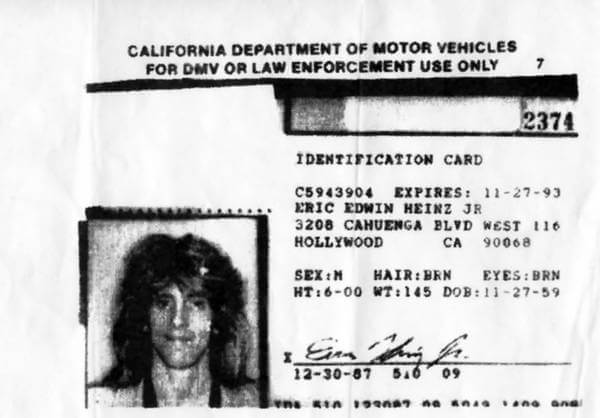
Kevin understood that the FBI was literally on his tail. However, he was not going to flee the country or at least hide and lie low for the time being. Instead, he led a demonstratively normal life… and carefully, with the help of his ghost phone, SAS and increasing access to various institutions and their databases, began to study those who were obliged to monitor him. Namely: Joseph Weiss and his colleagues. Thus began the same cat-and-mouse game of Kevin Mitnick with the FBI, which became a legend in the history of the hacking movement, and turned Mitnick himself into one of the most wanted criminals in the United States, to whom even FBI employees treated with respect and admiration. But more on that in the next part!