08.08.2025
13 min
2031



Kevin Mitnick is a legendary hacker who went down in history as a master of social engineering and digital camouflage. In the seventh part of the series, we tell about the period of his life when he was on the run from the FBI, switching identities and exploiting vulnerabilities in 90s databases to remain invisible. The reader will learn how Mitnick created new documents, faked identities, avoided ambushes and even blended into the crowd thanks to his athletic form. This is a story not only about cybercrime, but also about the psychology of escape, cunning and adaptability that made him one of the most famous hackers of the 20th century.

So, December 1992 came. The cunning Mytnik could not avoid the fact that the court, at the last moment of his probation, issued warrants for his arrest. The gears of the US law enforcement machine were spinning slowly but surely – and FBI agents treated the detention of the hacker even with some laziness and indifference. They probably believed that a 100% computer geek, with all his skills in circling the system around his finger, would not dare to take care of running and living underground. They underestimated how much Mytnik did not like prison – and how much he did not want to please behind bars again.
Mytnik was going to go from Los Angeles to Las Vegas by the most obvious route: via the federal highway Interstate 15, made famous by Hunter Thompson and Terry Gilliam. But before he could leave, Kevin couldn’t resist taking another step in his investigation of his personal enemy, FBI agent “Eric Heinz,” who was masquerading as a successful hacker. Posing as an employee of the Los Angeles County Department of Revenue’s Anti-Money Laundering Unit, he requested copies of the driver’s licenses of all three of his fake enemies from the motor vehicle registration office.

He asked for copies to be faxed to the Kinko’s club in the Hollywood studio area “for urgency.” Truvie Mitnik, who was hiding these days with a cousin named Truvie, did not know that the feds had already calculated this move – and the operator immediately reported the call to the senior special investigator of the same structure. He suggested sending Mitnik any suitable fake ID – and the club was faxed a standard template ID-sample in the name of “Annie Driver”, which does not exist. Cars with the investigator of the vehicle registration service Shirley Lessiak, her team of colleagues and a plainclothes FBI representative immediately drove to the club to detain “one of the most dangerous hackers in the United States”.
Mytnik, probably still not fully aware of the seriousness of the situation and the hunt for him, went to the club for copies with his grandmother. Having parked in a disabled parking lot near the supermarket to disguise himself, his grandmother stayed in the car, and Kevin went to pick up the documents. By that time, the law enforcement officers had been waiting for him for about two hours — and were sincerely waiting for the “damn Mytnik” to appear as soon as possible. The FBI agent even left on some urgent business.
The hall turned out to be crowded — and it was Kevin’s turn to get angry and wait in line to receive a fax: there were not so many of them in use yet, and faxes were a popular commercial service. Mytnik had no idea that several people were already watching him, until the visitors who were hiding in the crowd. He did not even suspect when, instead of the rights of “Eric Heinz”, the rights of some incomprehensible lady turned out to be in the dream folder. Outraged by the disorder of the vehicle registration service employees, Mytnik wandered around the hall and thought about what to do, while he was followed by officers of her own law enforcement unit in plainclothes, led by investigator Lessiak, waiting for a convenient moment to detain him.
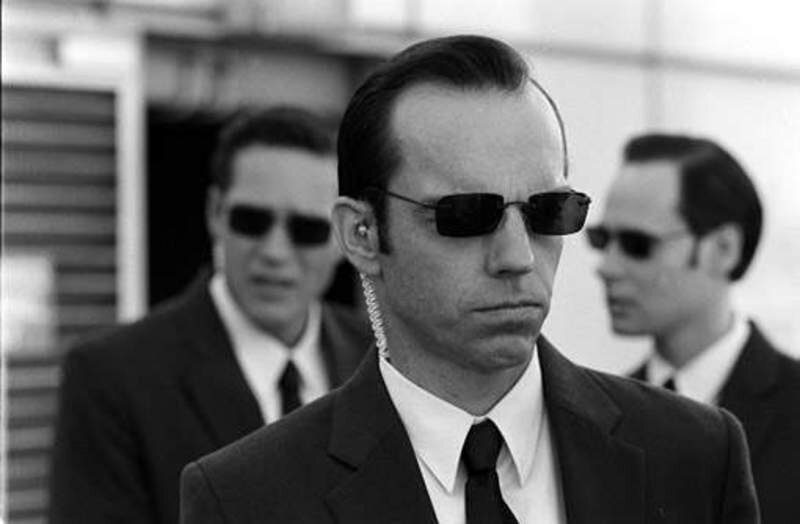
Finally, Kevin left the building through a back door to express his indignation on the phone – and as soon as he started to dial the number, he saw four people in plainclothes, led by an energetic woman. They approached and introduced themselves as employees of the investigation department of the vehicle registration service. Here, the customs officer was already acting on reflexes heated by paranoia. Roaring “I don’t want to talk to you!”, he threw faxes in the air, hoping to distract his pursuers with them – and rushed to run.
At that moment, he really appreciated all the time and effort he had devoted to training, weight loss, PE and healthy lifestyle. As well as his habit of wearing sports shorts and a T-shirt under his regular clothes. Easily breaking away from his less trained pursuers, almost parkouring through alleys and gates, he threw off his jacket and pants into some bushes – and ran on, already under the guise of training for a jog. After 45 minutes, he finally breathed his last – and from the nearest phone, he dialed his grandmother’s cell phone, which was left in the car.

No one picked up the phone. Kevin had time to panic quite a bit for her, until he thought of calling his cousin and asking her to find his grandmother. She ended up in the car where Mytnik had left her. When, already at the agreed place in a remote cafe, he asked her why she didn’t pick up the phone on her cell phone, the grandmother was genuinely surprised and said that she had no idea how to handle this intricate device and was afraid of breaking something. It simply didn’t occur to Kevin that an elderly person in the early 90s might not know how to use a cell phone. The grandmother also said that she tried to find her grandson in the building, but all she saw was a very confused lady with a videotape under her arm: it was Investigator Lessiak, who let Mytnik through, and she had a recording of Kevin from the surveillance cameras.
And now, the desert hills of eastern California and western Nevada were already flashing outside the windows. Kevin was racing to Las Vegas in his beloved grandmother’s car. She was driving, and the cops probably didn’t have any orientation to her car yet. The trip was uneventful, and Kevin stopped by his relatives. By that time, he had already formed preliminary outlines of his plans for further action. The first step was to create a temporary false identity as quickly as possible. The second was to more thoroughly design a new, most believable persona with all the papers and documents. Much like “Eric Heinz” had done many times before.
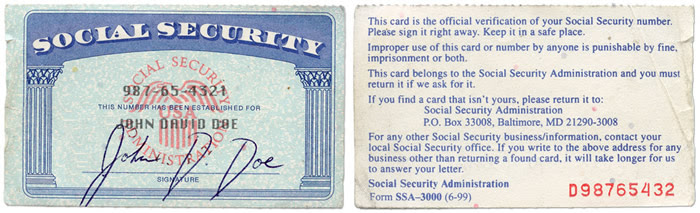
He, of course, was helped by the system itself, only four of his profiles were created for him as an undercover FBI agent. But Mitnick decided to follow in his footsteps, albeit completely illegally. Kevin Mitnick was to disappear without a trace in the eyes of the state – and the hacker who bore that name was going to start a new life somewhere else under a new name. How to do this? Our hero was going to use both his extensive experience in social engineering and the results of observing “Eric Heinz” and his methods, as well as a semi-underground collection of tips for such a case called The Paper Trip.
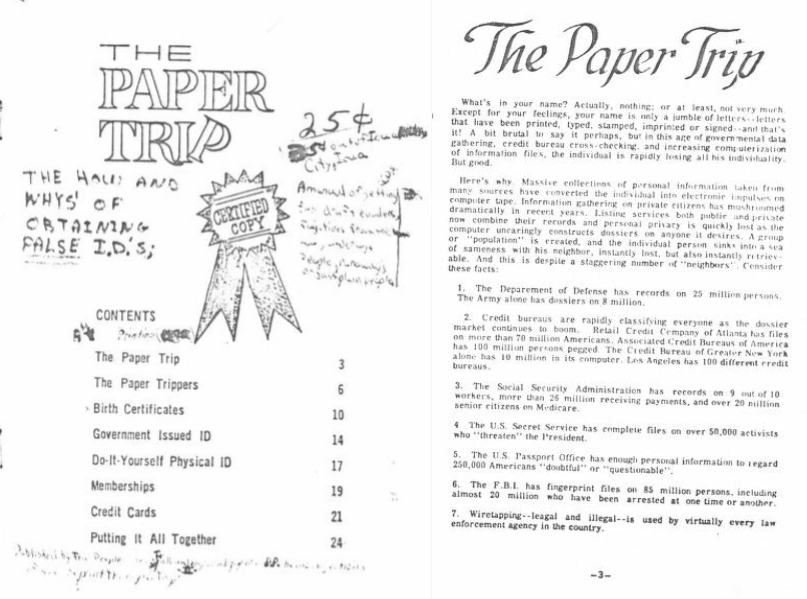
The Paper Trip, written by a certain Barry Reid — most likely also a pseudonym — was published in 1970 by the Californian countercultural publishing house Eden Press. It was designed to help Americans who were at odds with the system — such as antiwar activists, social justice activists, and various radicals — hide from its all-seeing eye under the guise of other people. The best way, the guide suggested, was to use the names, birth certificates, and social security numbers of deceased people who were similar in age, gender, skin color, and other characteristics — a method called ghosting.
The idea was that the integration of various databases from different US agencies was only at an early stage, the entire system was poorly computerized, and the Social Security Administration might have no idea that a person with a particular social security number had been dead for many years. Databases in different states were poorly integrated, and often not at all.
The best option for the initial selection of candidates for ghosting, the manual considered, was to search in old newspapers for publications about families who collectively died on trips to other states: this reduced the probability of meeting with living “relatives”, and made it difficult to link databases about what happened in different states due to the peculiarities of the American document. This is approximately how the same “Eric Heinz” was born – whose real prototype died in a car accident with his mother at the age of two, and his name and data were useful to the FBI to create a legend of its undercover agent in the hacker community.
However, to urgently create a temporary conspiratorial identity, Mitnik decided to borrow the data of a completely living person. Posing as a postal inspector, he contacted the vehicle registration service of the northwestern state of Oregon and requested data on a certain Eric Weiss, born between 1958 and 1968. Why Eric and Weiss? These were the real names of the famous magician who gained world fame under the name Harry Houdini. Mitnik once again could not resist a postmodern joke – and decided to temporarily borrow these namesakes of the great illusionist, whom he had admired since childhood.
Such a person was found in the database with a date of birth of 1968 – five years younger than Kevin. However, the thirty-year-old Mitnik was in excellent physical shape and could pass for a person 25 years old from birth. Then he found the number and dialed… Eric Weiss himself, asking if he was a graduate of the main university in Oregon, the University of Portland. He replied that he had been mistaken for someone else because he graduated from Ellensburg University. With his initial clues, Mitnick managed, in a few weeks of social engineering and database research, to extract almost all of the personal data of the unsuspecting manager from Oregon and organize a virtually complete package of documents in his name.
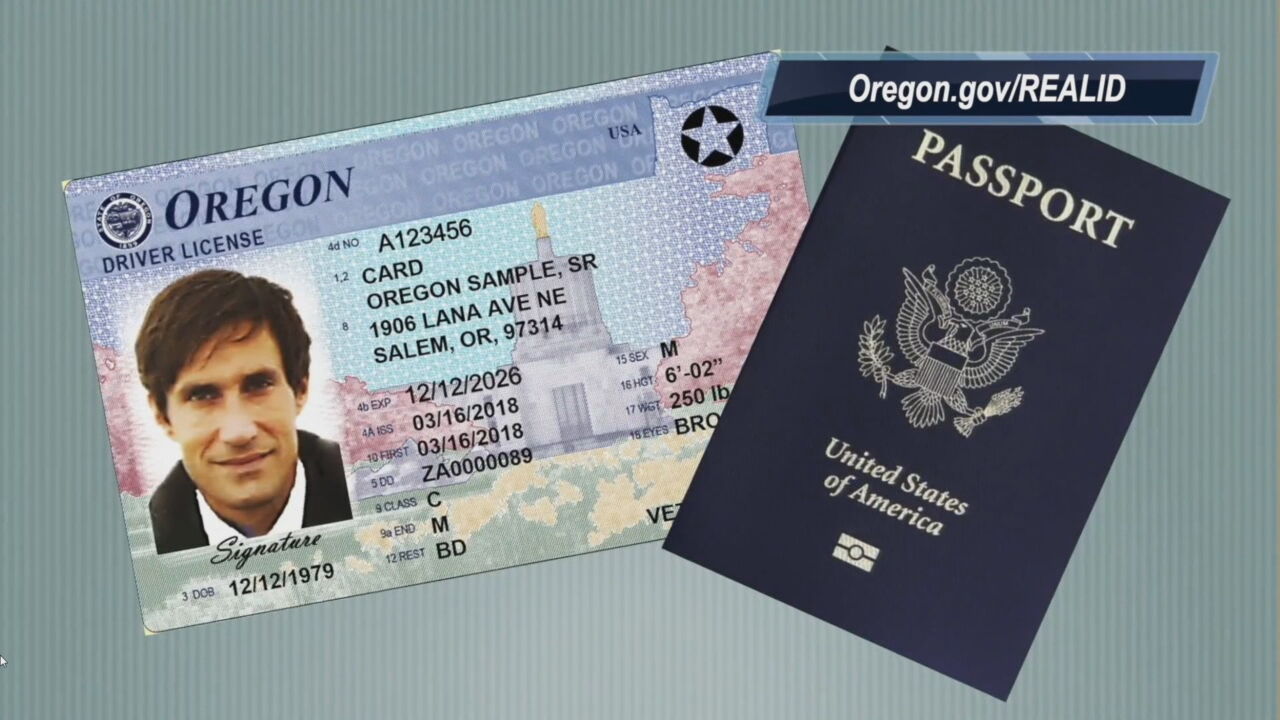
Kevin got a copy of his birth certificate and forged a W-2 tax form with salary and tax information from a supposedly previous job. Based on them, he passed a driving test under the legend that he had lived in Australia with left-hand traffic for several years and wanted to make sure of his skills for driving in the United States with right-hand traffic. So he got a driver’s license in the name of Eric Weiss – which in the States largely replaces the functions of an internal passport in other countries. And the license allowed him to get an official duplicate of a social security policy – with which he could already officially get a job.
From Vegas, Kevin Mitnick moved to Denver – the capital of the state of Colorado on the border of the Great Plains and the Rocky Mountains. He chose this place as one of the most dynamic cities in the country with a fairly strong IT sector. At the same time, Colorado is far from California, where he was wanted, in the very heart of the United States. In addition, Kevin had always dreamed of learning to ski, and from Denver to ski resorts was within easy reach: mountain ranges with ice caps were visible directly from the city.

Having reached Denver and temporarily settled in a motel, Mitnik began looking for a job in some computer company. He wrote a fake, but good and convincing resume – and went to get a job at the local division of the large international law firm Holm, Roberts and Owens. At the interview, in order not to arouse suspicion of excessive knowledge, more typical of a hacker, he deliberately gave several incorrect answers regarding the technical part. His last place of work was the non-existent Green Valley Systems from Vegas – and when HR called the number indicated in the resume, Kevin, changing his voice a little, without undue modesty, gave himself pleasant recommendations. Soon he was hired for a job with a salary of $ 28,000 per year. He was supposed to go to the office in two weeks to become a general computer specialist, literally an enkey.
Now, while there was still some free time, it was time to create another, permanent fake identity, which would be much more difficult to undermine. His choice fell on South Dakota — one of the quiet, remote, agrarian and provincial states in the entire USA — with a population of less than 700 thousand people at the time. Literally “Barnaul, Altai Territory” from the meme. There, Mytnik estimated, the digitization of databases and their comparison with databases in other states would not be completed soon, and a lot of water would still flow from there. In addition, in South Dakota, death certificates were public documents, and any citizen had the right to access them.
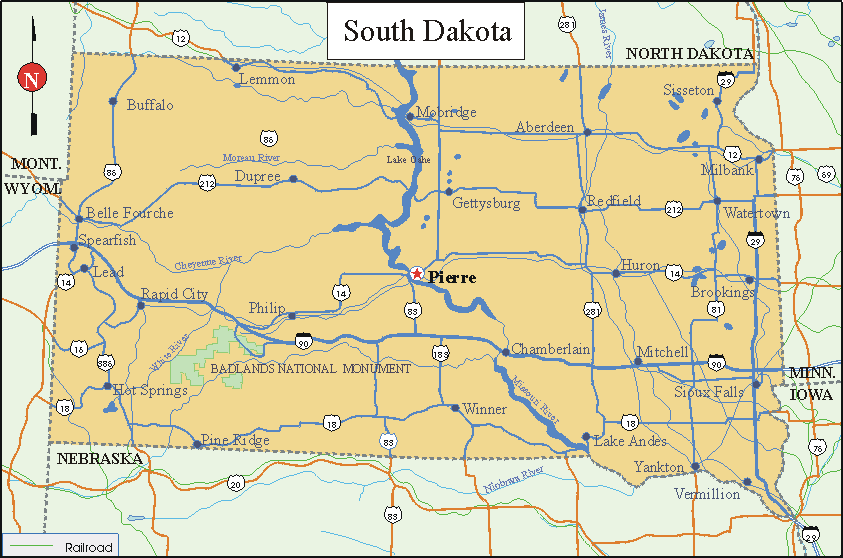
Kevin made 20 business cards in the name of private investigator Eric Weiss, which included a fictitious private investigator license number supposedly issued in Nevada, a fictitious address in Las Vegas, and a fake telephone number that went to an answering service. He traveled to the state capital, the town of Pyrre, with a population of only 13,000, and appeared in a strict business suit at the office of the state registrar of vital statistics. The head of the organization was very gracious about the visit of such a respectful person, and provided all possible assistance to the “investigation.”

South Dakota and the town of Pyrr. 1965-1975. By chance, Kevin used his social engineering skills to help one of his employees find her lost relative from Vegas – for which he was finally recognized by the team as “their boyfriend”. And he also accidentally found some treasures that he really needed: blank birth certificate forms were simply lying in boxes in one of the offices, and the official state seal (!) always stood on one of the tables. In California or Nevada, this would have been completely unthinkable, but South Dakota was a very quiet and peaceful place.
Having chosen a convenient moment, the Customs officer imperceptibly grabbed the press, locked himself in one of the offices and in five minutes organized 50 birth certificate forms with official seals, after which he returned everything to its original position. When Kevin finally dug through all the archives, the employees saw him off almost as if he were a colleague who was resigning, hugging and almost crying. Having reached Denver, Mitnik, through his acquaintance from the Social Security Administration, found a suitable name for the dead child, to whom the parents had managed to give a Social Security number. It turned out to be Brian Merrill: now Kevin was to become a person with this name and surname.
For Mitnik, quiet and calm office days in a 50-story skyscraper in downtown Denver finally began. In his free time, he learned to ski, improved his legal literacy to avoid new problems with the law, and also went to rock concerts. And everything seemed to be not bad, but our hero’s adventures were not going to end there.