08.08.2025
13 min
2031



Part 14 of the series “In Memory of Kevin Mitnick” concludes the story of the world’s most famous hacker, who went from a persecuted criminal to a respected cybersecurity expert. In the finale, we learn about the final court battles, the terms of his release, his first steps on the loose, and his transformation into a renowned consultant and author. This is a story of second chances, public recognition, and the legacy that Mitnick left in the world of digital security.
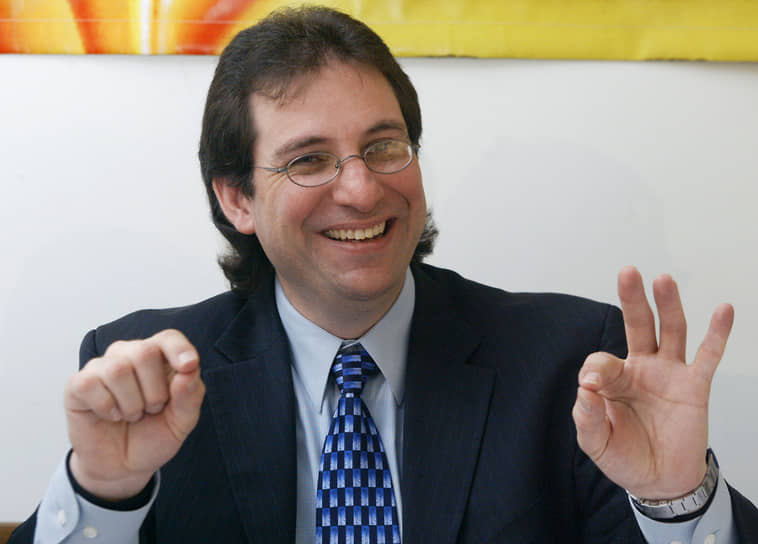
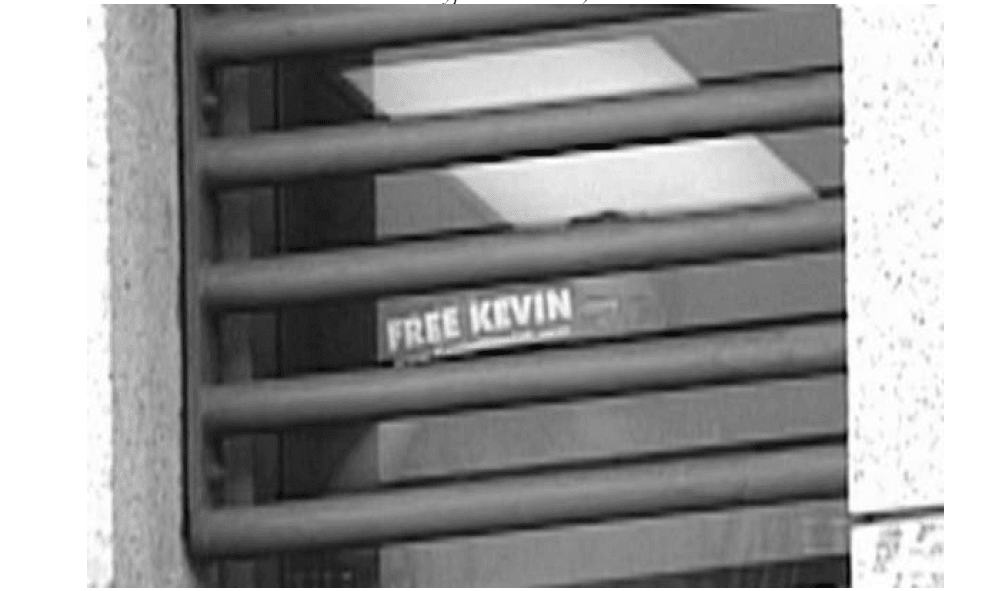
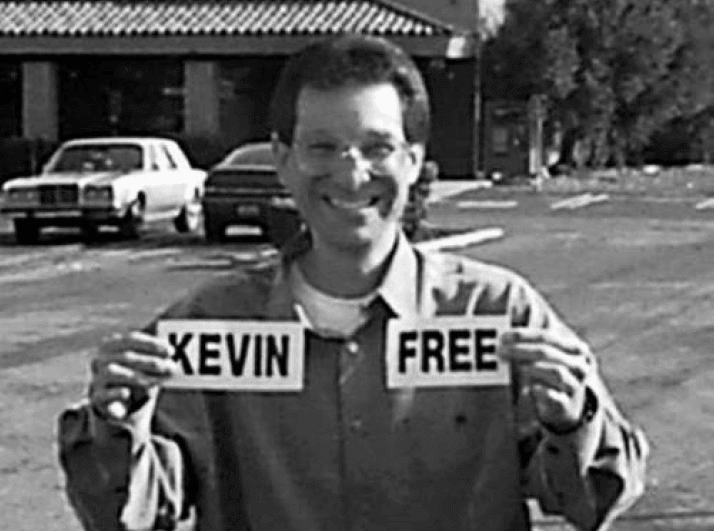
Captured by the FBI with the help of Shimomura in February 1995, Kevin Mitnick spent the entire second half of the 90s in a California prison. Years passed, lawyers desperately played with prosecutors, because in the worst case scenario he was threatened with up to life imprisonment. Representatives of the system, represented by the FBI and the company, tried to make Mitnick a show victim to intimidate hackers – and thereby provoked the start of a major public campaign in his defense. If the court had accepted the radical arguments of the prosecution, a precedent would have been created when any computer scientist risked multimillion-dollar lawsuits from corporations and many years of imprisonment for hacking a program for personal purposes. The result was that millions of people around the world joined the FREE KEVIN movement – and the issue began to turn from a legal one into a socio-political one. If in 1995 everything looked absolutely hopeless for Mytnik, then from 1998 the scales began to gradually shift in his favor.
Now he himself was encouraged, believed in himself again and even managed to find an interesting precedent for his lawyer in his favor. It was about the case of Richard Chubinsky, an agent of the US Internal Revenue Service, who in 1992 hacked the organization’s computers and gained access to the tax returns of politicians, officials and show business stars. When the hack was revealed, he was detained and charged with computer and telecommunications fraud. In December 1995, he received six months in prison, but appealed to the Federal Court of Appeals.
The Federal Court took into account the fact that Chubinsky did not disclose the information obtained, did not try to use it to the detriment of those whose data he received, did not blackmail anyone and did not try to profit from it – he acted literally out of curiosity. The charges were dropped, and Chubinsky was free. For the American judicial system, precedent is important, and the Chubynsky Mytnyk case was a perfect fit. Because, as far as is known, he also did everything out of sporting interest or for reasons of personal safety, and did not try to cause any damage to the winners – except for the burnt Simumura chair.
In parallel, state prosecutors apparently got tired of Mytnik sitting in prison for five years without a verdict — although some law enforcement officers wanted to turn his case into a show trial to intimidate hackers. They began to pressure Kevin to sign a plea deal with the investigation as soon as possible — threatening to do everything in their power to make his life in prison stressful and sad, and to make the final sentence as harsh as possible. Attorney Randolph was forced to admit that the threat was real, and Mytnik would do better to consider a plea deal — because technically, even without the mythical hacks of the CIA and the US strategic nuclear forces, there were enough episodes in Kevin’s turbulent hacking biography that, if the prosecutors wanted, could be sent.
Mytnik and his lawyer thought and discussed the options for some time — but in the end they decided to go for a plea deal. By that time, including under pressure from the public and the FREE KEVIN campaign, the prosecution was ready to accept softer terms than initially. The case was becoming too noisy and was turning in the public consciousness in the wrong direction for the FBI. The computer scientists did not want to be intimidated, but spoke out against the harsh punishment of Mytnik with an increasingly massive and united front. And the more expedient option was to close the issue as quickly as possible, more quietly, rather than pushing the topic further.
At the same time, there were literally mystical rumors surrounding Mytnik’s hacking skills and abilities to manipulate people; he was considered almost a hybrid of the Joker and Loki, and therefore the approach was strict and thorough. According to the terms of the agreement with the investigation, Mytnik was categorically forbidden to use any digital devices for three years after his release from prison without the prior permission of the supervising inspector assigned to him. Attempting to even touch a computer, cell phone, fax, pager, and so on automatically led to a new arrest and imprisonment. Moreover, Kevin was forbidden to even ask anyone to do anything with any digital device. And a separate ban was imposed on anyone working, including as a consultant and expert in the IT field.
All this was harsh and even cruel for such a computer fan as Kevin Mytnik. However, the alternative was to continue serving years in prison, which he wanted even less. Having strengthened his heart four years and a month after his arrest in North Carolina, he signed a deal on March 16, 1999. He officially confessed to fraud using telecommunications systems, to computer fraud, including illegal copying of software code, to capturing access means (passwords) to cellular and computer networks, to intercepting the exchange of other people’s information on the Internet, only seven episodes.
The wheels of Themis’ chariot turned slowly, and only on August 9, 1999, after another six months of serving time, did Judge Pfelzer finally pronounce his verdict. Kevin Mitnick had already been sentenced to 22 months in prison for violating his parole in 1992. For the sins he admitted to in a plea agreement, he received an additional 43 months. However, taking into account the time he had already spent in prison since February 1995, he only had to serve until January 21, 2000. The prosecution also demanded that Mitnick “compensate for damages” in the amount of 1.5 million US dollars, but here Judge Pfelzer sided with Kevin, took into account the fact that he would be very poor with money in the coming years, and imposed a fine of only 4,125 dollars.
To serve out his remaining months, Mitnik was taken to the federal prison in Lompoc, California, near Santa Barbara. He was met by a delegation of prison officials who sternly warned him not to touch computers and telephones, in order to avoid the most unpleasant consequences for him. He was also told to find a job in prison – otherwise they would find it themselves, and it would be very unpleasant. Mitnik soon found his way… to the prison communications department. There he was assigned to repair telephones. He did this for two days, after which he received a grand thrashing from the prison authorities and was transferred to the kitchen to wash dirty dishes. And he took it until his release on January 21, 2000. As a sign of protest, he periodically officially demanded that the prison authorities provide him with kosher food, although he had been philosophical about kashrut all his life, but the prison rabbi always commented philosophically that prison was not a country club with a good menu.

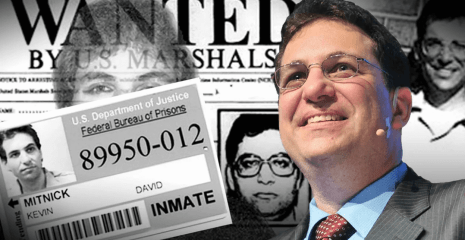
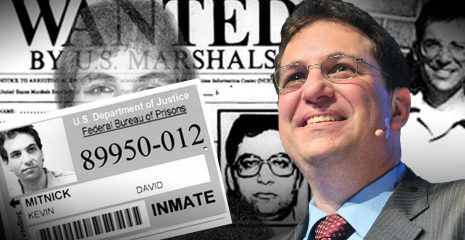
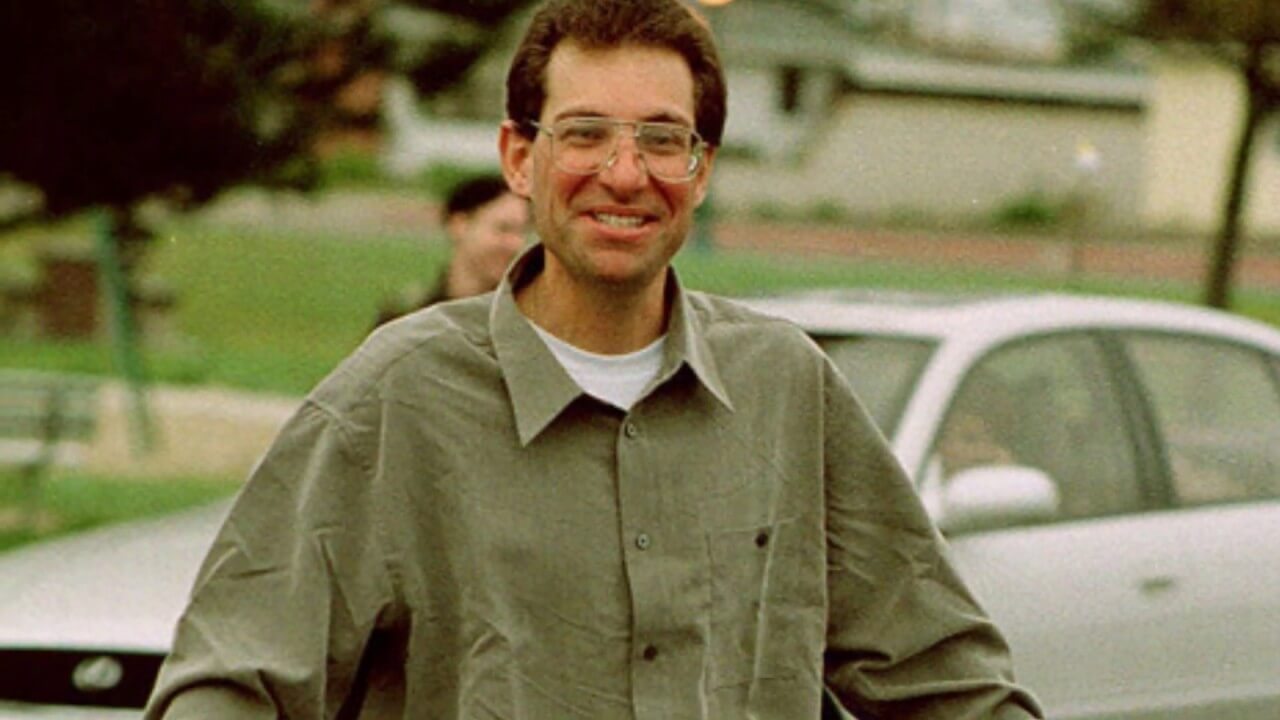
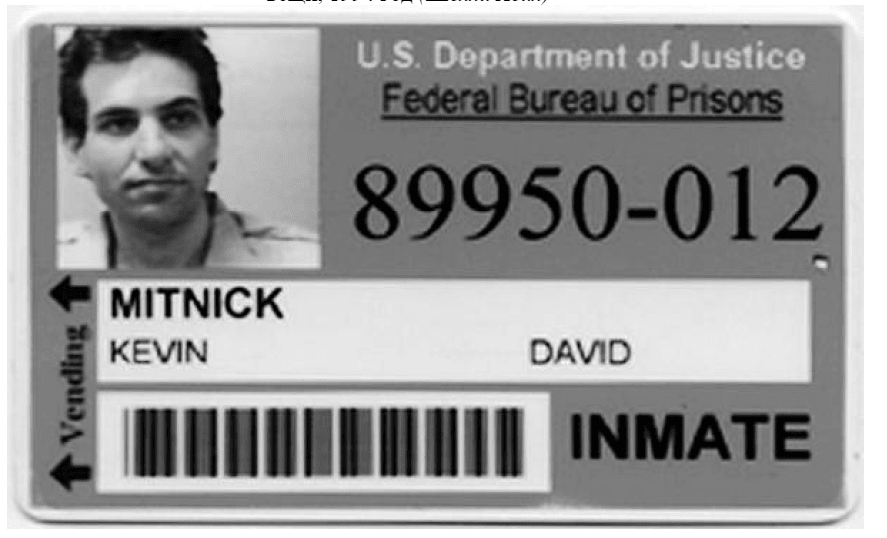
After leaving the gate, Mytnik first of all decided the issue of the fine and did it quickly and cunningly: taking into account his media popularity, he tried to put it on an existing Amazon. prison in Lompoc. As expected, the site administrators did not dare to accept such a product – and Kevin made sure that this story immediately became the property of the media. Very quickly, the story about Kevin Mytnik selling his prisoner card appeared even on CNN – and one of the European computer scientists, Kevin’s supporters, bought it for 4,000 dollars. Having reported his 125, Kevin successfully closed the fine. The prison management “bombed” and declared that the card was the property of the institution, and was going to sue Mytnik, but in the end they gave up and scored on this story.
And then, to Mitnik’s great surprise, he received a letter from Republican Senator Fred Thompson from Tennessee. The senator offered the famous hacker, who had just served time, a threat to US national security, nothing more or less, to come to Washington and speak at hearings on cybersecurity. The same ones at which Seymour had previously repeatedly spoken with a report on how to increase protection against hacker attacks and hacking of computer networks of various US organizations and departments. Why not, Kevin decided, arranged a trip to the probation department, went and spoke, and then answered the politicians’ questions, not forgetting to emphasize that he had acted out of professional interest, and not for profit or for nefarious reasons. He liked it, and so did the senators.
The hearings were broadcast on a special state TV channel, C-SPAN, and attracted a lot of attention. To Kevin’s surprise, he was showered with offers to speak at various venues and in the media: many wanted to see and listen to the famous hacker live, as well as ask him about various things and hear the answers firsthand. And many organizations were ready to pay for this. Interviews with him were published in the largest US newspapers: Washington Post, Forbes, Newsweek, Time, Wall Street Journal, Guardian, etc., his face regularly appeared on national TV channels.
Coming out of prison, Mytnik was sincerely afraid of poverty, since by court decision he did not have the right to work in his specialty, and, therefore, could only count on the cheapest unskilled labor. Now, at least for a while, he had the opportunity to earn money by public and not-so-public speaking, from TV talk shows and Ivy League audiences to closed think tanks at the Pentagon and Langley, and literally sell his personality. However, for all his skills at bumbling interlocutors, speaking in front of audiences and cameras, Kevin was not good at it and was afraid of it — and therefore was forced to take courses in hosting and acting. Since he was strictly forbidden to type texts for speeches and interviews on a computer — Mytnik was forced to write by hand or type on a typewriter.

At first, the supervisory service tried to put his finger in the wheel, insisting that such activities could be considered consulting on computer issues and, accordingly, violate the terms of his parole. However, Mytnik turned to lawyers, who said that here you can fight in court with good chances – and when trying to file a request for consideration of the case, Judge Pfelzer, who got acquainted with the essence, transparently hinted that she did not want to get involved with the topic of Mytnik anymore, especially over such nonsense. Probably, it did not do without the position of the Pentagon, the FBI and other special services, which discovered that Mytnik was no longer a dangerous hacker, but an excellent consultant on cybersecurity.
Perhaps better than Tsutomu Shimomura, who had worked in this area for a long time. Of course, from the court’s point of view, he had no right to provide consulting services for the next three years, but when it is very interesting and important for comrades in civilian clothes and high-ranking officers to receive such consultations… In general, the probation service understood everything, accepted it, and Kevin was no longer bothered with such claims. By the end of 2001, he was even unofficially allowed to use a laptop – the main thing is that he did not go online.
In the fall of 2000, Kevin Mitnik received an even more unexpected job offer: he was offered to become the host of a program about computers and the Internet on the Los Angeles radio station KFI-AM. He agreed, it started to work out quite well, and Kevin even invited his old friend and colleague in hacking cases, Alex Kasperavičius, to be his co-host. Hacker hosts in weekly Sunday hour-long programs told listeners about various interesting sites and dark corners of the Internet in the early 2000s, explained how to protect personal information and secure a personal computer. Again, Mytnik himself could not hack the network, and the radio station hired a special person to do it for him. Technically, this could be considered a violation of the terms of early release and the agreement, but at that time the authorities preferred not to delve into the mice. Kevin was happy with everything: the program was topping all the popularity charts in the city, and he soon began to receive about $ 1,000 per broadcast.

Popularity brought Mytnik not only to the radio host’s chair, but also to the lenses of movie cameras. The famous producer JJ Abrams invited him to play an episodic role with cameo elements in the spy-fantasy series Alias (“Spy” in the Russian localization): Kevin appeared there as a CIA hacker agent. Since he was still forbidden to touch a computer, and according to the plot he had to work at a computer, Mytnik was given a specially deactivated computer for filming. According to another version, he was even built a model of a computer out of cardboard, but he himself does not confirm this. This was the only acting experience in Kevin’s biography – but until the end of his days he considered it one of the most wonderful in his life.
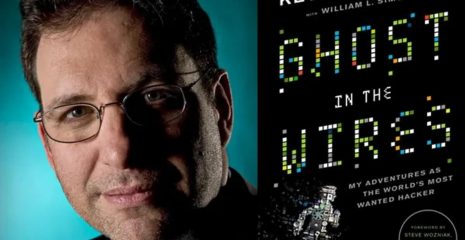
Well, in February 2003, the ban was finally lifted. By that time, Kevin Mitnick, who had settled in Las Vegas, had probably managed to recover from his morbid passion for hacking everything that could be hacked – and had a taste for fame, popularity and legal existence. He no longer engaged in hacking in the illegal sense – instead, he began to write books, the first of which was “The Art of Deception”, dedicated to the art of social manipulation. It immediately became a national bestseller in the USA after its release. Well, in terms of professional activity, Mitnick, who got to the keyboard after a long break, turned into, as he himself put it, an “ethical hacker”. That is, in essence, a cybersecurity specialist – in which, apparently, he far surpassed his enemy Tsutomu Shimomura.

His company Mitnick Security Consulting continues to provide services in this area after Kevin Mitnick’s death on July 16, 2023, at the age of 59. Well, his name will forever remain in the history of both the hacker community and the history of IT in general – although he owed many of his successes not just to his deep knowledge and skills in the computer field, but to their combination with well-developed social skills, knowledge of psychology and behavioral patterns. And it’s good that he used all this arsenal just for fun, and not for any villainous reasons. At least, as far as we know.