08.08.2025
13 min
2031



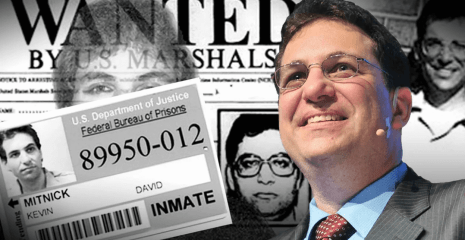
The sixth part of the series “In Memory of Kevin Mitnick” reveals one of the most fascinating periods of the legendary hacker’s life – his real-life game of cat and mouse with federal agents. Using social engineering, fake identities and skillful disguises, Mitnick gained access to confidential information, misled the FBI and even eavesdropped on the conversations of law enforcement agencies.
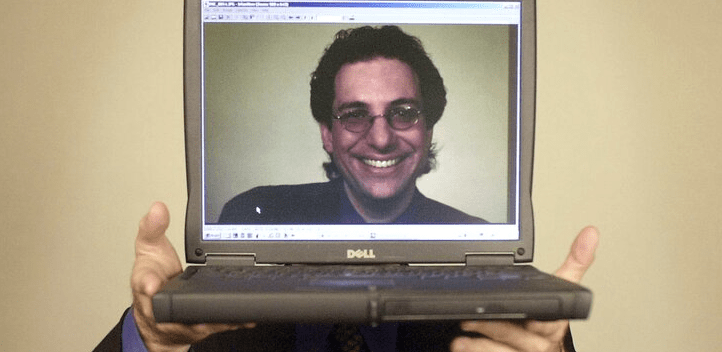
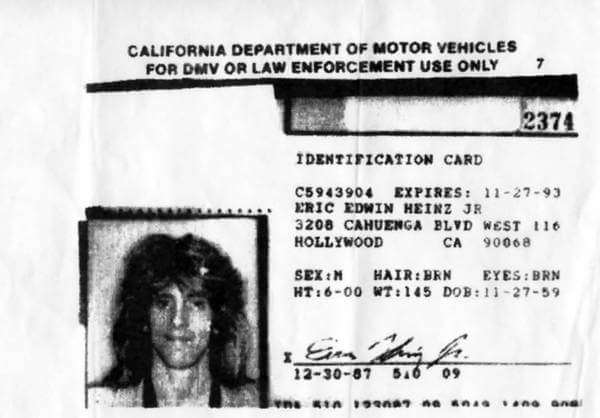
In the previous part, we told how Kevin Mitnick and his friend Lewis managed to figure out the fake hacker “Eric Heinz” – FBI career agent Joseph Weiss with the appearance of a rocker, who was playing an operational game with them. Thanks to their technical skills and social communications skills, the friends managed to figure out many details – right down to Weiss’ colleagues at the Los Angeles FBI headquarters and the address of his parents. At first, Kevin thought about fleeing the country – he really didn’t want to go to prison again, but excitement, a sense of protest and a desire to trick the system again took over. Mitnick began to play cat and mouse with the FBI. While the FBI tried to monitor him and collect evidence for the trial of the “most dangerous hacker in the United States”, he learned to track every step of the agents hunting him.
Kevin Mitnick later said that he literally couldn’t help but seek out all possible and impossible information about his new enemy: FBI staff agent Joseph Weiss — aka “famous hacker” Eric Heinz, aka tenant Joseph Veril, aka cell phone subscriber. Mitnick was also interested in Weiss’s immediate superior, Ken McGuire at FBI headquarters in Los Angeles.

In order to get even deeper into the secrets of the federal agents pursuing him, Mitnick skillfully and habitually disguised himself as an employee of the Los Angeles Department of Water and Power (DWP) from a special department that worked with law enforcement and emergency services. Employees of this department were obliged, according to security protocols, to request certain data from police officers, FBI agents, and so on, because they gave them access to classified data on suspected civilians.

This is the cheat that Mitnik used. He went under the guise of a DRW employee to the FBI’s Special Investigations Division, which had been causing Kevin problems back in college, and obtained from a certain Sergeant Davidson “to form a correct database” a list of the department’s employees who were in contact with DRW. And then (oh the holy simplicity of the 90s!) and a list of passwords of these employees, which they were supposed to call to control access to sensitive information. Kevin then used the personal data of the careless Sergeant Davidson to make calls supposedly from FBI special investigations especially often.
First of all, Mitnik used the obtained data to find out the new address of “Eric Heinz” (as it turned out, he simply rented another apartment in the same expensive apartment complex) and his new phone number, being quite crushed by the fact that the FBI agent did not even take care of registering all this under another fake name. Kevin’s next target was the California Department of Motor Vehicles (DMV). He dialed the sheriff’s office’s internal number, posing as a police lieutenant named Moore, and spoke with enough inside knowledge that he was given a special DMV number for law enforcement without question or hesitation.

Then Mitnick discovered that calls to this number were being forwarded to one of 20 different operators in the DMV database, and he had one of them forwarded to his ghost. He began receiving calls from the police, the FBI, the Drug Enforcement Administration, the Alcohol, Tobacco and Firearms Administration, and even the Secret Service, the oldest U.S. intelligence agency that protects high-ranking officials and combats counterfeiters.
According to the protocol, everyone who called gave the operator their login details and passwords to log into the system – so that it could be tracked who and what was asking about vehicle registration for individuals and organizations. The customs officer diligently recorded all this data until he had collected a sufficient database of logins under the names and passwords of many employees of various departments. After that, he turned off the forwarding, as if nothing had happened. Now Kevin could find out in a matter of minutes who registered certain cars, including those used for external surveillance and detention by FBI agents. This would repeatedly save him from arrest.

In parallel, Kevin Mitnick was officially hired by the private investigation company Teltec. Its director, Mark Kasden, a friend of Kevin’s father, and the company’s co-owner Michael Grant were impressed by Mitnick’s skills in obtaining access to wiretaps and various confidential data – which was very useful in their work as private detectives and collectors. They were also very curious about why someone had connected listening devices to their telephone lines. Kevin managed to find out that the wiretaps were installed by employees of the sheriff’s department and the security service of the Pacific Bell telephone company, which was very often the target of his hacking, because of which he repeatedly fell into the hands of law enforcement officers, and with which he had been waging a kind of mutual vendetta for several years.
As it turned out, a few months ago, the Teltec office was searched: it was suspected of illegal methods of gaining access to credit organization databases. Kevin managed to wiretap the line between the sheriff’s office and the phone company’s security department and found that the Teltec case had completely stopped. This pleased his new superiors.
Then Kevin thought about making some extra money using the method that “Eric Heinz” had bragged about: winning radio contests with listeners calling in. The customs officer and his friend Lewis figured out how to do it: they got the station’s internal number to bypass the filters that limited the connection speed and the number of incoming calls from the official contest number 8-800-…, and organized “drum roll” calls to always be the first. The fact is that in a typical contest on Los Angeles radio station KRTH, the winner was simply the one who called after a certain number of callers.

The scheme turned out to be a working one. Kevin and Lewis split the first prize of $1,000 in half. However, the same person could only become a prize winner once a year, so the friends organized a scheme through their relatives and acquaintances: the one who agreed to accept the money into his account received $400, and Kevin and Lewis shared the remaining $600. Many agreed, because at that time… it was not even considered fraud and illegal. Having won about 50 times, the friends exhausted the supply of acquaintances and “earned” about $7,000 each. According to Mitnik, this was the first time he used his skills to get money, and not just out of interest. For $6,000, Kevin bought his first laptop in his life, the most fashionable Toshiba T4400SX with a 486 processor at the time.

And at that time, he had a very cunning plan to get around the FBI at least until his probation expired in a few months and it would be much more difficult to put him in prison again. He decided to specifically send “Erica” through Lewis a fake that he was going to go to some cool group of hackers in Europe, either in Germany or in Bulgaria, to participate in electronic hacking and stealing money from accounts.
The logic of the plan was as follows. Kevin still did not know how much and what the FBI had managed to dig up about him since they began monitoring and tapping the phones in his father’s house. They could well have evidence to arrest him at any moment and throw him in prison for violating his parole. But if the FBI decides that the dangerous hacker Mitnik is going to go on a major and already directly criminal case, then they will not take him, but will only monitor him in order to take him at the last moment and loudly announce to the American people about the heroic detention of a threat to national security, a villain of computer technology.
The duck was launched, “Eric” became very interested and began to try to find out the details from Lewis, but he refused because the cautious Mitnik did not tell him any details. In parallel, Kevin began listening with his ghost phone and a hacked SAS system to the calls of the manager of the Pacific Bell security department, who helped the FBI monitor Mitnik.
While listening to one of the manager’s audio conferences with his colleagues, he finally heard something that applied to him: Pacific Bell security was brainstorming how to finally catch the damn Customs Officer, collect evidence against him, and hand it over to the FBI so they could track down the hacker. Kevin had great difficulty resisting the huge, hooligan temptation to jump into the conversation with the words, “I don’t think this is going to work. This Customs Officer is pretty smart! You never know, he might be listening to us right now!”
Trouble came unexpectedly: the police had arrested Teltec’s owner, Armand Grant. His son and the company’s director had posted bail for him, but they were told Armand would be released in just a few days. The Customs Officer offered to solve the problem in 15 minutes. He dialed the prison bail department’s internal phone, introduced himself as a police lieutenant, and said that Armand needed to be released ahead of schedule as soon as the bail money was deposited into his account, as he was assisting in the investigation of an important case. Soon, Armand was met by his son and the company director.

The Customs officer’s search for all possible information about “Eric Heinz” turned into a real obsession. After a long search, using mainly social engineering methods, he managed to find the numbers of his two Wells Fargo bank accounts and the statements of the latest transactions from them using the social security number he had already obtained. To Kevin’s surprise, the accounts were constantly receiving and leaving thousands of dollars every week. He did not appear at Alta-Services, where the owner of these accounts was officially listed under the pseudonym Joseph Veril. Kevin became even more curious – and to clarify the picture of what was happening, he decided to get the tax return of the FBI agent who was following him.
However, the tax office found out that “Veril” had not paid a single cent of income for the past two years, because, according to the tax office, he had no income! Even more surprised, Kevin discovered that “Eric” had by now finally left the apartment complex in an unknown direction. No big deal: through the already hacked Department of Water and Power, Mytnik quickly found out “Joseph Veril’s” new address. However, after Kevin called, he quickly moved away again.
Then, knowing the number of “Eric-Joseph’s” pager, Kevin found out its unique SAR code, bought a similar one, and persuaded the company manager to enter it into the device on the grounds that “I accidentally drowned the last one in the toilet.” Now all the messages that came to the agent’s pager were duplicated by Mytnik’s new pager. In addition, Kevin finally figured out how to wiretap “Eric’s” phone number through the SAS system: after all, it was dangerous and pointless to do it directly, the system made a characteristic click when triggered, which the subscriber could hear, and the agent knew it perfectly well. However, Mytnik guessed how to bypass the restrictions, and habitually instructed the company’s employee on duty about what needed to be done on the equipment.
He did it very timely: he soon overheard “Eric” discussing with his boss, Special Agent Ken McGuire, that Mytnik’s apartment needed to be searched, and in order to obtain a search warrant, at least some evidence needed to be collected. Kevin put down the mountain of bricks on the spot, urgently changed the number on his phone again and rushed to Lewis to tell him that the feds were really on his tail and that any possible evidence needed to be urgently disposed of. Having scattered all the suspicious equipment and disks to reliable acquaintances and relatives, the customs officer took a breather… and began to dig further for “Eric”.
In the social security system, he managed to get a number registered in the name of Eric Heinz. However, the database indicated that the bearer of this number was a disabled person who had lost his legs in a motorcycle accident. In addition, it was indicated that Heinz’s father was his full namesake. Having obtained his phone number and called under the guise of a former classmate, Kevin was once again fooled: Eric Heinz Sr. considered the call a very bad joke, and explained that his namesake son died with his mother in a car accident at the age of two, and he never had any classmates. The customs officer even managed to get a copy of the death certificate of the real Eric Heinz from the Seattle Bureau of Vital Statistics.
Kevin discovered that Ken McGuire often called the same number. The number, as it turned out, belonged to David Schindler, an assistant federal prosecutor who was the prosecutor in the trial of Poulsen, a former colleague of “Eric Heinz,” who, by a strange coincidence, had fallen into the FBI trap and then into prison. This confirmed Kevin’s worst fears: everything was serious, the system was working with enthusiasm and purpose and was working to put him in prison. Mitnik did not want to go to prison to the extreme.
Through the same analysis of telephone traffic, Mitnik managed to find out a new phone number, and through it the fourth address of “Eric” in his memory: it was again an expensive apartment, this time near Hollywood. Well, but FBI agents live there, Kevin thought. And he began to proactively prepare for a possible visit to his Teltec office. The fact is that Mytnik spent the night and hacked from his laptop “in secluded places,” but even he couldn’t work remotely at that time.
However, the work brought him not only legal money, but also moral satisfaction: he sincerely liked helping to find and subdue various assholes, such as malicious alimony defaulters or crazy relatives, kidnappers of children from their parents. True, the working methods of both Mytnik personally and the Teltec company allowed them to greatly please and pamper their clients, but from the point of view of American laws they were more than questionable.
Kevin bought a radio frequency scanner and an interpreter of data passing through cellular networks. He managed to set up the equipment so that he would receive an alarm signal when any of the numbers he had previously identified as FBI agents, belonging to all of “Eric’s” subscribers, and other characters he didn’t want to cross paths with appeared within range of the nearest cell tower to his office. Again, he did this very timely.

One September morning in 1992, Kevin arrived at work earlier than everyone else and heard a characteristic squeak from his workplace. The system recorded the appearance of a cell phone in the coverage area of the tower near the office, and not someone there, but FBI Special Agent Ken McGuire, who was personally handling his case. He had been present in the area for two hours and had time to make a call to the phone. Having immediately found out the address of the phone, Mytnik became even more nervous: the phone was located literally across the street from the rented apartment where he was spending the night. The morning was no longer difficult. The FBI was on Mytnik’s tail in almost the literal sense of the word.
Having exhaled a little and decided that if they were going to take him, most likely the mousetrap would have already snapped shut, and he himself would be lying on the floor and listening to the Miranda rule being read out, Kevin waited for his superiors. He told them that he seemed to have been followed – and they, as people who were experienced in such matters, were only surprised by the cunning and foresight of their colleague. Having taken all the things from the office, the Customs Officer, expecting a chase at any moment, rushed out of the city north on the 101st highway. Having got out and not noticing the tail, he called Lewis and warned about what was happening. Then they additionally tried to get rid of all potential evidence. Kevin returned to Los Angeles and stayed for a day in a motel not far from his previous residence. Exhaling even more, and even going to work at the office without incident the next day, he regained his composure and decided to … mock the FBI a little.
He returned to the rented apartment, which was already known to the feds, buying donuts on the way and putting them in a box with a large inscription “Donuts for the FBI.” He left the box in the refrigerator, and made a similar inscription on the door. Then he went to bed.
At six in the morning on September 30, 1992, they came for him. True, Kevin woke up to the creaking of the lock in the lock – and with horror assumed that instead of agents (who usually knock loudly on the door and shout about their departmental affiliation) robbers were trying to break into his house. A completely normal assumption, given the place and time of what is happening: LA 1992 is literally a real prototype and source of inspiration for GTA San Andreas.

The customs officer shouted “Who’s there?!”, hoping to scare off the robbers by making the owner ready to fight back. However, from behind the door came “Open up, FBI!”. At that moment, Kevin again realized that he had somewhat overestimated his self-control, fearlessness, and moral readiness for the search. Having cooled down, he went to open it, and only from the automatically lowered gaze of the FBI agent who appeared before him did he realize that he had come to the agents in his sleep – completely naked.
As the customs officer had assumed, the search was very thorough, but it yielded nothing. He was even a little offended that no one appreciated his joke with the donuts. Then one of the agents – already familiar to him from previous adventures, Special Agent Richard Beasley – started a conversation. First of all, he said, quite traditionally, that Lewis “has already given all the evidence against you, so it’s better to do it yourself sometime, or you’ll be gone for a long time.” Kevin didn’t believe this, since he and Lewis had discussed it more than once, and the FBI definitely shouldn’t have any evidence in that direction. However, Agent Beasley then played an audiotape… on which Kevin proudly showed Mark and Michael from Teltec the wiretap of Detective Simon and Pacific Bell security specialist Santos about the surveillance of Teltec.

However, to Mytnik’s sincere surprise, he had not yet been arrested: there was still not enough evidence for an arrest warrant. He said that he needed to consult with his father and lawyer, and went to his car. FBI agents also searched his car – and, unfortunately for Kevin, they found several disks hidden in the glove compartment, forgotten in the hustle and bustle. He was accompanied all the way to his father’s house by two cars with agents – and they could not enter the house without a warrant. When the agents nevertheless left, Mytnik rushed to the office. He did not find any agents or a search there, he sighed, and just in case he arranged a Format Disc C. Michael Grant was furious at such self-management with important company data and fired Mytnik. Later, Kevin learns that Grant was also going to use potentially incriminating data from his computer to leak it to the FBI and at this price improve the situation with the prosecution of his father by law enforcement officers.
There were still three months left on his probation. The customs officer had to hold out and not be arrested during that time—it would be much harder to catch him later. In early November, he tried to get permission from his parole officer to go to Las Vegas to talk to his mother and grandmother and celebrate Thanksgiving. To his surprise, he was granted permission with the condition that he check in with the Nevada Parole Office and return by December 4. However, either his growing paranoia or his sixth sense literally forced him to stop shortly after entering the outskirts of the city and listen to the Vegas police department’s radio broadcasts using a specially converted radio.

He studied how the cops asked if a particular car was wanted, went on the air and requested this information from his car. In response, he received the mysterious phrase “Are you clear with 440?” Asking the operator to stay on the line, he found out by phone, posing as a DEA agent, about the meaning of this code number in the Vegas police. As it turned out, 440 meant “person wanted.” And the operator’s question implied whether the cop who called could speak out of the suspect’s hearing.

For some time, Kevin hid with them, casually notifying the department of his arrival by phone, stating that he was seriously ill, but then asked them to take him back to Los Angeles just before the evening of December 4, as he was obliged to do by agreement with the supervisor. On December 7, his probation expired, and he had a glimmer of hope that after that date the arrest warrant would be invalid.
He spent two nights in his apartment, so as not to aggravate the situation by violating the rules of his parole, although he was very afraid of arrest. In the early mornings of December 5 and 6, he went to wander the streets and watch movies in theaters. Finally, December 7 came. His probation ended. This time he went to spend the night with his cousin, and his mother stayed in the rented apartment to help pack things for the move.

On the morning of December 10, three people came to the apartment: a bailiff with an arrest warrant, and two FBI agents — including Ken McGuire himself. The mother told them that she did not know where Kevin had gone, because “the day before we had a fight and he had gone somewhere.”
Kevin realized that the only way to stay free was to go underground and live the life of a wanted criminal on the run. A new stage in the difficult life of one of the greatest hackers and “Ostap Benders” in American history had begun. Since childhood, Kevin Mitnik had admired and associated himself with the main character of the film “Three Days of the Condor,” who skillfully hid from pursuit by CIA killers. Now he was to find himself in his shoes in practice.