08.08.2025
13 min
2036



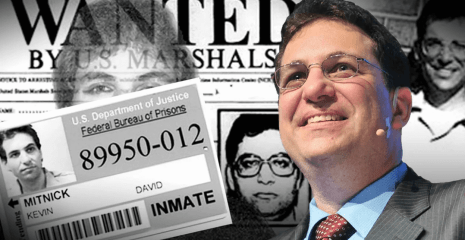
In the eighth installment of the Kevin Mitnick Memorial series, we delve into the period when the legendary hacker, while on the run, led a double life and continued to commit high-profile hacks. Working under an assumed name, he simultaneously managed to attack major technology companies, obtain source code, and mislead experienced engineers with the help of social engineering. Readers learn how Mitnick operated on the verge of exposure, changing identities, and remaining elusive to the FBI. This story is about cunning, risk, and a passion for hacking that did not fade even under the threat of arrest.

In the previous part, our hero took advantage of another loophole in the system and created two new identities for himself: a temporary one named Eric Weiss and a more elaborate one named Brian Merrill. Having obtained documents and records in state databases by various means, under the first pseudonym Kevin Mitnick got a job in the Denver office of an international law firm. The office work of a wide-profile IT specialist in a very friendly team of employees alternated with skiing holidays in the picturesque Rocky Mountains, hours in the gym, long bike rides, trips to rock concerts and blackjack in Indian casinos. FBI agents seemed to have lost track of him and did not show themselves in any way. Life finally returned to one of the most dangerous hackers in the United States on the wanted side. But Mitnick would not be himself if he were satisfied with such a peaceful and calm life.

Naturally, Mitnik, like a sparrow who has been shot many times, did not forget to play it safe. Among other things, he wrote a special script, thanks to which any calls from the company’s phones to the phones of the FBI and the US federal prosecutor’s offices in Los Angeles and Denver resulted in an immediate sending of a coded message to his pager. During his time working at the Denver branch of Holm, Roberts and Owens, the script worked twice: each time Kevin’s heart sank below his heels, but both times it turned out that the calls had nothing to do with him. Just in case, he grew long hair and a mustache that he had never worn before.
In addition, Mitnik at this time lived and worked for the time being under the temporary and not very developed in the sense of legend pseudonym Eric Weiss – with the data of a real, unsuspecting middle manager from northwestern Oregon. He wasn’t entirely sure that he had gotten the feds off his back and was refraining from forming a serious friendship or, even more so, a relationship with anyone. He was already aware that if he was caught again, the FBI would cause a lot of anxiety for everyone close to him, and he didn’t want to put up with people he liked—those he would otherwise be happy to be friends with or date. Out of the same caution not to talk too much to anyone, Mytnik almost never drank, even at corporate parties—except for light cocktails in bars.

However, there were also more cynical considerations: he was afraid to confide in someone close to him at some point, after which she could accidentally or even intentionally arouse unnecessary suspicions. The customs officer, who once dreamed of being like the main character of the political thriller “Three Days of the Condor”, now literally found himself in the shoes of an illegal agent in enemy territory, and it turned out to be by no means as interesting as in spy movies. But it was very lonely and very nerve-wracking. It is not surprising that many real spies, and not the steel super-agents from movies and tabloid novels, have progressive mental problems (which they often fall for), which they compensate with alcohol and other not very useful things.
The only exception and a gap in the security system of the illegal customs officer were regular calls with his mother and grandmother, without which his cuckoo, worn out by persecution and loneliness, could really fly away somewhere. His mother would dial him from a random phone at the Sahara Casino where she worked, and the call would go to a pre-arranged number that he would enter into his ingenious phone. After a few months of living in Denver, he couldn’t stand it anymore and took the train to Vegas: several meetings with his mother and grandmother in secret, pre-arranged locations literally took place in the format of spy appearances (Kevin suspected that his relatives were being secretly monitored by the FBI).

And with all this, Kevin Mitnick … could not give up his main passion: hacking and gaining access to other people’s data through social engineering. So, having hacked the computer of a hacker friend from Los Angeles and found login details for Sun Microsystems employees, Mitnick could not resist the temptation to go further. He acquired the rights of their network administrator and got hold of a server with the source code of the new SunOS operating system. Then his social engineering skills came into play: under the guise of a technical support employee, Kevin convinced a company employee to accept this source code, write it to a suitable medium and leave it at the entrance for the “courier”.
At some point, Kevin’s wanderings through the Sun Microsystems network and copying everything interesting from it, administrators and security experts realized that someone was wandering around the system. They even figured out that the hacker was using social engineering techniques, assumed that it was the same Kevin Mitnick, and took a number of precautions. This only led to the fact that Mitnick began to behave more cautiously, but by that time he was walking around their network as if at home and quietly snoring, reading correspondence about how he had managed to discourage him from the Sun Microsystems system. One of the employees even received a thank you on the wall for saving the company’s network and defeating Kevin Mitnick – which, however, did not actually happen.
Feeling the excitement and impunity, Mitnick went further. He aimed at Novell and its network operating system NetWare: in particular, because, according to rumors, everything was very cool there with information security – and it was all the more interesting for him to hack them. After initial success in obtaining access passwords to administrators, the scythe hit a snag: when trying to reach the server with the NetWare source code, social engineering did not work, the employees quickly realized that a hacker was calling them under the guise of colleagues, and the security service took action. After several attempts, Kevin managed to get some of the files through some less careful employees, but attempts to obtain the OS source code only ran into a wall of suspicion and security protocols. Moreover, Mytnik began to suspect that his voice was being recorded and could be used for new legal charges.

To improve his capabilities, Mytnik decided to switch from an outdated Novatel PTR-825 phone to the latest cool Motorola MicroTAC Ultra Lite model. But in order to turn an ordinary “mobile” into a secure tool for hacking and bypassing the system on bends, he needed the source code of the phone’s software. Kevin began calling the company’s offices and employees under the guise of an engineer from Motorola’s R&D department in Arlington-High, Illinois. And in this case, luck was on the hacker’s side: literally in a couple of calls, he came across a boss who had gone on vacation, a naive young lady who did not suspect anything and was even so kind as to convince the wary security guys to let him send the latest one.

One problem: Mytnik made this call from a street phone, having rushed out of the office and thinking that it would take more than one event and more than one day, there was a sharply continental Colorado winter in the yard, and while he was explaining to the girl what FTP was and how to archive files, he managed to die. But Kevin triumphed: according to him, he felt like a CIA officer who managed to recruit an agent in the Iranian embassy under the guise of a representative of a third country. Knowing our hero, you could already guess what happened next: Mytnik got bold and decided to climb into Motorola servers seriously and for a long time. In short, he decided and did it. In the most impudent way. The company’s employees, unlike the sophisticated Novell staff, were easily led to the most primitive social engineering and after a few polite phrases were ready to almost vouch for a random interlocutor in front of their own colleagues.
Kevin Mitnick let his guard down again, got cocky, and made mistakes again. In one not-so-beautiful moment for himself, he discovered that the administrator of Colorado Supernet, a Colorado internet service provider—on whose servers the hacker brazenly stored his loot in the form of code borrowed from corporations—was tracking his activities, including his attempts to break into Novell and the disappearance of pieces of source code from the servers. And worse, he was making up about what was happening to a certain FBI agent from Colorado Springs.
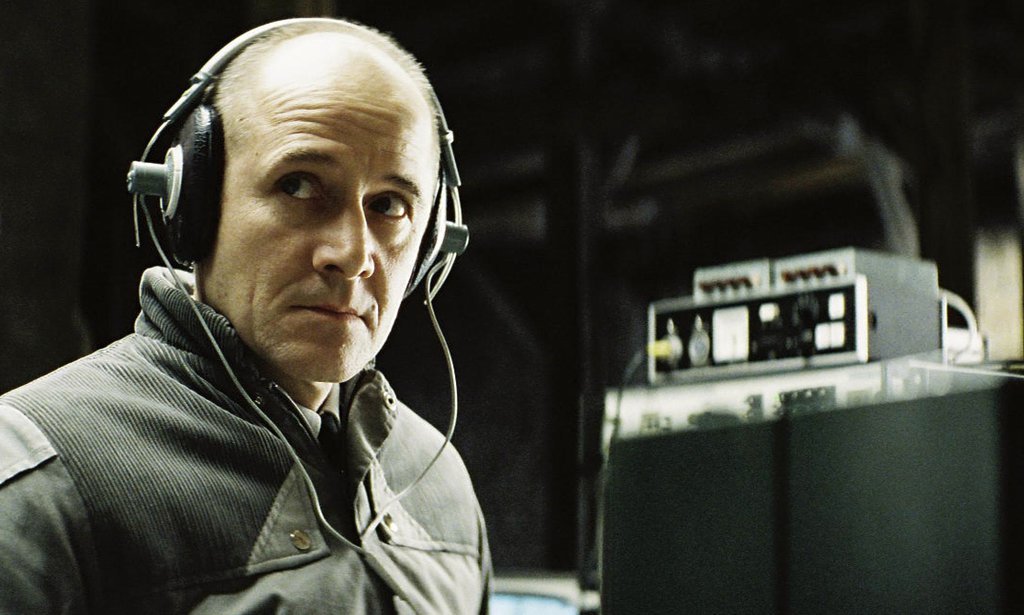
The customs officer, instead of immediately dumping Colorado and lying on the bottom, decided to burn out and play a joke on his enemies. First, he fabricated a fake log file with data about his action, which did not take place in reality, and sent it to the FBI under the guise of the same admin. Then he found an insufficiently careful employee in one of the Novell offices, using social engineering again got into their network and erased the source code of the latest operating system. At some point, he realized with his sixth sense that his actions were being tracked. Then, as a sacramental icing on the cake, he could not resist and wrote: “I know you are watching me, but you will never catch me.” Later, Novell security officers would tell him that they really read his actions and were quite official at that moment.
After that, Kevin considered it a blessing to leave Novell behind and switched to Nokia. Namely: he decided to get the source code for the latest Nokia 121 phone. Now he had to call Finland, but Mytnik was already knee-deep in the sea. True, it turned out that the Finns from the Finnish office did not speak English very well: they had difficulty understanding Kevin, and Kevin had difficulty understanding their attempts to express themselves in the language of Shakespeare. After several fruitless attempts, Mytnik howled and tried to switch to the company’s British office. It was better there, but only partially: the employee he managed to reach had a very pronounced British accent, and even with dialectisms, and Mytnik, who had previously communicated only with Americans, had to make a lot of effort to understand British English by ear. The security measures in the British office were quite primitive, so without any special problems Kevin managed to download the source code of the Nokia 101 and Nokia 121 to the Colorado servers.

Mytnik decided to go further again. He was interested in the source code of the newest phone that was just being developed, under the working code HD760. But here there was a problem: the Finnish company realized that something was wrong and blocked the uploading of files from their servers via FTP. Social engineering was used, and Kevin was lucky again: he found a trusting lead developer with good English in the office in Oulu, Finland, who was so kind that he agreed to download the code, write it on a magnetic medium and send it to the Nokia office in Largo, Florida. Where Mytnik was going to pick it up himself or through one of his trusted friends.

However, when the customs officer began to call Largo and ask if the package had arrived, he was clearly frozen on the line under various pretexts. He realized that he was being hounded again and trying to determine the location of the outgoing call. Kevin turned to his friend Lewis – and he could think of nothing better than to call Largo on behalf of the head of the American branch of Nokia Karri-Pekka Vilska with a demand to urgently send him a package. His pseudo-Finnish accent did not convince anyone, and the employees immediately reported the strange call to the FBI. It would seem that it was time to slow down, but Kevin and Lewis were beating their hooves and trying to get the source code at any cost.
Lewis again dialed the Largo office on behalf of Vilska and instructed to send the package to the reception of the Ramada Inn hotel near the office where Lewis worked. When the package arrived, Kevin called the hotel and asked if it was there. The receptionist froze him for a few minutes, the hacker’s suspicions growing. When the call ended, Mitnik dialed the hotel manager and introduced himself as FBI Special Agent Wilson. The manager almost clicked his heels and obediently reported that the hotel was under full control and supervision of the police and the FBI’s White Collar Crime Unit. At that moment, a police officer entered the manager’s office, and Mitnik, who ignored him, also demanded that he report on the situation.
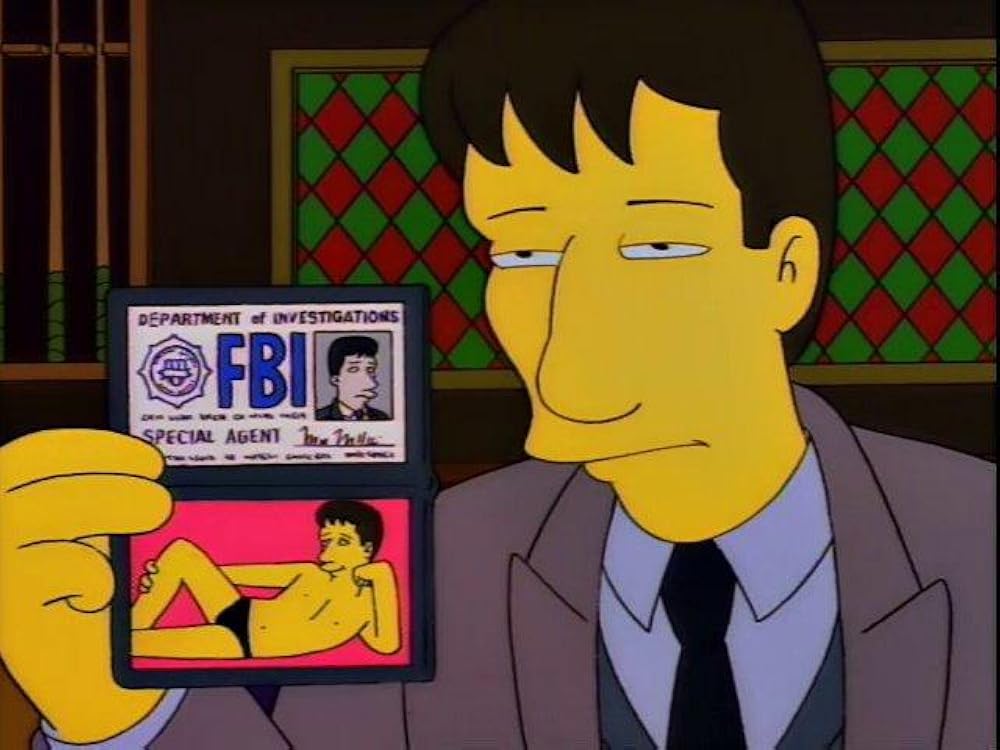
Kevin and Lewis were almost ready to storm the ill-fated hotel to get the desired code. For them, it was already a matter of excitement and self-respect as Very Cool Hackers. But they had to back down. Out of anger, Mytnik went to hack the Japanese-American company NEC in search of the source code for mobile phones. And he did. He uploaded the code he received to the servers of the University of Southern California. It was worth a special effort to extract the code for the latest NEC P7 mobile phone: to get it, Mytnik followed Lewis’s footsteps and dialed the company’s office under the guise of a very important Japanese person from the central office in Tokyo. With a heavy pseudo-Japanese accent. Oddly enough, this time everything worked out. Oh, the naive 90s.

Kevin was so impudent that — of course, not without precautions — he agreed to give a sensational interview about himself to Playboy magazine. However, all this did not go unnoticed. The FBI was literally besieged by angry representatives of corporations with demands to find the damn hackers who were stealing the source codes of their new products. No one believed that one unbridled adventurer could do this simply out of love for art and self-affirmation: they suspected industrial espionage by competitors, and mentally calculated with horror the billions in losses. The scale of the problem Mytnik began to realize when, during another hack on the servers of the University of Southern California, he discovered correspondence about his actions between the administrator Asbed Bedrosyan and the FBI.
As it turned out later, prosecutor David Schindler in 1994 held a secret meeting regarding what was happening to representatives of the affected corporations. They were all extremely indignant, suspicious of each other, and initially refused to publicly talk about their origins. However, in the process of work, law enforcement officers and managers came to the conclusion that the handwriting was quite characteristic and, most likely, pointed to a very specific culprit: Kevin Mitnick, who is on the run, one of the most dangerous hackers in the United States. However, company representatives still refused to believe that Mitnick was doing all this out of interest, and not to resell the mining to competitors for round sums as part of some cunning game.

Then, in the spring of 1994, Mytnik was suddenly fired from his job. His department was headed by a new, strict boss who decided to bring order and discipline. She admitted that Kevin was sitting at work for a suspiciously long time and fiddling with his phone – that is, using his working hours to work around the company with his private clients. The funniest thing is that Mytnik did do a lot of left-wing and even illegal things at work, but he did not do private jobs. Unlike his colleague, who was fired along with him for the same thing, but deservedly so. During the dismissal process, Mytnik made a few scandals, and then became paranoid that an angry former boss would dig through his data and find out that his entire identity as Eric Weiss from Oregon was a fake.
With the help of a former colleague, Kevin managed to quietly hack the company’s network from the outside, erase all potentially dangerous files and traces on his former computer, and at the same time poke his nose into his boss’s correspondence. As it turned out, the management had no major suspicions against him, and all that worried the management was that the dismissed person would not start legal proceedings. Kevin, of course, was not going to sue. However, the problem arose where no one expected it. The higher-ups recognized that the unsubstantiated accusation of “Eric” in working for third-party clients leaves too many possibilities for a lawsuit – and decided to dig deeper to find more weighty reasons for the dismissed person. Well, in the process of finding out, they discovered what Mytnik had feared: no Eric Weiss in the form in which he was known in the company existed. As well as the previous place of work indicated in the resume.
Kevin was surprised to learn of this from his former colleague. He immediately wrote an excuse and said that he was a private investigator working undercover, after which he cut off contact. Mytnik really liked Denver, for some time he fought the temptation to simply move to another part of it under a new name, but in the end he rightly decided that he had already made himself too famous here, and it was risky. In addition, a Playboy journalist who was working on the interview reported that gentlemen in plainclothes from the FBI came to him and were very interested in where the main character of the publication being prepared could be.
So, Eric Weiss died – now the pre-prepared Brian Merrill was to be born, who actually died as a child in a car accident many years ago, but left a bureaucratic trace.
Mytnik’s path led west, again to Las Vegas, and then to another unknown.